
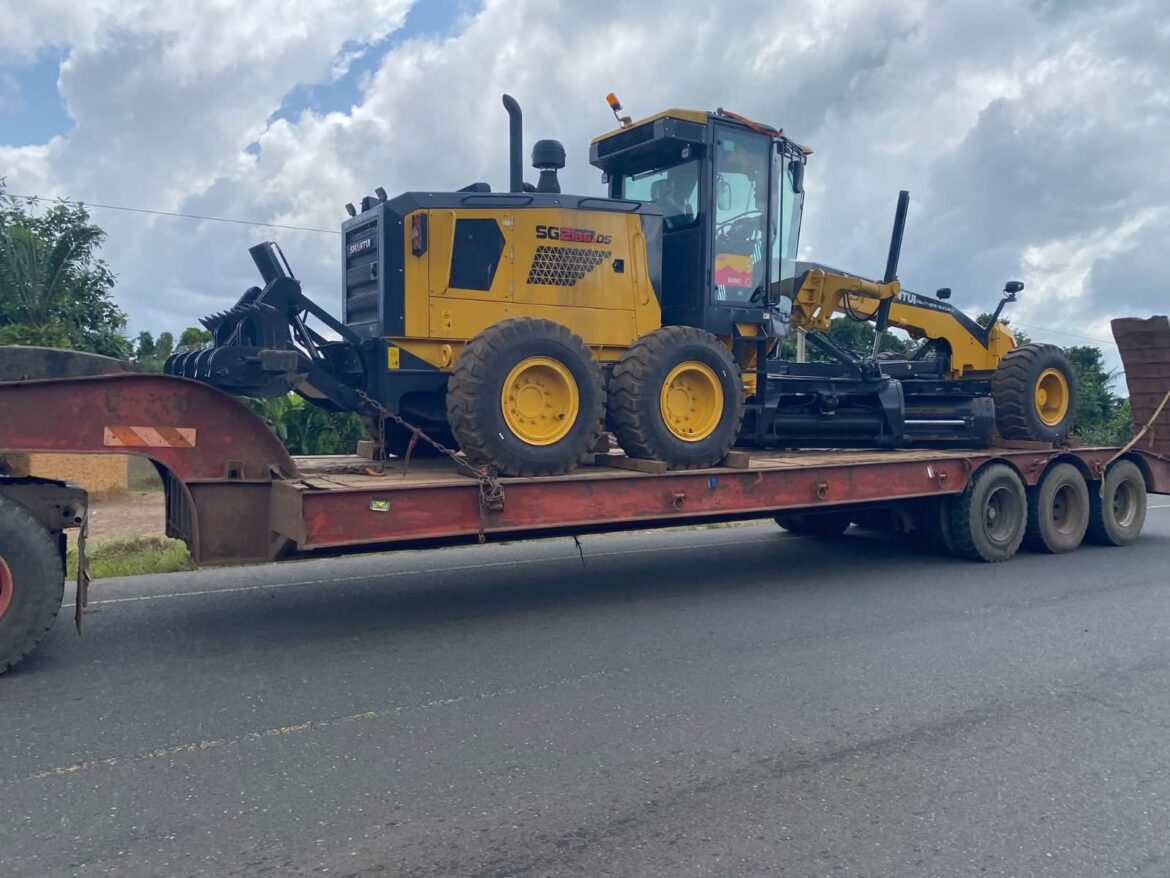
GBARNGA, Bong County – The arrival of 30 pieces of heavy earthmoving equipment in Bong County is being greeted as a turning point for the county’s farmers, traders and rural families. The head of the Environmental Protection Agency (EPA) says the machines could turn isolation into opportunity.
Dr. Emmanuel King Urey Yarkpawolo, the EPA Executive Director and a son of Zota District, said the yellow machines carry meaning far beyond the construction work they are expected to do. In his view, passable roads sit at the heart of food security, farm income and the daily survival of rural households.
In a statement marking the arrival, Dr. Yarkpawolo commended President Joseph Nyuma Boakai for placing roads at the center of his administration’s agenda. He argued that the initiative could begin to ease transportation problems that have long held back farming and trade in Bong, one of the country’s most important agricultural counties.
He leaned on a saying the President is known for: that people cannot eat a road, yet a road is what allows people to eat. “People do not eat road, but it is road that can make people eat,” he recalled. According to the EPA chief, the line captures what farmers across rural Liberia live with every season.
Farmers in Bong, he explained, put months of labor and money into growing rice, cassava, vegetables and plantains. But the work does not end at harvest. Getting crops out of the village and into a market is often the harder part, and where roads have deteriorated, that journey can fail altogether.
The rainy season makes matters worse. Mud, washed-out surfaces and damaged crossings can cut off whole farming settlements, leaving vehicles unable to reach them. Produce waiting by the roadside may rot before a buyer ever sees it, and the farmer absorbs the loss. “A farmer can grow rice, cassava, vegetables, and plantains, but without a reliable road to the market, that harvest may spoil before it can be sold,” he said.
The damage, Dr. Yarkpawolo noted, does not stop with the farmer. Market women struggle to get supplies, traders lose business, and families in towns and cities pay more because the cost of hauling food over bad roads gets passed along at the market stall.
That is why, he said, agriculture and infrastructure should not be treated as two separate items on the government’s to-do list. “A road connects the hands that grow our food to the households that need it,” he stated. He added that it also lets farmers earn the money to feed, educate and uplift their children.
Roads, he stressed, are also lifelines to schools and clinics. Children in remote communities can find it hard to reach the classroom, and patients needing urgent care may not reach a hospital in time when the only route is barely passable. More dependable roads throughout the year, he said, would ease those burdens. “Beyond food, better roads can help children reach school, patients reach hospitals, and businesses reach new customers,” he said.
His comments come amid an ongoing national conversation about road development and economic recovery, especially in rural counties where farming remains a main source of work and income. In Bong, many households rely on farming and small-scale trading to get by, and weak road links have historically made it harder to move goods and reach basic services.
Dr. Yarkpawolo believes sustained rehabilitation of rural roads could open doors for residents who have waited years. Farmers who can move crops quickly and cheaply stand a better chance of earning enough to enlarge their farms, buy inputs and improve conditions at home.
Traders would gain too. With better roads, he said, they could reach more villages, buy directly from producers and carry goods to bigger markets. Stronger ties between farmers and city consumers could also help bring down some of the transport costs that keep market prices high.
For Zota District and other rural parts of Bong, the stakes are personal.
“Today, as Bong County’s yellow machines arrive home, I welcome them with pride as a son of Bong,” he declared. He said the machines offer farmers, market women and cut-off communities a chance to turn isolation into access and hard work into income.
Yet the EPA chief was clear that delivery is not the same as results. He warned that the arrival of equipment does not fulfill the government’s responsibility, and called for practical steps to keep the machines running and ensure they produce measurable benefits.
Maintenance, he said, must be a priority. Without disciplined management and steady attention to servicing and operating needs, the machines’ usefulness will fade.
He also urged fairness in deployment, insisting that communities facing the toughest travel problems should get a real share of the benefit.
“Their arrival must now translate into results. We must maintain the machines, deploy them fairly, and ensure they serve the communities that need them,” he said.
Dr. Yarkpawolo said the program should not be judged by the number of machines parked in Bong, but by what changes on the ground. “Their true value will be measured in roads made passable, travel made easier, and livelihoods improved,” he said. Road work, in his words, must deliver tangible gains: easier movement, better market access and more earning opportunities for rural households.
See more Liberia News Network stories in Google Search by adding LNN as one of your Preferred Sources.
★ Add LNN as a Preferred Source