
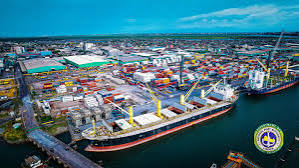
MONROVIA, Liberia, November 6, 2026: APM Terminals Liberia has announced emergency measures to ease growing congestion at the Freeport of Monrovia, warning that delays in clearing imported containers are severely affecting cargo movement and putting pressure on Liberia’s main commercial gateway.
The company disclosed that the port’s container storage capacity has effectively declined by nearly 50 percent as the average time containers remain at the terminal has increased from seven to eight days in 2025 to 15–16 days in 2026.
APM Terminals Managing Director Rachid Baho said the company is working with the National Port Authority (NPA) and other stakeholders to expand terminal capacity, improve container movement, and reduce shipping delays affecting importers, businesses, and consumers.
“We acknowledge the congestion at the port and the impact it is having on our customers and businesses in Liberia. Our immediate focus is on improving the areas within our responsibility, particularly terminal capacity and the movement of containers through and out of the port,” Baho said.
According to the company, at least 250 import containers must leave the terminal daily to maintain efficient cargo flow. However, only about 170 containers are currently being collected each day, creating a significant imbalance between incoming shipments and outgoing cargo.
To address the situation, APM Terminals has begun relocating hundreds of longstanding import containers to other areas of the port, demolishing unused structures within the terminal, and developing additional container stacking spaces.
The company said some measures could improve operations within a week, while others would increase capacity over the coming months.
Baho emphasized that lasting improvements would require coordinated action among shipping companies, customs authorities, clearing agents, truckers, importers, and other port stakeholders.
“Sustainable improvement requires coordinated action across the entire port community to solve the problem with containers not getting out of the terminal fast enough to create space for new cargo coming in,” he explained.
APM Terminals reported that Liberia’s annual container traffic is approaching 200,000 twenty-foot equivalent units (TEUs), representing approximately 30 percent growth over the past two years.
The company said it has invested US$15 million in container-handling equipment, including reach stackers, to support the growing demand.
It also announced plans to acquire a third mobile harbour crane, three additional reach stackers, two empty-container handlers, five terminal trucks, and two spreaders to strengthen operational capacity.
Meanwhile, APM Terminals attributed part of the shipping delays to congestion at major West African transshipment hubs, where Liberia-bound containers often pass before reaching Monrovia.
The company noted that congestion at these facilities can disrupt shipping schedules, delay connections, and prolong cargo delivery.
To reduce dependence on transshipment through Abidjan, APM Terminals announced a new arrangement with shipping giant Maersk that will make Monrovia the first port of call on its W5A service beginning January 2027.
Baho said the direct service would allow Liberia-bound containers to be discharged in Monrovia without passing through Abidjan, potentially improving shipping reliability and reducing delays.
“It will be a significant improvement for Monrovia that from January 2027, APM Terminals Liberia and Maersk have joined forces to make Monrovia the first port call for the W5A service,” he said.
The announcement comes amid growing concerns over congestion at the Freeport, with reports before the Legislature highlighting prolonged shipping delays and containers spending more than 30 days at sea before reaching Monrovia.
The National Port Authority has also acknowledged increasing pressure on port infrastructure and announced plans for dredging and expansion to accommodate larger vessels and growing cargo volumes.
APM Terminals maintained that expanding terminal capacity alone would not resolve the congestion unless customs clearance, documentation, trucking, and timely collection of imported containers are simultaneously improved.
The company reaffirmed its commitment to working with the government, NPA, Liberia Revenue Authority, shipping lines, customs brokers, truckers, and importers to restore efficient cargo movement and strengthen Liberia’s principal international trade gateway.
See more Liberia News Network stories in Google Search by adding LNN as one of your Preferred Sources.
★ Add LNN as a Preferred Source