
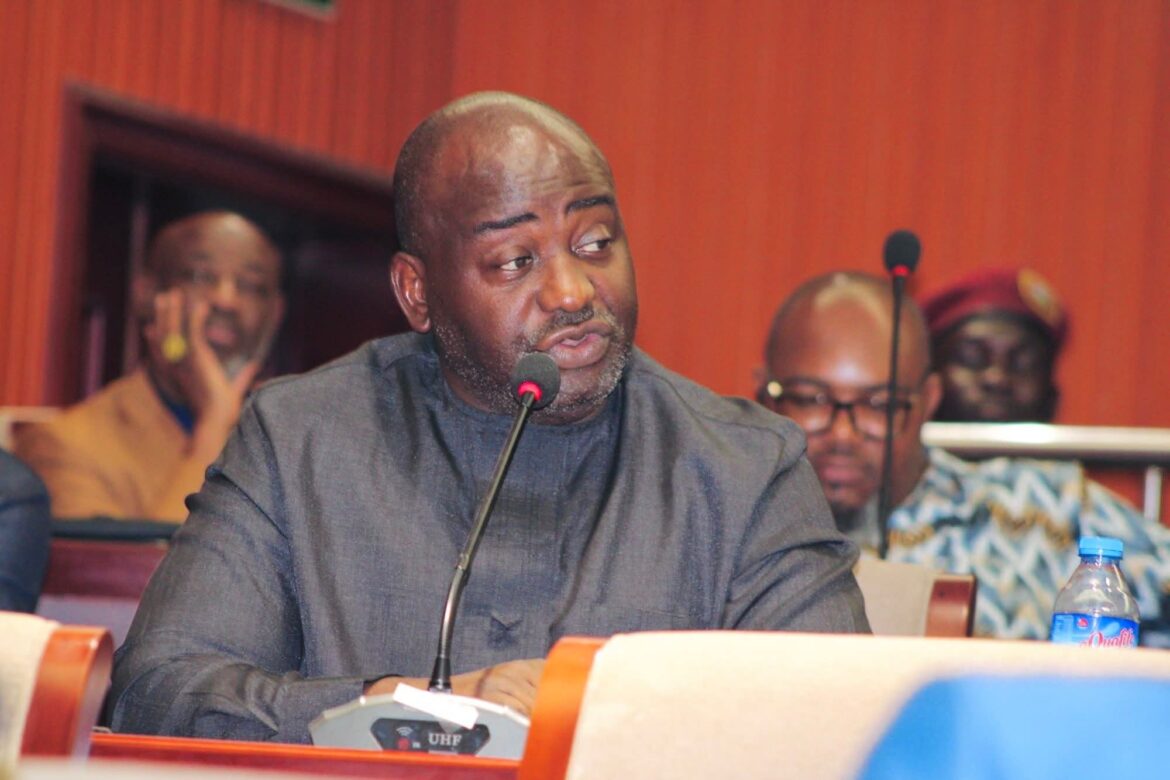
SACLEPEA, NIMBA COUNTY – Nimba County Representative Musa H. Bility has called for a more serious national conversation about leadership, governance and economic development, challenging Liberia’s political leaders to demonstrate their competence through detailed policy discussions rather than relying on political slogans and identity-based arguments.
Bility said Liberia needs leaders who can openly explain their economic vision, defend their policy decisions and demonstrate how their proposed programmes will improve the living conditions of ordinary citizens.
In a public reflection published on his official Facebook page on Monday, November 9, 2026, titled “Letter from Saclepea: The Hypocrisy We Must Confront,” the lawmaker expressed concern that the country’s political discussions have not sufficiently prioritized practical issues surrounding economic management, employment, education, healthcare and national development.
He argued that Liberia’s leadership debate must move beyond discussions about tribal affiliations and religious identities and focus on the qualifications, performance and policy positions of those seeking public responsibility.
The representative specifically expressed his desire to see political leaders engage the Liberian public in meaningful discussions about their national development plans, recalling that since former President Ellen Johnson Sirleaf left office, he has wanted to hear leaders present and defend their visions freely and in considerable detail.
According to Bility, prepared speeches alone are insufficient to demonstrate whether political leaders possess the knowledge and practical understanding required to address the country’s complex development challenges.
He challenged those aspiring to national leadership to demonstrate their ability to discuss the economy, explain their decisions and provide convincing answers about how ordinary families can earn a decent living.
The Nimba lawmaker questioned whether political leaders can withstand difficult public questions without retreating into familiar political slogans.
For him, the ability to explain policies, defend decisions and articulate practical solutions should form an essential part of assessing anyone seeking the confidence of the Liberian people.
His argument places particular emphasis on the relationship between leadership accountability and the country’s persistent development difficulties.
Bility maintained that Liberia’s economic and social challenges do not discriminate along ethnic or religious lines.
He argued that poverty affects families across tribal communities, while children from different religious backgrounds continue to face educational difficulties and inadequate access to essential services.
He further noted that the country’s healthcare needs, unemployment and limited economic opportunities affect citizens regardless of whether they identify as Mandingo, Kpelle, Gio, Kissi, Krahn or members of other communities.
According to the lawmaker, these problems are rooted in governance and leadership failures that require serious national attention rather than political arguments that divide citizens.
He maintained that Liberia needs leaders capable of mobilizing resources, developing practical policies and ensuring that public decisions translate into tangible improvements in people’s lives.
Bility also used Liberia’s historical and international relationships to reinforce his argument about the need for a more inclusive understanding of national development.
He referenced the country’s cooperation with international development partners, including Saudi Arabia, Kuwait, the United Arab Emirates and other institutions supporting infrastructure and public investment.
Among the examples he cited was the Gbarnga-Salayea road project, which received financing support from the Saudi Fund, Kuwait Fund, BADEA and the OPEC Fund, alongside the Liberian Government.
He also referenced the Emirates Hospital in Gbarpolu County, describing it as an example of development assistance from the United Arab Emirates.
Bility argued that Liberia’s willingness to embrace international development partnerships demonstrates that national progress should not be restricted by religious or cultural differences.
He questioned why the country can welcome investments and development assistance from Muslim-majority nations while some citizens allegedly remain unwilling to accept a Liberian Muslim as a potential national leader.
The representative’s argument was that national development requires an appreciation of contributions from every individual and institution capable of helping the country overcome its challenges.
He also invoked Liberia’s political history, recalling that the country’s first president, Joseph Jenkins Roberts, was born in Virginia, United States.
Bility further cited the birthplaces of previous Liberian presidents to challenge what he considers inconsistent standards in determining national belonging and eligibility for political leadership.
His broader argument is that Liberia must apply equal standards when assessing the citizenship and leadership potential of its people.
The lawmaker also made the issue personal, declaring that he is a Muslim, a Mandingo and a Liberian, while inviting citizens to examine his political record, competence, integrity and development plans.
He said he does not object to public scrutiny of his qualifications or ideas but rejects the use of ethnicity and religion as substitutes for a fair assessment of his ability to serve.
In one of the more personal portions of his reflection, Bility disclosed that two of his daughters have developed an interest in politics.
He expressed hope that they, alongside other Liberian children, will grow up in a country where opportunities for leadership and public service are determined by merit rather than ancestry or religious affiliation.
The statement also reflects his concern about the kind of political culture Liberia is building for the next generation.
He argued that the country cannot afford to spend valuable time debating which tribe or religious group deserves political opportunities while mothers continue to need functioning hospitals, children lack adequate classrooms and families struggle to secure sustainable livelihoods.
Bility pledged to challenge the prejudice he described through peaceful and open engagement, maintaining that national unity and development should take precedence over identity-based divisions.
His call for substantive political engagement raises an important governance question: Are Liberia’s political leaders being adequately challenged to explain how their policies will translate into jobs, better healthcare, quality education and improved economic opportunities?
For the Nimba County representative, that is the examination the country needs.
He believes that the future of Liberia should be determined by the quality of leadership and the ability of public officials to respond to the people’s needs, rather than by the ethnic or religious identities of those seeking to serve.
See more Liberia News Network stories in Google Search by adding LNN as one of your Preferred Sources.
★ Add LNN as a Preferred Source