
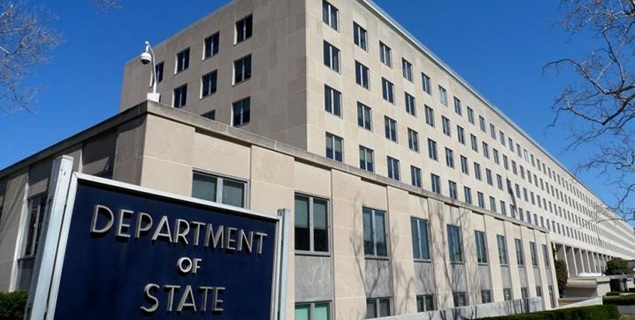
MONROVIA — The United States Department of State has delivered a serious assessment of Liberia’s governance and investment environment, identifying corruption, alleged bribery involving court officials, judicial delays and concerns about political interference as major obstacles confronting the country.
In its 2026 Investment Climate Statement on Liberia, the U.S. government raises troubling questions about the effectiveness of the country’s anti-corruption institutions and the ability of its judicial system to provide timely and independent justice.
The assessment describes corruption as a major impediment to democratic consolidation and economic growth, warning that political connections, unofficial payments and alleged extortion continue to undermine confidence in Liberia’s business environment.
The findings present an important challenge to President Joseph Nyuma Boakai’s administration, which came to power promising to strengthen accountability, fight corruption and restore public confidence in government institutions.
But the State Department’s assessment suggests that significant institutional weaknesses remain, raising questions about whether Liberia’s anti-corruption promises are translating into meaningful results.
CORRUPTION AND POLITICAL CRONYISM UNDER SCRUTINY
One of the most serious concerns identified in the U.S. assessment is the alleged influence of personal financial interests and political connections over government decisions.
The report indicates that some public officials prioritize personal gain over the country’s investment interests, while political cronyism can influence decisions that should be governed by established laws and transparent procedures.
It also raises concerns that businesses operating in Liberia sometimes encounter demands for unofficial payments from government officials.
According to the assessment, companies that refuse to participate in such arrangements may face difficulties navigating government regulations, while those willing to make unofficial payments may find it easier to operate outside established procedures.
The report identifies government procurement, concession negotiations, customs administration, taxation and regulatory approvals as areas particularly vulnerable to corruption.
It also highlights complaints from foreign companies about additional fees allegedly imposed outside the terms of their investment agreements.
Such practices, the U.S. government warns, increase the cost of doing business, discourage investors and weaken confidence in Liberia’s public institutions.
JUDICIARY UNDER FIRE: COMMERCIAL DISPUTES CAN TAKE UP TO FIVE YEARS
Perhaps the most damaging part of the assessment concerns the state of Liberia’s judicial system.
The State Department reports that commercial disputes in Liberia can take between two and five years to resolve, reflecting a serious backlog and weaknesses in the administration of commercial justice.
The report also raises concerns about the enforcement of court judgments, particularly against government institutions.
Even when businesses obtain favorable judgments, enforcing those decisions can become another lengthy and difficult process.
More troublingly, the assessment references allegations of bribery involving court officials and concerns about possible executive interference in judicial and legislative matters.
These concerns raise fundamental questions about investor confidence in Liberia’s courts and the ability of the judicial system to protect contractual and commercial rights.
For a country seeking billions of dollars in foreign investment across mining, energy, agriculture and infrastructure, prolonged litigation and uncertainty over judicial enforcement represent significant economic risks.
FOREIGN INVESTORS TURN TO INTERNATIONAL ARBITRATION
The U.S. assessment also points to the preference of some investors for international arbitration when resolving disputes involving Liberia.
Some investment agreements provide for arbitration outside the country, reflecting concerns about the effectiveness and reliability of domestic dispute-resolution mechanisms.
Although Liberia participates in international arbitration arrangements, the enforcement of arbitration decisions can still encounter delays.
The development raises an uncomfortable question: If investors entering major agreements with Liberia prefer to resolve disputes outside the country’s judicial system, how confident are they in the independence and efficiency of domestic courts?
BOAKAI’S ANTI-CORRUPTION PROMISES FACE A TEST
The report acknowledges that the Boakai administration has introduced or pursued several anti-corruption initiatives, including asset declaration requirements for public officials, investigations into allegedly irregular government contracts and efforts to establish a specialized criminal court for corruption cases.
It also references a proposed amendment to remove the statute of limitations on corruption prosecutions.
However, the assessment characterizes these initiatives as being at an early stage, underscoring the difference between announcing reforms and achieving measurable enforcement.
The Liberia Anti-Corruption Commission and the Ministry of Justice therefore face an important test: demonstrating that investigations can lead to prosecutions and that anti-corruption laws are applied consistently, regardless of an individual’s political position or connections.
A WARNING BEYOND FOREIGN INVESTMENT
The State Department’s concerns extend beyond the interests of foreign businesses.
Corruption in government procurement can divert money intended for roads, hospitals, schools and other public services. Judicial delays can deny ordinary citizens timely justice, while bribery and political interference undermine confidence in the rule of law.
For Liberia, these institutional weaknesses have consequences that reach far beyond the investment sector.
A country cannot sustainably attract investors while businesses question the transparency of government decisions, citizens struggle to obtain justice and public institutions face persistent allegations of corruption.
GOVERNMENT AND JUDICIARY MUST ANSWER
The findings should prompt responses from the Executive Mansion, the Liberia Anti-Corruption Commission, the Ministry of Justice and the Supreme Court of Liberia.
The government must explain what measurable progress has been made in strengthening public procurement, investigating corruption allegations and enforcing accountability.
The Judiciary should also address the reported commercial court delays and explain what safeguards exist to prevent bribery and improper interference in judicial proceedings.
The LACC, meanwhile, should provide updated information on investigations, prosecutions and the implementation of its institutional reform agenda.
WASHINGTON’S WARNING, LIBERIA’S ACCOUNTABILITY TEST
The 2026 U.S. State Department Investment Climate Statement presents a sobering picture of the institutional challenges confronting Liberia.
While the country possesses substantial investment opportunities in mining, agriculture, energy and infrastructure, corruption, weak judicial enforcement and institutional uncertainty continue to undermine confidence in its business environment.
For President Boakai, the assessment raises a difficult question about the distance between his administration’s anti-corruption commitments and the results investors and ordinary Liberians are experiencing.
Liberia needs more than anti-corruption speeches, policy announcements and promises of reform. It needs functioning institutions, transparent public spending, independent courts and accountability that applies equally to everyone.
The American assessment has placed these concerns on the international record. The responsibility now rests with Liberia’s government and institutions to demonstrate, through evidence and action, that the country is making progress.
Smart News will continue examining the report and seeking official responses from the relevant Liberian authorities.
See more Liberia News Network stories in Google Search by adding LNN as one of your Preferred Sources.
★ Add LNN as a Preferred Source