
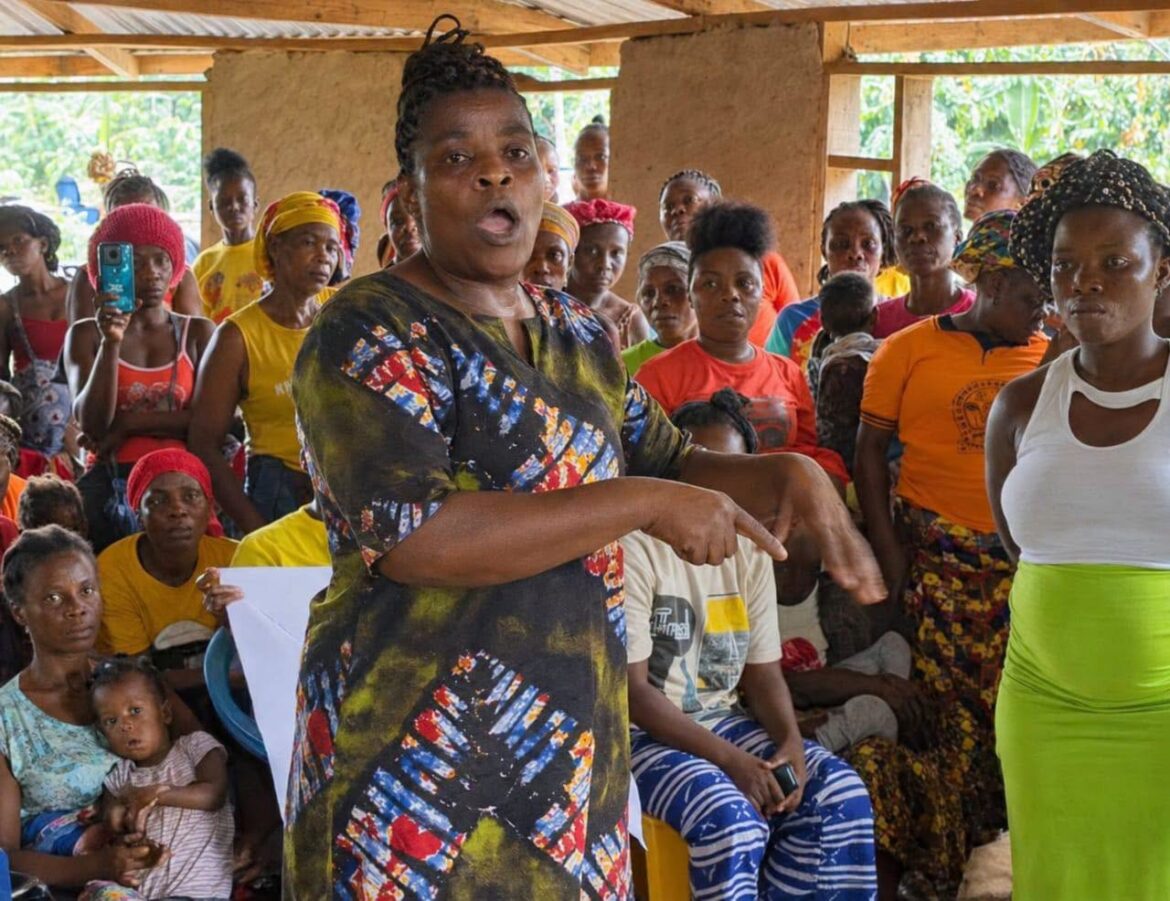
CESTOS CITY, Rivercess County — Judy Graham measures her progress in bags of rice. Not long ago, the owner of Ma Judy Business Center was struggling to trade with a single bag. Today she has 25.
The bigger stock has put her business on firmer footing. Graham said the change she values just as much is the confidence to make her own decisions.
“I am so grateful to God, the Government of Liberia and the World Bank for bringing this opportunity to our doorsteps,” she said. “Some of us never had the confidence to stand and make decisions, but today I can stand with my head held high.”
Graham credits the Liberia Women Empowerment Project, known as LWEP, with helping her expand her business and regain her self-belief. She shared her story on Nov. 2 when a Ministry of Gender, Children and Social Protection team led by Deputy Minister Laura Golakeh met beneficiaries in Cestos City. The meeting was one stop on a multi-county assessment of projects that support women and vulnerable communities.
Graham’s gains show up on her shelves. For other women at the gathering, the benefits have reached past their businesses and into their homes and their children’s classrooms.
Marian M. Karr heads the “Money Is Power” Money Saving Club. She said a US$5,000 grant to her group has helped members invest in their livelihoods and better meet their household needs. Before the support, she said, many members struggled to cover basic expenses. Now they are investing in their businesses and paying for their children’s education.
Their stories show the link LWEP is built to strengthen. Women’s economic opportunities, their ability to make decisions and the well-being of their families rise and fall together.
The ministry implements the project, which was approved with US$44.6 million in World Bank financing through the International Development Association. That total is made up of a US$26.8 million credit and a US$17.8 million grant. LWEP pairs livelihood support with measures that tackle the social barriers facing women and girls.
The project’s reach is wide. It covers 498 communities in six counties and aims to provide livelihood and business development services to 36,000 women. Its other work includes preventing gender-based violence, improving access to health and education services and strengthening women’s voices in their communities. Those figures are targets the project is working toward, not confirmed results.
The Cestos City visit gave ministry officials a chance to hear from beneficiaries about what is changing and where more support is needed.
Golakeh said the tour is assessing implementation under LWEP, the Recovery of Economic Activity for Liberian Informal Sector Employment Project and the Spotlight Initiative 2.0. Officials are examining livelihood activities, how grants are being used, reported changes in household incomes and whether the gains can last. The team is also identifying implementation challenges and checking whether county offices have the equipment they need to do their work.
Golakeh urged the women to protect the opportunity by investing their grants in the activities they were meant for.
“Please use it for the intended purpose to help transform your livelihood and educate your children,” she said.
She described LWEP as a Government of Liberia project supported by World Bank financing. She said public officials have a responsibility to serve the people, whatever their titles.
For Graham, that service has taken a form she can count: a business stocked with 25 bags of rice, and a confidence she did not have before.
“My life and business have improved from one bag of rice to owning 25 bags,” she said.
See more Liberia News Network stories in Google Search by adding LNN as one of your Preferred Sources.
★ Add LNN as a Preferred Source