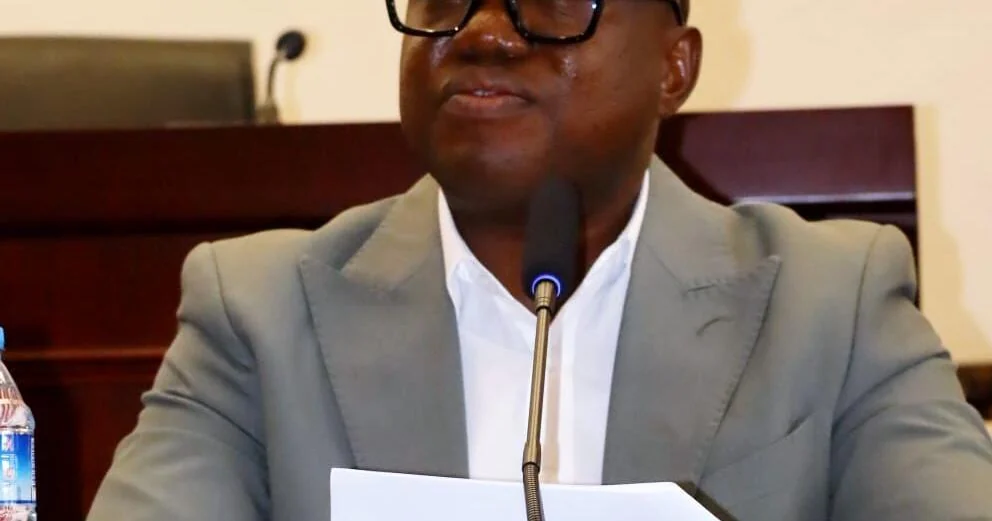
Monrovia City Corporation (MCC) Mayor-designate James K. Mulbah has unveiled an ambitious six-pillar development agenda aimed at transforming Liberia’s capital into a cleaner, greener, climate-resilient and economically sustainable city, while calling on the Liberian Senate to increase the corporation’s proposed allocation in the draft 2027 National Budget from approximately US$8.5 million to US$14.5 million.
Appearing before the Liberian Senate Committee on Local Government for his confirmation hearing, Mulbah outlined a comprehensive urban development strategy anchored on domestic resource mobilization, integrated solid waste management, urban beautification and green infrastructure, drainage and climate resilience, stakeholder coordination, and climate financing and partnerships.
The Mayor-designate pledged to usher in a new era of accountable urban governance, improved sanitation, effective municipal revenue collection and sustainable infrastructure development, emphasizing that Monrovia’s longstanding urban management challenges require more than conventional approaches to waste collection.
Presenting his vision under the theme of a “Clean, Green, and Sustainable Monrovia,” Mulbah argued that addressing the capital’s sanitation and infrastructure problems would require functional municipal systems capable of connecting revenue generation with visible improvements in public services.
“Monrovia does not lack revenue opportunities; it lacks the systems to collect them,” Mulbah told the Senate Committee, as he outlined plans to establish a Digital Monrovia Revenue Registry to strengthen municipal revenue mobilization, improve transparency and expand the corporation’s financial capacity.
Under the proposed initiative, every property and business operating within the municipality would be registered and assigned a unique Monrovia Municipal Identification Number.
The system, he explained, would establish a centralized database for municipal billing, revenue collection, monitoring and enforcement, providing the MCC with a more reliable mechanism for identifying revenue sources, tracking payments and addressing leakages in its collection system.
The proposed digital registry is also expected to improve the corporation’s ability to broaden its revenue base and reduce dependence on government budgetary allocations, while ensuring that municipal revenue collection is more transparent, organized and accountable.
Integrated Solid Waste Management
On sanitation, Mulbah proposed a comprehensive and integrated solid waste management system designed to address the entire waste management chain, from waste separation at source and collection to recycling, treatment and final disposal.
He disclosed plans to divide Monrovia into designated waste collection zones, each with clearly defined collection schedules, service providers and measurable performance targets.
Under the proposed arrangement, waste management contractors would be compensated based on independently verified performance, an approach he said would promote accountability, ensure value for money and improve the quality and reliability of sanitation services.
The Mayor-designate also announced plans to pilot a “Separate Your Waste” initiative, beginning in Sinkor, as part of efforts to encourage residents and businesses to separate waste at source and promote environmentally responsible waste disposal practices.
Beyond improving sanitation, Mulbah said the initiative would seek to transform waste into economic opportunities through recycling, compost production, energy generation and employment creation, particularly for young Liberians.
The approach is intended to move the city away from a waste management system focused primarily on collection and disposal toward a more sustainable model that recognizes waste as a potential economic resource.
Green Infrastructure and Urban Beautification
As part of his environmental and urban beautification agenda, Mulbah proposed developing green corridors along Tubman Boulevard, Somalia Drive and other major entry points into Monrovia.
He further pledged to work with development partners and relevant government institutions to plant 200,000 indigenous and climate-resilient trees across the capital.
The proposed tree-planting initiative, he indicated, would contribute to improving the city’s environmental quality, expanding green spaces, strengthening climate resilience and creating a more attractive urban environment for residents and visitors.
He also committed to strengthening the enforcement capacity of the Monrovia City Police to ensure compliance with municipal ordinances, particularly those governing sanitation, public spaces and orderly urban development.
The Mayor-designate maintained that beautification efforts must be accompanied by effective enforcement and public cooperation to prevent indiscriminate dumping, encroachment on public spaces and other practices that undermine the city’s environmental and physical development.
Drainage and Climate Resilience
Addressing Monrovia’s recurring flooding and drainage challenges, Mulbah proposed collaborating with the Ministry of Public Works to establish a Monrovia Drainage Maintenance Program.
The proposed program would focus on mapping drainage systems, conducting routine cleaning and maintenance, and strengthening waste control measures to prevent drains and waterways from becoming blocked by solid waste.
He emphasized that the city’s drainage challenges cannot be addressed through occasional interventions, stressing the importance of sustained maintenance, proper waste disposal and coordinated institutional action.
The initiative is expected to complement broader efforts to reduce flooding, protect public infrastructure and address environmental and public health risks associated with poor drainage and inadequate sanitation.
Stakeholder Coordination and Institutional Collaboration
Recognizing that the transformation of Monrovia extends beyond the mandate and financial capacity of the City Corporation, Mulbah stressed the need for strong collaboration among government institutions, private-sector actors, development partners and local communities.
He identified the Office of the President; the Ministries of Finance, Public Works and Internal Affairs; the Environmental Protection Agency; Liberia Revenue Authority; Liberia Water and Sewer Corporation; Liberia National Police; Paynesville City Corporation; private-sector institutions; development partners; and community stakeholders as critical partners in implementing his proposed development agenda.
According to him, effective coordination among these institutions would be essential to addressing the city’s interconnected challenges, particularly sanitation, drainage, environmental protection, infrastructure development and municipal revenue mobilization.
The Mayor-designate’s position reflects the recognition that sustainable urban development requires coordinated planning, clearly defined institutional responsibilities and consistent cooperation among national and local government authorities.
First 100 Days: Immediate Interventions
If confirmed by the Liberian Senate, Mulbah has committed to implementing a series of priority interventions within his first 100 days in office to establish the foundation for his broader reform agenda.
Among the proposed initial actions are conducting a citywide assessment of waste management operations and municipal revenue sources, mapping waste hotspots and revenue opportunities, and establishing a framework for developing a comprehensive property and business database.
He also intends to introduce pilot waste collection zones, identify priority locations for urban beautification, and initiate a visible but fair enforcement campaign to improve compliance with municipal regulations.
Other proposed interventions include improving waste transfer stations and landfill operations and developing an investment portfolio capable of attracting financing for sustainable urban development projects.
These initial measures, Mulbah indicated, would help establish a clearer understanding of the corporation’s operational challenges, identify immediate priorities and create a practical foundation for implementing his six-pillar development strategy.
Seeks US$14.5 Million in 2027 Budget
To finance the proposed transformation agenda, Mulbah appealed to the Liberian Senate to increase the Monrovia City Corporation’s proposed allocation in the draft 2027 National Budget from approximately US8.5milliontoUS14.5 million.
He acknowledged President Joseph Nyuma Boakai Sr. for proposing an increase in the corporation’s budgetary allocation but maintained that the resources currently available to the MCC remain insufficient to address the extensive sanitation, drainage and infrastructure challenges confronting the capital.
According to the Mayor-designate, the additional US$6 million would be directed primarily toward preparing a disposal cell at the Cheesemanburg landfill site and rehabilitating the city’s waste transfer stations.
He stressed that without adequate financial resources and functional waste disposal infrastructure, the corporation would continue to face serious constraints in its efforts to sustainably address Monrovia’s sanitation crisis.
The proposed investment in the Cheesemanburg landfill is particularly significant to the city’s waste management ambitions, as adequate disposal capacity and properly functioning transfer stations are essential components of an effective solid waste management system.
Mulbah’s appeal therefore places particular emphasis on the need to strengthen the physical infrastructure supporting waste collection, transportation and final disposal rather than relying exclusively on collection initiatives.
Beyond the immediate budgetary request, he proposed establishing a Monrovia Green and Sustainable City Investment Program to develop bankable projects and attract climate financing, international development partnerships and other sources of sustainable investment.
The proposed program would provide a framework for identifying and packaging urban development projects capable of attracting external financing, particularly in areas involving environmental protection, climate adaptation, green infrastructure and sustainable sanitation.
Alignment With Boakai’s ARREST Agenda
Mulbah’s proposed development agenda is also aligned with President Boakai’s ARREST Agenda for Inclusive Development, particularly its priorities relating to sanitation, tourism, climate-resilient infrastructure, economic transformation and accountable governance.
His vision seeks to position the MCC not merely as a municipal sanitation institution but as a more financially capable and development-oriented local government entity with the institutional systems necessary to support Monrovia’s long-term growth.
The proposed reforms, if implemented, could strengthen the corporation’s revenue base, improve the delivery of municipal services, create employment opportunities through waste recycling and related activities, and encourage greater participation by private investors and development partners in urban development.
However, the success of the proposed agenda will depend significantly on the availability of adequate funding, institutional cooperation, effective implementation and sustained public participation.
Concluding his presentation, the Mayor-designate pledged to lead the Monrovia City Corporation with integrity, transparency and accountability, promising to keep residents informed about the corporation’s performance, achievements and challenges.
“If confirmed, I commit to lead with integrity, transparency and accountability; to report regularly to the people of Monrovia on what we have achieved and where we have fallen short,” he assured the lawmakers.
See more Liberia News Network stories in Google Search by adding LNN as one of your Preferred Sources.
★ Add LNN as a Preferred Source