
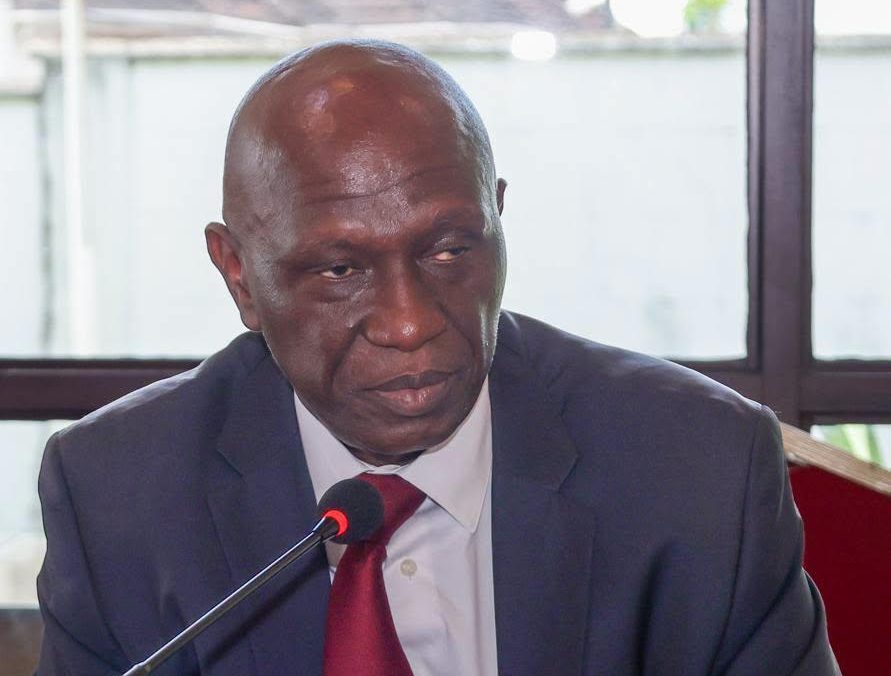
MONROVIA – The Master Infrastructure Development Agreement (MIDA) is signed, and the government has answered the debt question. President Joseph Nyuma Boakai, Sr. says the US$5.7 billion program creates no new general debt. His legal advisor, Cllr. Bushuben M. Keita, explains how. Payments will come from Bea Mountain Mining Company (BMMC) revenues that would otherwise reach the treasury. Call it forgone revenue rather than a loan. The cost still lands on the public purse. Keita also conceded a sharper risk. BMMC and associated companies could overcharge or supply inferior materials. The safeguard is an independent owner’s engineer, still to be hired. The paper protections look sound. Enforcement will decide MIDA’s worth. As THE ANALYST Stephanie M. Duncan reports,
MONROVIA, Liberia – President Joseph Nyuma Boakai, Sr. has signed the US$5.7 billion (L$1.04 trillion) Master Infrastructure Development Agreement (MIDA), describing it as a historic investment aimed at addressing Liberia’s longstanding challenges in electricity and road infrastructure.
Speaking at the signing ceremony at the Executive Mansion on Wednesday, November 25, Boakai said the agreement represents the largest integrated infrastructure program ever conceived in Liberia and is intended to lay the foundation for the country’s economic transformation.
The President thanked members of the government, ministers, and other officials who participated in reviewing, negotiating, and debating the agreement, saying their collective efforts had brought the country to this stage. “Today marks a historic day for Liberia,” Boakai said, reiterating his call for Liberians to “think Liberia, love Liberia, and build Liberia.”
TWO CONSTRAINTS: POWER AND ROADS
The agreement is designed to address two major constraints to Liberia’s development: inadequate electricity supply and poor road infrastructure. Under the agreement, four new power plants are expected to add approximately 270 megawatts of electricity to the country’s current generation capacity, with the potential to expand power generation beyond 1,000 megawatts as the economy grows.
Boakai said the agreement also provides for the development of major water reservoirs, including the VIA and SP-4 dams, to support electricity generation throughout the year, particularly during the dry season. He said the reservoirs would help stabilize water supply and ensure that hydropower facilities operate more consistently, reducing the seasonal disruptions that have affected electricity production.
The agreement also includes the construction of new transmission lines and the reinforcement of the national electricity grid to ensure that power generated is distributed beyond Monrovia. In addition to energy infrastructure, 14 major road and bridge projects have been earmarked for support under the agreement.
Boakai said the projects align with his administration’s ARREST Agenda for Inclusive Development, which seeks to extend government services and development opportunities to all regions of Liberia. He emphasized that the benefits of the agreement would extend beyond electricity and road construction, particularly for households, businesses, farmers, and public institutions.
BENEFITS FOR HOMES AND BUSINESSES
According to the President, reliable electricity would allow children to study at night, enable families to preserve food, and help hospitals and clinics operate essential medical equipment. He said the agreement would also provide electricity for small businesses, including welders, tailors, barbers, and shopkeepers, while supporting the growth of industries and the production of goods made in Liberia.
Boakai further said improved electricity and road connectivity would help farmers transport produce to markets, reduce food waste, and create opportunities for agricultural processing and value addition. He expressed concern that many factories and businesses are concentrated in Monrovia, where the cost of living is significantly higher than in rural communities. The President said the agreement could help change that pattern by creating opportunities for industries and businesses to expand beyond the capital, bringing employment and economic activity closer to rural communities.
KEITA: NO DEBT TRAP
Providing an overview of the MIDA, Cllr. Bushuben M. Keita, Legal Advisor to the President, said the financing arrangement had been structured to avoid placing Liberia in a debt trap. Keita explained that the agreement is tied to Bea Mountain Mining Company (BMMC) and its associated arrangements, with payments expected to come from revenues that would otherwise accrue to the Government of Liberia.
He said the agreement had been ring-fenced to ensure that the government would not incur general debt obligations unrelated to the project. According to Keita, the government believes the infrastructure program will largely pay for itself through the revenue streams associated with the agreement. He added that if any obligations remain after the construction period, continuing revenues from the project would be used to settle them within the shortest possible time.
BMMC’S US$500 MILLION FACILITY
Boakai said the government had arranged with BMMC to generate new revenue streams through cooperation beginning in 2027, using rising gold prices to help finance the projects. He also disclosed that BMMC had agreed to establish a US$500 million (L$91.18 billion) refinancing facility to ensure that projects do not run out of funds and stall during construction. The President said the facility would help maintain the flow of financing throughout the implementation period.
GUARDING AGAINST OVERCHARGING
Keita said the government had also taken steps to protect Liberia’s interests and ensure value for money under the agreement. He acknowledged concerns that BMMC, together with Mapa and associated companies, could potentially overcharge the government or provide inferior materials.
To address those concerns, he said the agreement includes audit protections and provisions for an independent owner’s engineer to monitor project implementation. The owner’s engineer is expected to oversee construction activities, assess the quality of materials, and identify possible overcharging or other irregularities during the project.
Keita said the agreement also provides for penalties against the company if it is found to have overcharged the government. He acknowledged that the project carries risks but said those risks could be minimized through proper monitoring and protection of the country’s interests. The government, he said, is seeking to engage highly qualified international engineering experts to help oversee the implementation of the infrastructure program.
FIVE-YEAR DELIVERY TARGET
Boakai said his administration’s priority is to deliver the infrastructure projects within five years. He disclosed that the biomass plant and transmission lines are expected to be completed within two years, while the broader infrastructure program will be implemented over the five-year period.
VIA RESERVOIR AND FUTURE EXPANSION
Keita said the VIA reservoir would provide the foundation for future expansion of Liberia’s electricity generation capacity. He explained that while the initial project would not necessarily install all the turbines, the reservoir would allow the government to add more generating units as demand for electricity increases.
Keita said the country could eventually expand its power generation capacity to at least 1,000 megawatts, and potentially more. He argued that the project would help Liberia overcome one of the major barriers to attracting investment, noting that the country had previously lost investment opportunities because it lacked sufficient electricity to support businesses and industries.
BACKBONE OF A MODERN LIBERIA
Boakai said the agreement would establish the economic backbone of a modern Liberia, creating opportunities for employment, industrial growth, and improved living conditions. He called on Liberians to support the country’s development efforts, saying the agreement represents a major step toward addressing infrastructure challenges that have hindered national progress for decades.
The President concluded by thanking all those who participated in the negotiations. He expressed hope that the projects would be completed and deliver tangible benefits to the Liberian people.
See more Liberia News Network stories in Google Search by adding LNN as one of your Preferred Sources.
★ Add LNN as a Preferred Source