
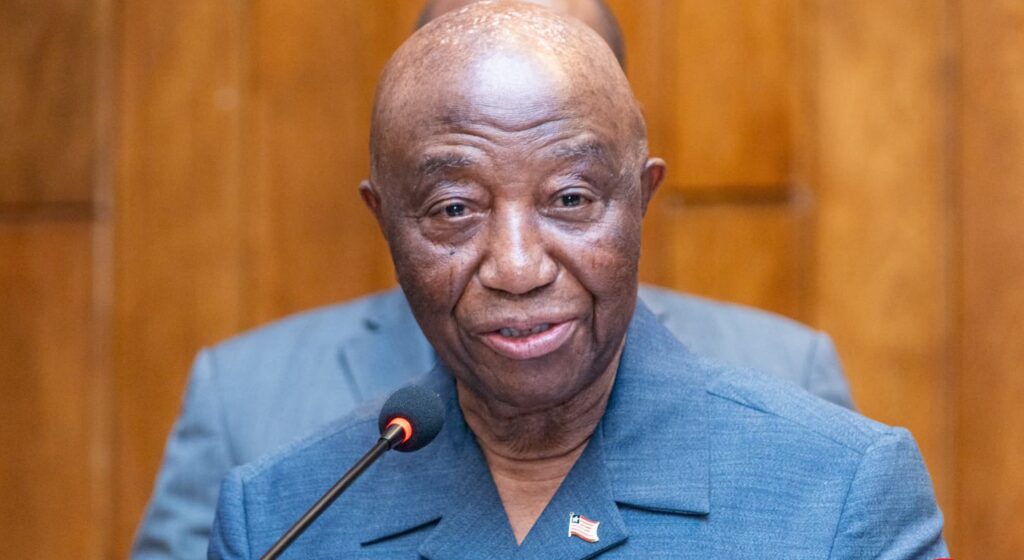
MONROVIA, LIBERIA — Importers, manufacturers and businesses operating in Liberia’s commercial sector are facing a revised trade protection framework following President Joseph Nyuma Boakai’s issuance of Executive Order No. 172, which introduces new import surcharges, adjusts existing rates and establishes additional compliance conditions for selected products.
The order, signed on November 2, 2026, extends and renews Executive Order No. 156, maintaining the government’s intervention in selected product markets to protect domestic manufacturing from competition arising from imported goods.
Unlike a general import restriction, the renewed policy establishes product-specific charges based on designated Harmonized System codes, meaning that the applicable surcharge depends on the classification of goods entering or leaving the country.
The revised schedule covers a broad range of consumer goods, food products, industrial materials and construction-related supplies, placing the Liberia Revenue Authority at the center of the implementation process.
Among the products receiving attention is imported flour, which will attract a surcharge of US$0.25 per kilogram. The provision also introduces conditions concerning the price of locally manufactured flour, stating that it should not exceed US$35, while wheat bran is to be tariffed under HS Code 1101.00.
The order further provides for the sale of flour to local farmers through the Ministry of Commerce and Industry at US$2 per 50-kilogram bag, although the exact operational arrangements will require clarification from the relevant government institutions.
Imported biscuits will attract US$0.20 per kilogram, while eggs are assigned a charge of US$0.45 per kilogram. However, the egg provision states that there should be no increase above US$50 per carton, introducing a price-related condition into the protection framework.
Soap products, including bleach, antiseptic and disinfectant products, hand and body wash, bathing and toilet soap, and laundry soap, are assigned a new rate of US$0.25 per kilogram. The order also states that the local sale price of soap will be determined following an investigative review.
For other consumer products, the 10 percent surcharge on tissue and paper towels is retained, as is the 10 percent charge on soft drinks.
The revised framework also introduces new provisions for detergents, assigning a charge of US$0.25 per kilogram to detergent powder, liquid detergent, dishwashing liquid and toilet bowl cleaners.
Natural honey is assigned a new 20 percent surcharge, while bugle chips made from corn or flour will attract a new 15 percent rate.
One of the notable changes concerns the construction and steel sector. The surcharge on deformed bars and steel rods is reduced from US$350 to US$200 per ton, while the order also lists square bars among the affected steel products.
PVC pipes, fittings and tubes are assigned a 10 percent surcharge under the revised schedule, replacing the previous 25 percent rate.
The plywood category receives a new 40 percent surcharge, subject to a condition that the sales price should not exceed US$5. The order also retains the US$80-per-ton charge on exported metal scrap.
These adjustments have implications for importers, distributors, manufacturers and businesses that rely on the affected products. The actual financial impact will depend on the applicable customs classification, quantity imported, valuation and the rate assigned to each product.
For businesses operating in the construction sector, the reduction in the surcharge on deformed bars and steel rods could provide some relief compared with the previous rate. However, the continued charge on PVC products and the introduction of the plywood rate will require importers and suppliers to assess their pricing and procurement arrangements.
The order also makes an important distinction between the benefits extended to local manufacturers and the obligations attached to those benefits.
Manufacturers benefiting from the protective measures must comply with all applicable tax and customs laws, observe the Liberia Revenue Authority’s Fiscal Device Regulations, meet electronic fiscal reporting requirements and maintain the necessary regulatory and operating licenses.
Failure to meet these obligations could result in the suspension or withdrawal of benefits under the order.
The government has assigned the Liberia Revenue Authority, in collaboration with the Ministry of Finance and Development Planning, responsibility for assessing, collecting and enforcing the new charges through existing customs and revenue procedures.
The Ministry of Finance and the LRA must also publish the applicable rates, affected products and implementation guidelines to ensure that importers, manufacturers and other stakeholders understand their obligations.
Meanwhile, the Ministry of Commerce and Industry, the Ministry of Finance and the LRA are required to monitor the implementation and impact of the policy and advise the President on any necessary adjustments.
The one-year duration of the order means that the government will have an opportunity to assess whether the revised charges are producing the intended industrial benefits or creating unintended consequences for businesses and consumers.
A central issue will be whether the additional costs imposed on selected imported products translate into stronger domestic production rather than simply higher market prices.
For the policy to achieve its stated objectives, local manufacturers must demonstrate their ability to supply sufficient quantities, maintain acceptable standards and offer competitive prices. Otherwise, consumers and businesses could face higher costs without receiving the benefits of stronger domestic competition.
The government must also ensure that the implementation process is transparent, particularly regarding product classification, customs valuation, applicable rates and the conditions attached to locally manufactured alternatives.
Executive Order No. 172 takes effect immediately upon publication and remains in force for one year unless revoked, modified, renewed or otherwise extended in accordance with law.
As Liberia renews its industrial protection policy, the challenge will be balancing the interests of domestic manufacturers with those of importers, commercial operators and consumers.
The measure provides local industries with another opportunity to compete in the domestic market. Whether that opportunity produces affordable products, stronger businesses and additional employment will depend on the quality of implementation and the willingness of manufacturers to deliver measurable results.
See more Liberia News Network stories in Google Search by adding LNN as one of your Preferred Sources.
★ Add LNN as a Preferred Source