n
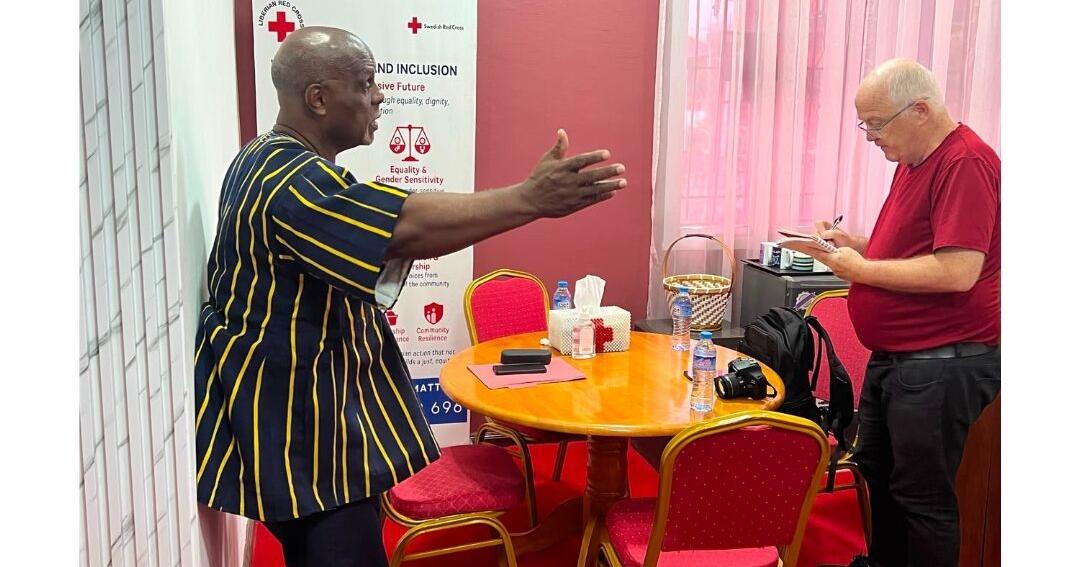
Ten years after Ebola swept through Liberia and claimed thousands of lives, the world is still turning to this small West African nation for answers. On Sunday, in a wide-ranging conversation, Chris McCall of The Lancet’s World Report, the news section of one of the world’s oldest and most trusted medical journals, sat down with Gregory T. Blamoh, Secretary General of the Liberia National Red Cross Society (LNRCS), to revisit an outbreak that reshaped the country’s approach to public health emergencies.
The conversation was part of a broader examination of how nations once devastated by epidemics have turned hard-won experience into lasting institutional memory.
“Our success in the Ebola response was collective,” Blamoh said. “Every Liberian was involved and learned from the response. Systems have been put in place, and every Liberian is fully aware of Ebola. And if we were to have any recurrence, the impact will not be as devastating as the first outbreak.”
Community volunteers built that collective response on the ground, many mobilized through the LNRCS.
During the 2014 outbreak, Red Cross volunteers trained, equipped, and trusted by their neighbors stood on the front lines, working across four areas of intervention that remain central to the organization’s emergency work today: Safe and Dignified Burial, Risk Communication, Contact Tracing, and Psychosocial Support.
Ten years on, those four pillars remain embedded in Liberia’s emergency preparedness architecture.
The LNRCS has continued training volunteers, strengthening early warning systems, and keeping communities informed work that has left the country better prepared for future public health emergencies.
Among the most sensitive and, at the time, most misunderstood interventions was Safe and Dignified Burial. Ebola spreads readily through contact with the bodies of the dead, making traditional burial practices a serious transmission risk.
Working in full protective equipment, 240 LNRCS-trained burial team members took on the difficult task of safely managing the remains of 3,820 Ebola victims while preserving as much dignity and cultural respect as possible.
It required constant, careful engagement with grieving families, community members, and traditional leaders, building the trust needed to explain why long-held burial practices had to change to protect the living.
Alongside the burial teams, Red Cross volunteers led sustained awareness campaigns, going house to house, market to market, and community to community to explain how the virus spread and how it could be stopped. In a crisis defined as much by fear and misinformation as by the disease itself, these conversations became one of the response’s most powerful tools, correcting rumors, dispelling myths, and building trust.
The experience underscored a lesson that still shapes humanitarian response today: communities are not simply recipients of information, but essential partners in saving lives.
Volunteers also formed the backbone of contact tracing, systematically identifying and monitoring people who had been in contact with confirmed cases, following them through the 21-day incubation period, and alerting health authorities at the first sign of symptoms. This community-level monitoring helped catch potential cases early and contain chains of transmission before they could grow work that demanded discipline, persistence, and close coordination with health authorities.
The response also recognized the psychological toll of the outbreak on survivors, families, communities, and responders themselves.
Psychosocial support was woven into the Red Cross response, offering counseling and community-based care to help people navigate grief, stigma, fear, and trauma effects that, for many communities, lingered long after the outbreak was officially declared over.
A decade later, Liberia’s Ebola experience continues to demonstrate the value of preparedness, community trust, local leadership, and volunteer action. The Red Cross volunteers at the center of the response were more than emergency workers; they were neighbors and trusted voices who translated public health messages into action that saved lives.
Today, the systems and community networks strengthened during the Ebola response continue to inform Liberia’s readiness for future emergencies. As Blamoh put it, the experience “isn’t just history; it’s a roadmap other nations are learning from.”
Ten years later, the world is still listening to Liberia. And Liberia’s lessons still matter.
See more Liberia News Network stories in Google Search by adding LNN as one of your Preferred Sources.
★ Add LNN as a Preferred Source