
MONROVIA – A routine Armed Forces of Liberia recruitment exercise has unexpectedly ignited a national reckoning after a simple reading test revealed deep literacy challenges among aspiring recruits. What was intended as a standard screening tool quickly evolved into a powerful public moment, exposing structural weaknesses in Liberia’s education system while raising questions about fairness, dignity, and access to opportunity. As footage circulated and reactions intensified, the episode shifted from a military procedure to a broader societal reflection. At stake is more than recruitment standards; it is the intersection of national service, human potential, and systemic inequality. As THE ANALYST reports, the moment has forced Liberia to confront uncomfortable truths about preparation and opportunity
The Armed Forces of Liberia (AFL) recruitment exercise, typically a routine administrative process aimed at selecting new entrants into the nation’s military, has unexpectedly become a focal point of national debate following the public exposure of literacy challenges among applicants, triggering widespread reflection on education, opportunity, and the meaning of national service.
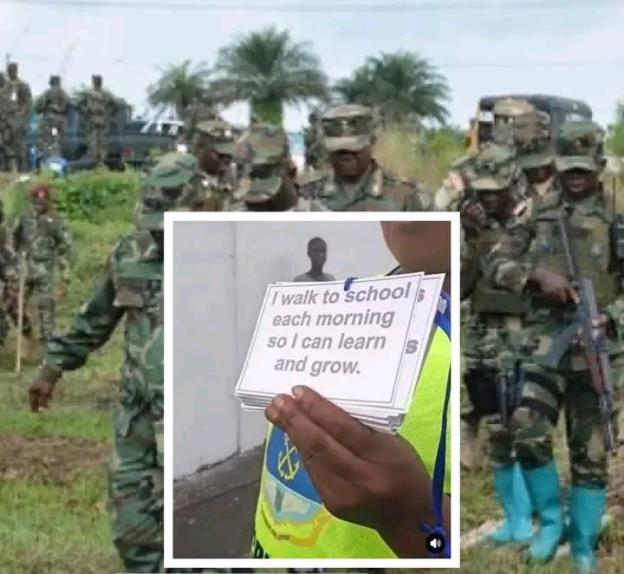
At the center of the unfolding discourse is a seemingly simple but revealing component of the recruitment process: a reading test. Applicants were asked to read basic English sentences such as, “The bright bird sings loudly in the early morning near the window,” “Soldiers train every day to keep our people safe and secure,” and “I walk to school each morning so I can learn and grow.”
What might ordinarily have passed as a standard assessment quickly took on broader significance when portions of the exercise were broadcast publicly. The footage revealed that many aspiring recruits struggled to read even these elementary sentences, a moment that resonated deeply across the country.
For some observers, the test represented a necessary standard—an essential filter in a modern military environment where literacy is not merely desirable but indispensable. Soldiers today must be able to read operational instructions, interpret intelligence reports, understand technical manuals, and adapt to increasingly sophisticated technologies.
From this perspective, the AFL’s approach reflects professionalism and a commitment to building a capable and effective force. The ability to read basic English sentences, proponents argue, is a minimum requirement for individuals entrusted with national defense responsibilities.
Yet, for many others, the moment was profoundly unsettling. Watching young men and women—many of whom had traveled long distances from rural counties—hesitate, stumble, or fall silent under the pressure of a public reading test revealed more than individual shortcomings. It exposed systemic gaps that extend far beyond the recruitment ground.
These were not merely applicants failing a test; they were citizens confronting the limitations of an education system that has struggled for years to deliver equitable access to quality learning.
Long before the cameras captured the moment, the story had already begun to unfold. At the BTC Barracks in Monrovia, hopeful recruits reportedly arrived days in advance, driven by a combination of ambition, economic necessity, and a desire to serve their country.
Some slept outdoors, others shared cramped spaces, enduring discomfort with determination. They came from across Liberia—Lofa, Grand Kru, Nimba, Maryland, and beyond—each carrying personal stories of aspiration and resilience.
For many, the recruitment exercise represented more than a job opportunity. It was a pathway to dignity, stability, and national contribution. In a country where employment opportunities remain limited, the prospect of joining the Armed Forces carries both economic and symbolic significance.
However, as the reading test unfolded in full public view, that aspiration collided with a stark reality. Standing before officials and cameras, unable to read a sentence designed for early-grade learners, many applicants experienced a moment of visible embarrassment and disappointment.
The emotional weight of that moment cannot be overstated. It is one thing to struggle privately; it is another to do so under public scrutiny, with the nation watching.
Public reaction has been sharply divided. On one side are those who defend the AFL’s standards, arguing that lowering requirements would compromise the integrity and effectiveness of the military.
“If you cannot read instructions, how can you protect a nation?” one observer asked, capturing a sentiment that prioritizes competence and preparedness.
On the other side are critics who question both the process and its presentation. The decision to broadcast the reading test has been described by some as insensitive, exposing applicants to unnecessary public humiliation.
Critics argue that such assessments should be conducted privately, preserving the dignity of individuals while still maintaining standards.
Beyond questions of dignity, there is a deeper concern about inclusivity. Liberia remains a country where access to quality education is uneven, particularly in rural areas where schools may be under-resourced, understaffed, or inaccessible.
In this context, strict enforcement of literacy requirements without corresponding efforts to address educational disparities risks excluding individuals who, with appropriate training and support, could become capable and disciplined soldiers.
The recruitment exercise, therefore, has become more than a military event. It has evolved into a mirror reflecting the state of Liberia’s education system.
How is it that young adults, motivated enough to travel across counties and endure hardship, cannot read basic sentences? The answer lies in a complex interplay of factors: limited access to schooling, inadequate infrastructure, teacher shortages, economic pressures that force children out of school, and systemic inequities that disproportionately affect rural communities.
The implications of these challenges extend beyond the military. Literacy is foundational to participation in modern society, influencing access to employment, civic engagement, and personal development.
When significant portions of the population struggle with basic reading skills, the impact is felt across all sectors—from governance and healthcare to business and technology.
The AFL recruitment exercise has inadvertently brought these issues into sharp focus, prompting a national conversation that goes far beyond the barracks.
For policymakers, the moment presents both a challenge and an opportunity. It highlights the urgent need for sustained investment in education, particularly in early-grade literacy, teacher training, and infrastructure.
It also raises questions about how institutions can balance standards with inclusivity—ensuring that opportunities for advancement are not limited by systemic barriers.
For the AFL, the challenge lies in maintaining professionalism while demonstrating sensitivity. Recruitment processes must uphold necessary standards, but they must also respect the dignity of applicants and recognize the broader context in which they operate.
As the exercise continues, there may be room for adjustments in how assessments are conducted and communicated, ensuring that they serve their intended purpose without unintended consequences.
For the applicants themselves, the experience is likely to leave a lasting impression. Behind every failed sentence is a story—a young person who dared to hope, who sought to serve, and who encountered a barrier that reflects larger societal challenges.
These stories, collectively, form a powerful narrative about aspiration, resilience, and the gaps that remain in Liberia’s development journey.
Ultimately, the AFL recruitment exercise has done more than identify potential soldiers. It has sparked a necessary and, perhaps, overdue conversation about literacy, opportunity, and national responsibility.
It has forced the country to confront uncomfortable truths, but also to consider pathways forward.
As Liberia reflects on this moment, one thing is clear: the strength of a nation’s military is not only determined by its training and equipment, but by the strength of the society from which it draws its ranks.
And in that sense, the reading test has revealed not just who is ready to serve—but how prepared the nation is to support them.
