
Published: October 12, 2026
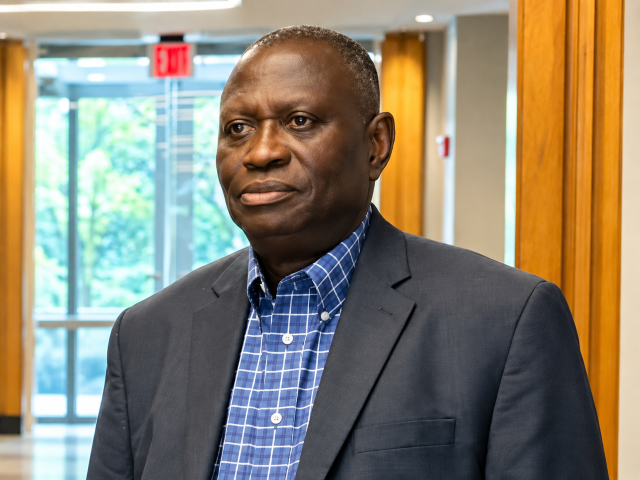
MONROVIA— For more than five decades, Emmanuel Nuku Reeves Sr. has built a career spanning government service, international finance, entrepreneurship and maritime administration. But beyond his professional accomplishments and business interests, the Liberian statesman and philanthropist has established a record of humanitarian contributions that supporters say reflects a philosophy of giving without expecting anything in return.
From providing educational opportunities and supporting community infrastructure to assisting vulnerable families and strengthening diaspora organizations, Reeves has sought to use his professional achievements and personal resources to improve the lives of others.
His humanitarian activities have reached students, elderly citizens, persons with disabilities, community organizations and individuals facing economic hardship, both in Liberia and abroad.
The chief executive officer of Reeves Investment Group LLC and Atlantic Finance LLC has combined decades of business experience with philanthropic initiatives focused on education, health care, community development and economic empowerment.
For Reeves, whose roots are deeply connected to Grand Bassa County, the relationship between personal success and public responsibility has become a defining feature of his professional and humanitarian journey.
His contributions have also earned national recognition, including one of Liberia’s highest honors, conferred by President Joseph Nyuma Boakai in July 2026.
Yet the broader significance of his work extends beyond awards, titles and public recognition. It lies in the opportunities his assistance has created for individuals and communities, particularly those with limited access to essential resources.
Reeves’ professional journey began in the 1970s when he entered public service as a cadet at Liberia’s Ministry of Finance during the administration of then-Finance Minister Stephen A. Tolbert.
A Liberian of Bassa heritage, he pursued his early education with an interest in accounting and financial management, eventually earning a bachelor’s degree in accounting from the University of Liberia.
His academic achievements later earned him a scholarship to study in the United States, where he obtained a graduate degree in finance and subsequently pursued another master’s degree.
The educational opportunities helped prepare him for a career in corporate America, where he developed experience in financial management, business operations and institutional leadership.
Over the years, Reeves expanded his professional interests into entrepreneurship and maritime administration, building a career that connected financial expertise with business development.
He eventually emerged as a business executive, leading Reeves Investment Group LLC and Atlantic Finance LLC while maintaining relationships with institutions and communities in Liberia.
Although his professional advancement created opportunities for personal financial success, Reeves also began directing resources toward humanitarian assistance, scholarships and community initiatives.
His experience reflects a broader pattern among Liberians in the diaspora who have used professional achievements abroad to support development efforts in their country of origin.
At the center of Reeves’ philanthropic activities is a principle that places humanitarian responsibility above personal recognition.
His approach reflects the belief that individuals who have benefited from educational, professional and economic opportunities can help create similar opportunities for others.
Rather than treating philanthropy solely as occasional charitable donations, Reeves has supported initiatives intended to produce both immediate relief and lasting community benefits.
His contributions have included educational assistance, health-related support, community infrastructure, financial assistance and institutional development.
The philosophy bears similarities to the African concept of Ubuntu, which emphasizes shared humanity, social responsibility and the interconnectedness of individuals and communities.
It also reflects the ethical principle associated with the Greek philosopher Aristotle that character is demonstrated through consistent conduct rather than isolated actions.
Within this understanding, generosity becomes more than the transfer of money or material possessions. It involves recognizing the needs of others and using available resources to help address them.
For Reeves, this approach has meant supporting individuals and organizations without necessarily making repayment, public acknowledgment or personal benefit a condition of assistance.
His philanthropic record illustrates how private resources can contribute to public welfare when directed toward education, community development and humanitarian needs.
One of Reeves’ notable humanitarian interventions occurred during Liberia’s 179th Independence Day celebrations in July 2026.
As part of the observance, he donated more than 500 bags of rice and dozens of mattresses to elderly residents and persons with disabilities in Grand Bassa County.
The donation targeted vulnerable individuals facing economic and social challenges, providing food and household necessities during the national celebration.
The initiative reflected his continued connection to Grand Bassa County and his commitment to supporting residents who face difficulties meeting basic needs.
While food and household assistance primarily address immediate concerns, such interventions can provide meaningful relief to families and individuals with limited financial resources.
Reeves’ philanthropic activities have also extended to community development initiatives designed to create longer-term benefits.
At a gathering of the Grand Kru County Development Association in the Americas, he contributed to the organization’s development efforts and encouraged diaspora groups to pursue sustainable projects rather than depend entirely on occasional charitable donations.
His engagement highlighted the importance of transforming diaspora contributions into investments capable of strengthening communities and expanding economic opportunities.
The approach recognizes that humanitarian assistance and sustainable development serve different but complementary purposes.
Immediate donations can help people experiencing hardship, while investments in education, infrastructure and economic activities can address some of the underlying conditions that contribute to poverty and limited opportunity.
Education has remained a significant component of Reeves’ humanitarian commitment.
Through scholarship initiatives and other forms of educational assistance in Liberia and the diaspora, he has reportedly supported thousands of individuals pursuing academic and professional advancement.
Such assistance has helped beneficiaries access educational opportunities that might otherwise have remained beyond their financial reach.
The importance of educational philanthropy extends beyond the immediate recipients.
Students who complete their education may later contribute to society as teachers, health professionals, entrepreneurs, public servants and community leaders.
In this way, educational assistance can generate benefits that extend across families and communities.
For a country such as Liberia, where financial hardship continues to affect access to quality education, private scholarships and institutional support can complement government efforts to strengthen human capital development.
Reeves’ contributions to schools, clinics and community facilities similarly reflect an interest in improving access to services that directly affect people’s daily lives.
Schools provide learning opportunities, clinics help communities access health services, and public facilities create spaces for social interaction and community activities.
These investments demonstrate how development can be experienced at the community level rather than measured exclusively through national economic indicators.
Although Reeves has built much of his professional career in the United States, his connection to Liberia has remained central to his philanthropic activities.
He is a founding member of the United Bassa Organizations in the Americas (UNIBOA), a diaspora institution involved in cultural preservation, education, community development and humanitarian initiatives.
Through his association with the organization, Reeves has contributed financial resources and institutional support to programs intended to strengthen connections between Liberians abroad and their communities at home.
He is regarded within UNIBOA as its highest individual contributor, reflecting years of support for the organization’s activities.
His contributions have also been recognized through community development projects and public facilities associated with his name.
Among them is UNIBOA’s decision to break ground for an event center in Grand Bassa County in his honor.
The initiative recognizes his longstanding involvement in the organization and his contributions toward its development objectives.
The Emmanuel Nuku Reeves Sr. Park in Grand Bassa County also stands as a public recognition of his association with community development.
While such facilities provide visible reminders of his contributions, their broader importance lies in the services and opportunities they can provide to surrounding communities.
Beyond Liberia and the Bassa community, Reeves’ humanitarian assistance has reportedly benefited individuals from different nationalities and backgrounds, reflecting a philanthropic outlook that extends beyond ethnic and geographical boundaries.
His activities illustrate the potential role of diaspora organizations in mobilizing financial resources, professional expertise and institutional networks for development.
Reeves’ decades of professional and humanitarian contributions received national recognition in July 2026 when President Joseph Nyuma Boakai admitted him into the Most Venerable Order of the Star of Africa with the rank of Grand Commander.
The honor recognized his longstanding contributions to public service, finance, entrepreneurship, maritime administration, philanthropy and community development.
It also marked a significant moment in a professional journey that began more than five decades earlier as a young government cadet.
The recognition highlighted the role private citizens and business leaders can play in national development outside elected or appointed government positions.
Through scholarships, mentorship, community investment and humanitarian assistance, individuals can contribute to national progress while operating within the private sector.
The significance of the occasion was further underscored when President Boakai dedicated the Geneva Reeves Johnson Event Center in St. John, Grand Bassa County, in honor of Reeves’ late mother.
The dedication took place a day after Reeves received the national honor.
By recognizing his mother, the ceremony also acknowledged the family background and values associated with his personal and professional development.
The two events connected national recognition with family legacy and community identity, highlighting both Reeves’ achievements and the influences that helped shape his life.
Reeves’ humanitarian activities also reflect the growing importance of partnerships between government, private businesses, diaspora organizations and local communities in addressing Liberia’s development challenges.
Although government remains primarily responsible for public policy, infrastructure and essential services, private contributions can help expand opportunities in areas where public resources are limited.
Scholarships can improve access to education, financial assistance can support vulnerable households, and investments in schools and clinics can strengthen community services.
Similarly, business development and entrepreneurship can create employment opportunities and contribute to economic activity.
For Liberia, the participation of diaspora communities is particularly important because Liberians living abroad possess financial resources, technical knowledge, professional experience and institutional connections that can support national development.
Reeves’ professional journey demonstrates how these resources can be mobilized through sustained engagement with communities and organizations in the homeland.
His involvement in diaspora institutions, educational initiatives and community development projects reflects a commitment to maintaining connections between his achievements abroad and the needs of people in Liberia.
However, the long-term value of such initiatives depends not only on the resources contributed but also on how effectively they are managed and sustained.
Projects that strengthen local institutions, improve access to services and expand economic opportunities can create benefits that continue beyond the initial contribution.
For Reeves, professional accomplishments, business interests and national honors represent only part of a much broader story.
His humanitarian record presents another measure of achievement: the number of individuals and communities whose circumstances have improved through access to assistance, education and development opportunities.
The student who receives financial support to remain in school, the elderly person who benefits from humanitarian assistance and the community that gains access to an educational or health facility each represent a different dimension of philanthropy.
Such contributions may not always attract widespread public attention, but their cumulative effects can influence families and communities over time.
Reeves’ story also raises a broader question about the responsibility of successful individuals toward the societies and communities from which they emerged.
His career demonstrates that professional achievement and humanitarian service need not be separate pursuits.
Financial success can provide resources for community investment, while professional experience can create opportunities for mentorship and institutional development.
His decades of engagement in both areas offer an example of how personal advancement can be connected to public benefit.
In a society where philanthropy is sometimes associated with political influence, publicity or personal recognition, Reeves’ approach emphasizes assistance that is not necessarily conditioned on immediate returns.
His work suggests that meaningful giving can take different forms, from providing food to vulnerable citizens to supporting educational opportunities and investing in community institutions.
The long-term significance of those contributions will ultimately depend on the opportunities created, the institutions strengthened and the lives improved.
For Emmanuel Nuku Reeves Sr., the journey from a young Ministry of Finance cadet to an internationally experienced business executive and nationally honored philanthropist has been accompanied by a sustained commitment to humanitarian service.
See more Liberia News Network stories in Google Search by adding LNN as one of your Preferred Sources.
★ Add LNN as a Preferred Source