
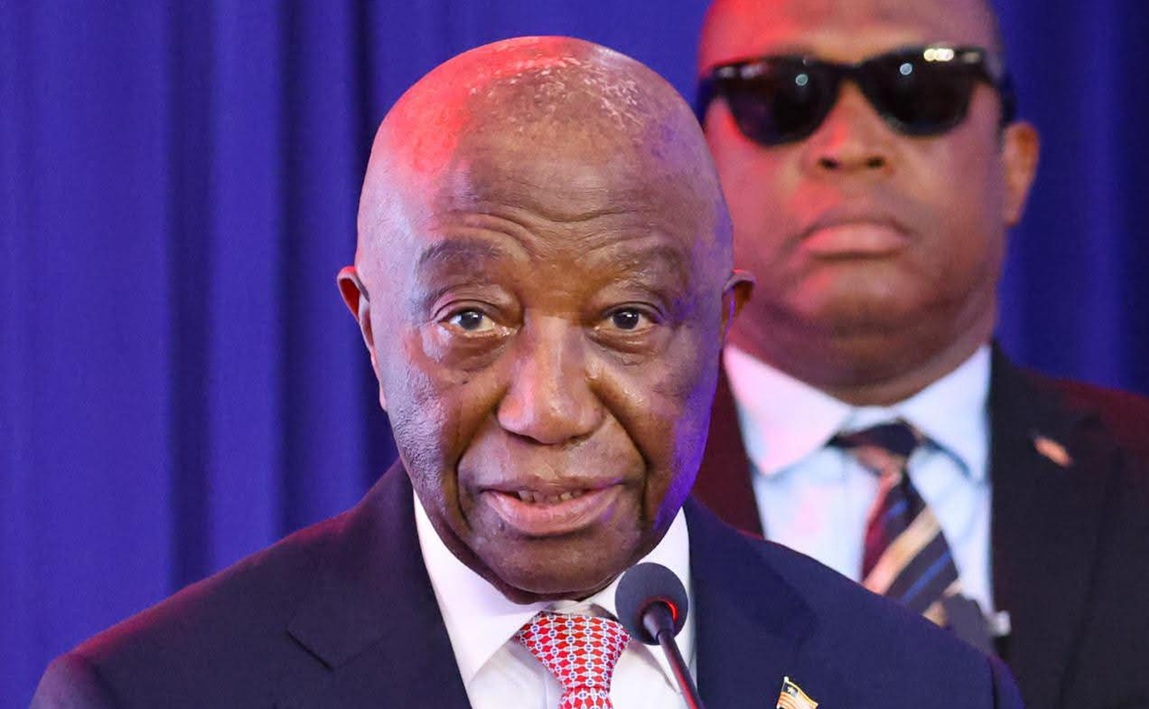
HARBEL, MARGIBI COUNTY — President Joseph Nyuma Boakai has announced an ambitious package of mining sector reforms, including plans to establish Liberia’s first gold processing facility within two years, create a National Mining Company of Liberia, and authorize the establishment of a sovereign wealth fund designed to convert the country’s finite mineral resources into long-term national financial assets.
Delivering the keynote address at the opening ceremony of the Liberia International Mining and Energy Conference and Expo (LIMEC 2026) at the Farmington Hotel on Wednesday, October 27, 2026, in Harbel, Margibi County, President Boakai said Liberia must move beyond extracting and exporting raw minerals toward a development model that retains more economic value within the country.
The President’s proposals signal a shift in the government’s approach to mineral wealth, with greater emphasis on domestic processing, state participation in mining investments, improved mineral governance, and long-term financial planning.
He told international investors, mining executives, energy developers, financiers, technical experts, and development partners that Liberia was prepared to welcome responsible investment but expected the sector to deliver benefits beyond mineral extraction.
“Natural resources alone do not guarantee transformation,” Boakai said, emphasizing the need for reliable infrastructure, affordable electricity, clear laws, capable institutions, and tangible benefits for communities hosting mining operations.
His message placed the future of Liberia’s mineral industry within the broader framework of the government’s ARREST Agenda for Inclusive Development, which seeks to connect economic growth with employment, infrastructure development, and improved living standards.
Among the most notable announcements was the government’s intention to establish Liberia’s first gold processing facility within two years, an initiative intended to reduce the country’s dependence on exporting unprocessed mineral commodities.
Under the proposed policy, gold extracted in Liberia would undergo primary and secondary refining at licensed domestic facilities to internationally recognized purity standards before export.
The initiative is expected to create opportunities for skilled employment, technical training, mineral processing services, and related businesses while increasing the economic value retained within Liberia.
For a country with established gold production and additional exploration prospects, domestic processing could help expand the economic activities associated with mining beyond extraction and transportation.
President Boakai said Liberia intended to contribute to the African Minerals Strategy Group’s continental push for greater value addition before minerals leave Africa.
The policy reflects a broader economic concern shared by many mineral-producing countries that export raw materials but import finished products, equipment, technology, and specialized services at higher costs.
Liberia’s challenge will be to translate the announcement into an operational facility supported by dependable electricity, adequate financing, modern processing technology, trained personnel, effective regulation, and a commercially viable supply of gold.
The government will also need to establish clear licensing and oversight arrangements to ensure that domestic processing requirements are implemented consistently and transparently.
Although the President announced the two-year target, his address did not specify the proposed facility’s location, projected processing capacity, total construction cost, financing arrangements, or the identity of potential investors.
Those details will be important in determining how quickly the proposal can progress from policy commitment to construction and eventual operations.
President Boakai also announced that the National Mining Company of Liberia would move the country toward more active state participation in mineral development through equity ownership and strategic investments.
The proposed model represents a departure from relying primarily on royalties, taxes, fees, and other government revenues generated by privately operated mining projects.
Through equity participation, the government could potentially secure a share of the financial returns generated by selected mining investments, depending on the ownership arrangements, financing structure, and commercial performance of individual projects.
The initiative could also give Liberia a more direct role in strategic decisions affecting the development of its mineral resources.
However, the success of a state mining company would depend on the strength of its governance arrangements, the professional competence of its management, the transparency of its investments, and its ability to operate on commercially sound terms.
Clear safeguards would be necessary to protect public funds, prevent political interference, disclose financial obligations, and ensure that investment decisions serve the national interest.
The President did not provide details in his address about the company’s proposed capitalization, ownership structure, initial projects, management arrangements, or implementation timetable.
These questions will become increasingly important as the government moves toward establishing the institution and determining how it will participate in the mining industry.
For investors, the company’s operating framework will help clarify how state participation will interact with existing mineral rights, private ownership, and future concessions.
For Liberians, the central test will be whether the initiative generates additional public value without exposing the national budget to poorly managed investments or excessive commercial risks.
In another major policy announcement, Boakai said the government had authorized the creation of the Liberia Sovereign Wealth Fund, which is intended to operate as an independent investment vehicle in line with the internationally recognized Santiago Principles.
The proposed fund would seek to channel a fixed percentage of mineral revenues into diversified investments in Liberia and international markets.
Its stated purpose is to transform revenue generated from finite natural resources into financial assets that can support long-term national development and provide economic security for future generations.
A sovereign wealth fund can help a resource-dependent country manage fluctuations in commodity prices by setting aside part of its revenues rather than allowing all mineral earnings to flow directly into annual government spending.
For Liberia, the initiative could offer an additional mechanism for managing mineral income, provided the fund is established with strong legal protections, transparent reporting, professional investment management, and independent oversight.
The reference to the Santiago Principles is particularly relevant because these internationally recognized guidelines promote transparency, sound governance, accountability, and prudent investment practices among sovereign wealth funds.
However, the President did not specify the percentage of mineral revenue that would be transferred into the proposed fund, the initial capitalization amount, the rules governing withdrawals, or the institutions responsible for monitoring its operations.
The relationship between the fund, the national budget, and existing public financial management arrangements will also need to be clearly defined.
Without enforceable safeguards, a fund established to preserve national wealth could face pressure to finance short-term expenditure or projects that do not offer adequate financial returns.
Its credibility will therefore depend not only on the government’s announcement but also on the legal and institutional arrangements that govern its establishment and daily operations.
The proposed reforms come as the government seeks to increase the contribution of mining to national economic growth and public revenue.
According to figures presented by President Boakai, mining expanded by 17 percent, while Liberia recorded overall gross domestic product growth of 5.1 percent, with real GDP growth of 5.5 percent projected.
The President said mining contributed 18.4 percent of real GDP in 2025 and was projected to account for 19.4 percent in 2026.
He also reported that the sector contributed approximately US$124 million directly to national revenue in 2024 and US$432 million to domestic revenue to date.
Boakai linked the performance of the mining and energy sectors to the government’s projected domestic revenue milestone of US$1.1 billion for 2026, compared with US$699 million in 2024.
These figures were presented in the presidential keynote address. Their precise accounting periods and classifications will be important when assessing the sector’s contribution to government finances.
The government intends to use increased domestic revenue to support public services and development priorities, including infrastructure, education, and healthcare.
Nevertheless, higher mineral production and revenue do not automatically translate into improved living conditions. The results will depend on how public funds are managed, how employment opportunities are distributed, and whether mining communities receive measurable benefits.
Beyond the three major initiatives, Boakai announced plans to improve Liberia’s geological information systems and strengthen the administration of mineral rights.
The government intends to advance geological mapping, analyze new exploration findings, improve mineral information management, and expand qualified investors’ access to technical data through a coordinated national exploration programme over the next five years.
A US$30 million airborne geophysics data collection programme is planned under the Millennium Challenge Corporation compact to improve understanding of Liberia’s mineral potential, including critical and strategic minerals.
Such information can help investors identify prospective deposits, assess geological risks, and determine where additional exploration spending may be justified.
The government also plans to review the Minerals and Mining Law and related regulations to reflect changing investment practices, environmental standards, technology, and national development objectives.
President Boakai said the administration would strengthen the Ministry of Mines and Energy and relevant institutions, improve digital licensing and mineral information systems, expand access to official fee schedules, and monitor mineral license holders.
He stressed that mining operators must comply with Liberia’s laws, pay required taxes and fees, meet environmental obligations, and respect workers and host communities.
The planned reforms will require effective enforcement to ensure that licensing procedures remain transparent and that companies are held accountable for their contractual and legal responsibilities.
Boakai’s message to the international mining community was that Liberia welcomes investment but expects partnerships to support domestic enterprise, technology transfer, skills development, and employment.
The country possesses substantial iron ore, gold, diamond, and other mineral prospects, including critical minerals and rare earth elements that may offer additional opportunities as exploration advances.
However, the President said the government’s ambition extended beyond the extraction of these resources.
The administration wants mineral production to support domestic processing, industrial development, infrastructure, and decent jobs while helping build a more competitive and resilient economy.
For Liberia to achieve that objective, the announced initiatives will have to be supported by credible implementation plans, adequate infrastructure, commercially viable projects, and strong public institutions.
The gold processing facility, National Mining Company, and Sovereign Wealth Fund each represent a different component of the proposed strategy. Together, they seek to change how Liberia participates in the financial and industrial benefits generated by its mineral resources.
The next phase will be measured by the passage of necessary legislation, the establishment of transparent institutional arrangements, the mobilization of financing, and the commencement of projects capable of delivering verifiable results.
See more Liberia News Network stories in Google Search by adding LNN as one of your Preferred Sources.
★ Add LNN as a Preferred Source