
A tense border confrontation between Liberia and Guinea has entered a delicate new phase after Guinean soldiers who had crossed into Liberian territory reportedly took down their flag early Wednesday morning and retreated back across the border, easing immediate fears of a military standoff.
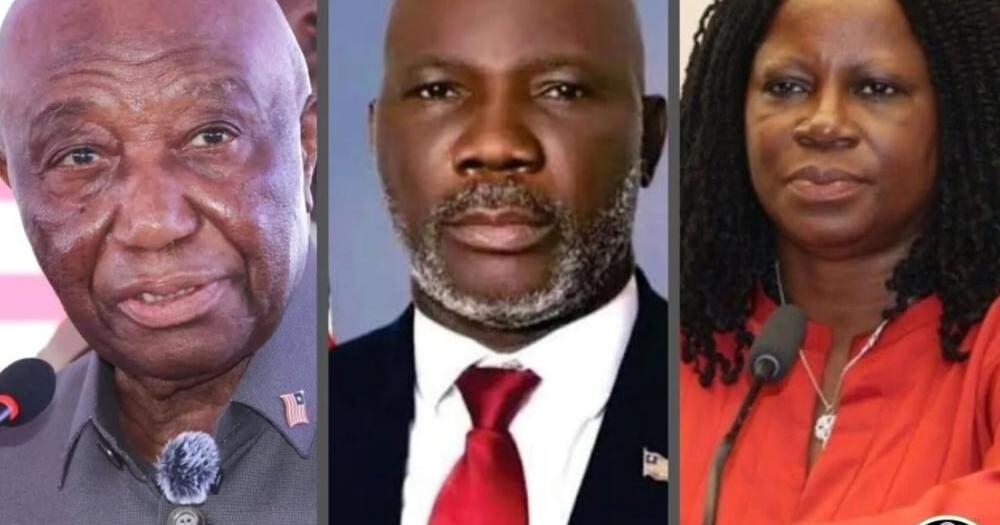
Yet even as the soldiers withdrew, the episode has triggered one of the most serious national security debates in Liberia in years, prompting President Joseph Nyuma Boakai to consult with leaders of the House of Representatives of Liberia and the Liberian Senate on the constitutional powers available to the government in responding to what officials consider a foreign military incursion.
The consultations took place Wednesday evening in Monrovia, following days of rising tension along the northern frontier in Lofa County, where Guinean troops had earlier crossed into Liberian territory and raised their national flag at the Sorlumba Border Point.
While the withdrawal appears to have temporarily diffused the situation, many believe that the incident has exposed deep vulnerabilities in Liberia’s border security and revived longstanding disputes over the frontier along the Makona River.
The confrontation unfolded over several days, beginning with reports that Guinean soldiers entered the disputed zone to halt operations by a Liberian company engaged in sand mining along the Makona River.
The company, identified as BK Enterprise Inc., had been extracting sand from the riverbed—an activity Guinean authorities claim occurred within their territorial jurisdiction.
Guinean officials also suspected that the equipment could have been used to extract minerals such as gold or diamonds.
But what began as a dispute over mining operations quickly evolved into a broader geopolitical confrontation.
According to witnesses in Foya District, Guinean soldiers later advanced deeper into Liberian territory, removed the Liberian flag, and raised the Guinean flag—an act widely interpreted as a symbolic assertion of sovereignty.
Residents described scenes of confusion and fear.
“This is our land. We have always known this place to be Liberia,” said youth leader Teetoe Momoh. “Seeing foreign soldiers come and plant their flag here is frightening for our people.”
Witnesses also reported helicopters delivering Guinean troops to the area, while Liberian security officers stationed at the border were reportedly asked to withdraw from certain positions.
However, in a surprising development early Wednesday morning, residents reported that the Guinean soldiers removed their flag and withdrew across the Makona River back into Guinea.
The move appeared to follow intensified diplomatic engagement between the two governments.
Despite the retreat, the episode has already triggered a full-scale national security review in Liberia.
Government officials say the incursion raised serious concerns about territorial integrity and the protection of citizens living near the border.
Boakai Engages Legislature on National Defense
Against this backdrop, President Boakai convened consultations with leaders of Liberia’s 55th Legislature, a move that underscores the constitutional dimensions of the crisis.
Under Liberia’s 1986 Constitution, responsibility for national defense is shared between the Executive and the Legislature.
Article 34 grants lawmakers the authority to provide for the security of the Republic, raise and support the armed forces, and declare war.
The President, meanwhile, serves as Commander-in-Chief of the Armed Forces of Liberia, responsible for directing the country’s military response to threats against national sovereignty.
Political observers say the President’s engagement with lawmakers signals that the situation has moved beyond routine diplomacy.
“When a president begins formal consultations with lawmakers on a border incursion, it usually indicates that the matter has entered the national security decision-making space,” one legislator said.
The House of Representatives has already voted to summon the government’s Joint Security apparatus to appear before plenary for hearings on the incident.
The crisis has also drawn attention to the constitutional provisions governing emergency powers.
Under Article 86 of the Liberian Constitution, the President may declare a state of emergency in consultation with the Speaker of the House and the President Pro Tempore of the Senate.
Such a declaration is permitted when the country faces a “threat or outbreak of war” or other situations posing a “clear and present danger” to national security.
Although officials say no emergency declaration is currently planned, constitutional experts note that the President’s consultations with legislative leaders reflect the procedural steps required should the situation deteriorate.
Government Urges Calm
In an official statement issued late Wednesday evening, the government, through the Ministry of Information, urged citizens to remain calm while diplomatic efforts continue.
The administration confirmed that a high-level inter-ministerial delegation—including officials from the Ministries of Defense, Foreign Affairs, Justice, and Local Government—had been dispatched to engage Guinean authorities.
“The Government assures all citizens and residents that it has taken seize of the situation unfolding along the Liberia–Guinea border and is actively engaging the matter through established diplomatic channels,” the statement said.
Officials emphasized that Liberia remains committed to resolving the dispute peacefully.
The government also urged citizens to avoid spreading unverified reports that could inflame tensions.
The Makona River boundary between Liberia and Guinea has long been sensitive.
Much of the frontier was loosely defined during the colonial era, leaving sections poorly demarcated.
Border disputes have occasionally erupted over the years.
A notable incident occurred in 2010 when Guinean troops reportedly raised their flag in another area of Lofa County.
A Liberian Journalist, who grew up near the border, said the latest confrontation echoes a troubling pattern.
“All through my childhood in Lofa, the Makona River was the boundary between Liberia and Guinea,” he said. “To now threaten people and ask them to leave land they have always known as their home is deeply troubling.”
Regional Implications
The episode has also drawn attention to the increasingly assertive posture of Guinea’s leadership under President Mamady Doumbouya, who seized power in the 2021 Guinean coup d’état before later transitioning into a civilian presidency.
Security experts say the confrontation bears similarities to the long-running Yenga border dispute between Guinea and Sierra Leone, where Guinean troops maintained a controversial presence for years.
“Military-led governments often consolidate domestic support by projecting strength externally,” said a former Liberian security official who served during the administration of Charles G. Taylor. “Border disputes can become instruments of nationalism.”
For the Liberian government, the challenge now lies in balancing firm defense of national sovereignty with diplomatic restraint.
Liberia currently holds a seat as a non-permanent member of the United Nations Security Council, a position that carries expectations of responsible international leadership.
Some observers argue that the government’s measured response reflects that responsibility.
“Restraint should not be mistaken for weakness,” a security analyst said. “Diplomacy backed by readiness is often the strongest demonstration of national confidence.”
Despite the withdrawal of Guinean troops, fear still lingers among residents living near the frontier.
Some families in villages around Sorlumba reportedly began leaving their homes during the height of the standoff.
“What people want most right now is reassurance,” a community elder said. “They want to know that their government will protect them.”
While the immediate confrontation appears to have eased, the broader implications of the incident remain unresolved.
For Liberia, the episode represents a stark reminder of the strategic importance of its borders and the need for stronger monitoring and security infrastructure in remote frontier regions.
For the government of President Boakai, the crisis has become a defining early test of leadership—one that demands both diplomatic finesse and firm defense of national sovereignty.
As consultations continue between the executive branch and the Legislature, the central question remains:
Was this a temporary misunderstanding—or the opening move in a deeper territorial contest along the Mano River frontier?
