
By Seltue Karweaye Sr.
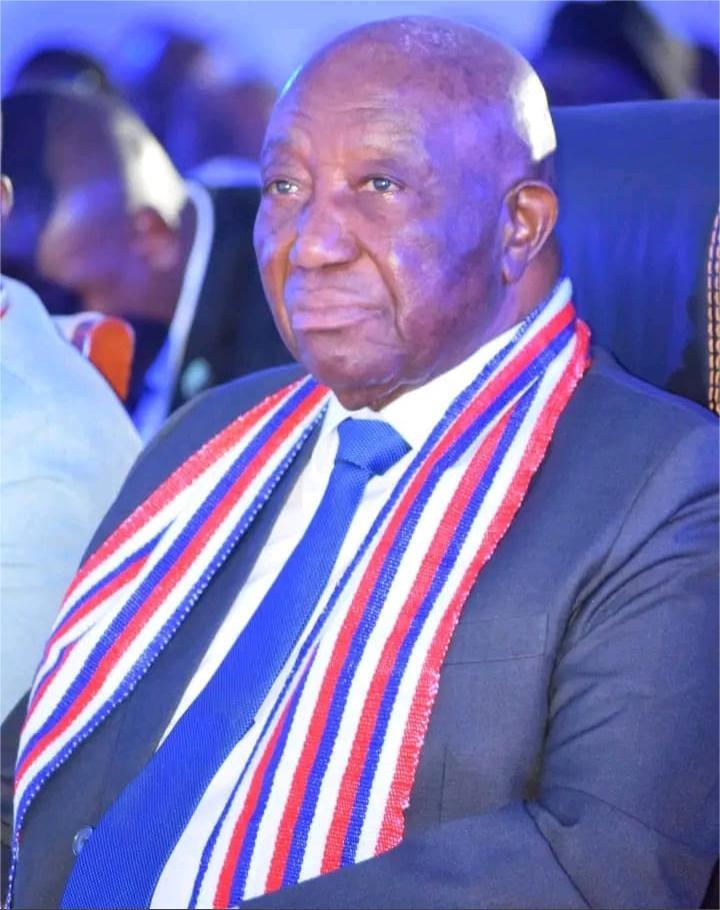
It is often said that one person with belief and courage can wield social power equal to ninety-nine who are driven solely by their interests. Liberia appears to have found such a leader in President Joseph Nyuma Boakai, who took office on January 22, 2024, bringing over 40 years of public service experience.
However, the widely held view that Boakai embodies the spirit of “the Rescuer,” capable of dismantling the entrenched corrupt system in the country, may not fully capture the reality. The persistent corruption crisis and his government’s apparent inability or unwillingness to tackle the pervasive impunity of offenders raise significant concerns.
Upon assuming office, Boakai dedicated himself to establishing an Assets Recovery and Property Retrieval Task Force, an initiative backed by the public that aimed to seize state assets reportedly stolen or misappropriated by previous officials. Yet, more than two years later, the anti-corruption agenda he championed appears to be losing momentum.
The current state of Liberia’s democracy under Boakai’s leadership resembles a framework governed by self-interest and profit rather than the rule of law. The troubling truth is that the Boakai/Koung government has yet to address high-level conflict of interests and corruption effectively, failing to hold powerful officials and politicians accountable, and has not initiated the necessary reforms to strengthen the justice system. These reforms are critical for creating a robust framework that could deter systemic corruption and provide justice for those affected.
As of early 2025, while the Task Force continues its work, it has faced mounting criticism. Critics allege a slow start, accusations of political witch-hunting, and a lack of substantial progress in recovering stolen assets. For Boakai to fulfill his promise as a transformative leader, decisive action is needed to restore public trust and effectively combat corruption in Liberia.
In Liberia, corruption remains a glaring issue in public view, undermining trust in governance. A small group of relatives and friends of President Boakai has come under fire for blurring the lines between their official responsibilities and personal business interests, yet they have so far evaded legal consequences. Reports from 2024 reveal that yellow construction machinery was sent to Liberia via Mamaka Bility, the Minister of State without portfolio, rather than through the designated Ministry of Public Works. The controversial “Yellow Machine” deal has raised serious eyebrows, especially after the Public Procurement and Concessions Commission (PPCC) stated it had no record of participating in the agreement, thus questioning adherence to the PPCC Act.
Analysts, civil society organizations, and concerned lawmakers assert that the absence of a formal, transparent bidding process constitutes a violation of the Public Procurement and Concessions Act. Originally described as a “donation” or “gentleman’s agreement,” the arrangement for 285 machines was later clarified as a $22 million purchase, planned for payment over three years. This shift has fueled accusations of mismanagement of public resources and prompted urgent questions about the transparency of the acquisition process.
Furthermore, President Joseph Boakai faces mounting criticism and allegations of nepotism and conflicts of interest. His appointment of individuals perceived to be his family members or close associates to critical positions, especially at the Central Bank of Liberia (CBL), has been particularly contentious. In early 2024, reports confirmed that Jake Kabakolie is a nephew of President Boakai. Allegations surfaced suggesting that Kabakolie, in his influential role, engaged in internal maneuvering within the CBL, reportedly brokering deals with deputy governors to shield them from potential suspension.
Criticism has been strongly directed at the President regarding the contentious appointment of Henry F. Saamoi as the Acting Executive Governor of the Central Bank of Liberia, a position he now occupies permanently. Allegations have surfaced suggesting that Saamoi is a relative of the President, which raises serious concerns about adherence to principles of good governance and ethical conduct in public office. Opponents have denounced this appointment as a classic case of “daylight nepotism,” arguing that it undermines public trust and sets a dangerous precedent for favoritism in government positions.
Moreover, the appointment of James B. Wilfred to the role of Deputy Governor for Operations has intensified scrutiny. Wilfred’s name has frequently come up in discussions concerning potential familial ties or close connections to influential figures within the government, adding to the perception of impropriety. Compounding these concerns, a report issued by the General Auditing Commission (GAC) disclosed that Wilfred had an outstanding debt of over $90,000 to the bank at the time he received his appointment. This situation not only raises red flags about a potential conflict of interest but also threatens the integrity and accountability of leadership within the Central Bank. This interconnected web of interests underscores an urgent need for reform and accountability in Liberia’s governance.
The recent outcry over the judgment in the US$6.2 million economic sabotage case, which acquitted former Minister of Finance Samuel Tweah of all charges, underscores a growing frustration among the public regarding the government’s anticorruption efforts. Tweah’s discharge from allegations of criminal conspiracy, economic sabotage, criminal facilitation, and theft of public funds indicates that citizens are no longer willing to tolerate excuses for the apparent failures in the fight against corruption.
This high-profile case involved five former officials from the Coalition for Democratic Change administration, including Samuel D. Tweah Jr., former Acting Justice Minister Nyenati Tuan, former National Security Advisor Jefferson Karmoh, former Financial Intelligence Agency Comptroller General D. Moses P. Cooper, and former Financial Intelligence Agency Director General Stanley S. Ford.
The trial at Criminal Court “C” in the Temple of Justice spanned 46 days, focused on grave allegations involving the disbursement and misuse of over US$6.2 million designated for national security operations during former President George Manneh Weah’s administration. Prosecutors asserted that these funds were unlawfully withdrawn and misappropriated under the misleading pretext of national security spending, circumventing critical documentation and accountability measures. The defendants faced a wide range of accusations, including criminal conspiracy, economic sabotage, theft of public funds, criminal facilitation, theft of property, and money laundering.
The public’s response to the verdict marks a crucial juncture in the ongoing demand for transparency and accountability in governance. The prosecution’s case faced a considerable blow during the cross-examination of Baba Mohammed Boika, the lead investigator from the Liberia Anti-Corruption Commission (LACC). Boika revealed that his inquiry “did not extend to how the funds were spent” and was limited to identifying which institutions received them. He noted that several security agencies denied having received the L$1.055 billion and US$500,000 allocated.
One pivotal question that went unanswered in court was which joint security agency actually received that money. To prove economic sabotage, willful intent to damage the economy must be established, yet the State failed to show that Tweah intended to sabotage or personally benefited from the funds. Tweah asserted in court that “there was no proof, no convincing argument” of intent. Ultimately, the jury acquitted Samuel Tweah, a man currently under U.S. sanctions for significant corruption, underscoring the pressing need for clarity and accountability in our institutions.
The handling of this monumental case by the Chief Prosecutor and Justice Minister of the Boakai/Koung administration has raised critical concerns regarding the government’s dedication to combatting corruption. It prompts us to ask: Why did the prosecutor seemingly overlook overwhelming evidence that could have led to Tweah’s conviction? Let’s examine the details:
1. The Financial Intelligence Agency (FIA) operates under the direct control of the Liberian government and, by extension, is influenced by the leadership of President Boakai’s administration. This relationship is essential in understanding how governmental oversight or intervention could impact judicial proceedings.
2. The Central Bank of Liberia opted to issue checks valued at $6.2 million to the FIA rather than distributing cash directly. This decision is significant; it reflects a system where financial transactions are monitored and documented, yet raises questions about the subsequent handling of such funds.
3. Following this, the FIA deposited those checks within various local or foreign commercial banks, thereby placing these funds in the banking system. However, the implications of this choice warrant scrutiny as it affects accountability and traceability.
4. In an unexpected development, the FIA reported to both the courts and the public that it lacked any records pertaining to the $6.2 million. This statement is not only surprising but also potentially damaging, as it casts doubt on the FIA’s record-keeping practices and raises concerns over transparency.
5. Alarmingly, government representatives failed to compel the FIA to procure necessary withdrawal documents from the commercial banks that had processed these deposits. This lack of action is troubling, as withdrawal documents would identify who accessed the funds and where they went, critical information for any investigation into corruption.
By not obtaining these withdrawal documents, the government has left several key questions unanswered. The Central Bank’s decision to issue checks, rather than providing cash, indicates a system designed to create a paper trail. This situation thus prompts a critical inquiry: Is the government’s inaction an inadvertent oversight, or was it a deliberate attempt to shield information? Both scenarios are unacceptable and raise serious ethical concerns.
Moreover, the specter of bribery among judicial officials—including judges, lawyers, and jurors—remains a significant issue. This pervasive problem has been consistently highlighted in annual reports from the US State Department, underscoring the urgent need for systemic reforms. As citizens, we must demand rigorous accountability and transparency from our leaders to ensure the integrity and trustworthiness of our judicial system. Without such measures, the fight against corruption will remain incomplete and ineffective.
The Tweah”s case is just the latest in a series of major corruption cases that the Boakai/Koung government has lost in recent times. So, it has become so easy for public officials and top politicians to steal with almost absolute impunity.
This increasing level of corruption in the public sphere, and the abject failure of the criminal justice system and anti-corruption agencies to secure convictions in clearly simple corruption cases, have battered public trust and confidence, and strengthened the perception that corruption is unavoidable.
The government doesn’t seem to have the capacity or will to end the growing evidence of intense inter-agency rivalry and conflicts within the security and anti-corruption agencies.
The justice system and key anti-corruption agencies like the Liberia Anti-Corruption Commission (LACC) , General Auditing Commission (GAC). Good Governance Commission (GGC), Public Procurement and Concession Commission (PPCC), Financial Intelligence Agency (FIA), you name it—that are supposed to provide accountability—seem overwhelmed and overpowered by Executive Mansion, power brokers, the leadership of the National Legislature, and no match for a small but powerful group of politicians, a coterie of elite bureaucrats, and those in their inner circle.
The tragedy of the country’s criminal justice system is that it’s quick to impose maximum punishment on petty criminals while curiously reluctant to get tough with top officials and politicians who confuse their private accounts with the public treasury. Yet, persistent disobedience of court orders is a recipe for state tyranny and corruption to grow and take even deeper root.
The country is dropping deeper into a pattern of corruption and impunity, with Liberians still feeling a complete disconnect between what’s happening down in the Executive Mansion, and what’s happening on their doorstep.
The fundamental responsibility of any government, particularly within a democratic framework, is to uphold and enforce the rule of law. This principle ensures that all citizens, regardless of their position or influence, are subject to the same legal standards and protections. However, under the current leadership of Boakai and Koung, we have observed a significant and troubling deterioration in the integrity and functionality of the judiciary. This decline has culminated in an alarming trend where government officials routinely disregard orders issued by legitimate courts.
A striking instance of this disregard occurred on April 16, 2026, when the Supreme Court of Liberia, under the guidance of Associate Justice Yussif D. Kaba, issued a provisional extraordinary writ of prohibition. This writ was an attempt to halt the House of Representatives from continuing its investigation into Representative Yekeh Y. Kolubah, who represents Montserrado County District #10.
The Supreme Court ordered a stay on all legislative actions against Kolubah, citing serious allegations of violations of due process rights in the ongoing proceedings. Despite the clear and authoritative nature of this court order, the House of Representatives chose to ignore it entirely, exemplifying a blatant rejection of judicial authority.
In a troubling move that exemplifies the erosion of constitutional respect, the very next day, on April 17, 2026, the House formally voted to expel Representative Yekeh Y. Kolubah from his position. This expulsion not only undermined the judicial process but also set a dangerous precedent for the disregard of the rule of law by those in power.
The ongoing pattern of disobedience to court orders poses a significant threat to the foundations of our democracy. When legal decisions are ignored, it creates an environment ripe for tyranny, where power can be wielded arbitrarily and without accountability. Such actions encourage corruption to take root and flourish, fundamentally compromising the rights of citizens and the very essence of democratic governance. It is essential that we recognize and confront these challenges to restore respect for the rule of law and protect the integrity of our democratic institutions.
It is deeply concerning that a significant number of Liberian politicians appear to prioritize their own personal interests over the urgent need to alleviate the widespread poverty and suffering experienced by their constituents. Their relentless focus on accessing and exploiting public funds, coupled with an insatiable drive for personal enrichment, seems to have diminished their sense of empathy and accountability to the very people they were elected to serve. This culture of systemic corruption has resulted in a vast majority of citizens living below an unacceptably low standard of well-being, while corrupt officials ensure that their families, friends, and associates are taken care of, further entrenching inequality and suffering.
Let’s be unequivocal: the citizens of Liberia are unlikely to subscribe to the anti-corruption agenda proposed by Boakai and Koung if they do not first demonstrate a willingness to confront and challenge the corrupt behaviors and practices present within their own government. Direct action against entrenched corruption is essential for any reform agenda to gain legitimacy in the eyes of the public.
While it is accurate to state that corruption cannot be eliminated overnight, it is equally true that addressing this pervasive issue requires a fundamental and proactive shift in strategy rather than a mere continuation of existing, ineffective practices. There is an urgent need for comprehensive reforms of the current anti-corruption laws and institutions, as such reforms are vital to fortify the independence of the country’s anti-corruption agencies. These agencies must be empowered to operate free from any undue influence or interference from the Minister of Justice or any other governmental authority.
Furthermore, the fight against corruption demands consistent, fair enforcement of the law, as well as the imposition of effective sanctions for top officials and politicians who engage in corrupt activities. The judiciary, along with anti-corruption agencies, must detach from the corrupt systems that have historically compromised their ability to hold corrupt leaders accountable. It is crucial for these institutions to take bold steps to challenge the political elite and undermine their efforts to shield themselves from scrutiny and accountability.
Until the Boakai and Koung led government can successfully restore public trust in both the criminal justice system and the credibility of anti-corruption agencies, the severity of the corruption crisis in Liberia will likely escalate. If they are genuinely committed to “rooting out corruption, confiscating the assets of corrupt officials, and imprisoning those in high office who abuse their power,” this is the moment for them to exhibit both courage and political will. It is imperative that they act decisively to revitalize the government’s faltering anti-corruption agenda and demonstrate their dedication to the welfare of all Liberians. I rest my pen.
