
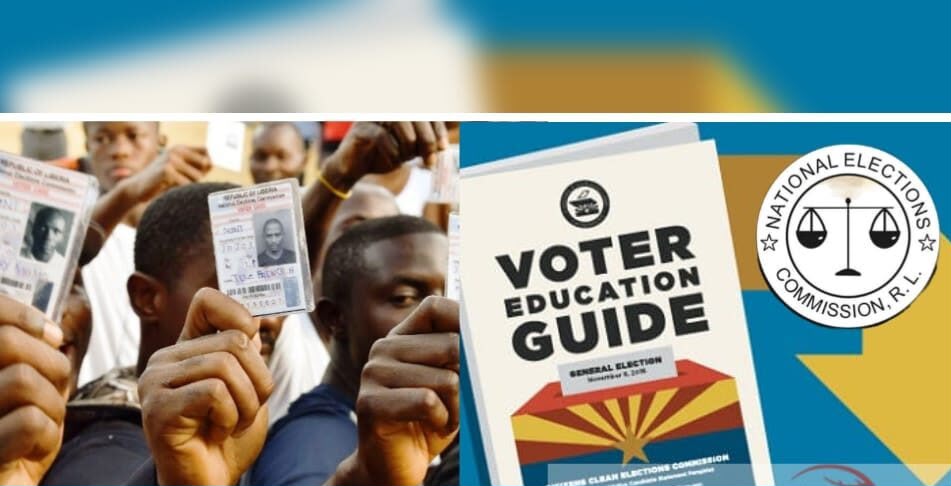
Monrovia: Voter education plays a crucial role in informing the electorate about the importance of participating in elections. It promotes effective organization and activism among citizens in support of political parties and causes, encourages appropriate behavior for a peaceful election, fosters acceptance of election results, and cultivates tolerance for competition and opposition.
However, one group that often faces challenges in this process is individuals living with disabilities, including those who are blind, deaf, or unable to speak. People with disabilities frequently encounter barriers due to stigma and prejudice, which can lead to the assumption that they are less capable than they truly are. Discriminatory laws and societal norms further marginalize them, while physical obstacles and inadequate attention to their rights hinder their access to public spaces and information.
When individuals with disabilities are denied their agency, they struggle to access essential services such as healthcare, specifically sexual and reproductive health (SRH) services, education, information technologies, and employment. This situation has significant implications for overall development.
As the October 10, 2023 General Elections approach, the National Elections Commission of Liberia is expected to implement civic voter education campaigns to ensure that prospective voters are effectively informed through various mass media channels, including print media, radio, the internet, and face-to-face engagement. Given the reported number of over three thousand deaf and mute individuals in Liberia (according to the 2008 Census), it is essential to assess their access to voter education initiatives.
Deborah L. Hall Deaf Skills Training Center is located at the Methodist Compound on 12th Street, Sinkor, Monrovia. Funded by the Middletown United Methodist Church in Maryland, U.S.A., the center provides education and skills training for children, adolescent boys and girls, as well as men and women who are deaf.
Mr. Edmond Brownell serves as the administrator of the center. He explains that during previous elections, students who are deaf did not receive adequate civic voter education as a result of limited information provided by only a few local civil society groups that visited the school campus during the awareness period.
“When it comes to civic voter education, I can confirm that the deaf students here do not benefit from or receive sufficient information about the voting process.
Only one or two civil society groups visit the campus to discuss it for a few minutes, and when they leave, no further information is provided. We have many individuals of voting age at the center, but how can they benefit from voter education?” he asked.
The school administrator emphasized that it is the responsibility of the government, through the National Elections Commission (NEC), to ensure that people with disabilities, especially the deaf and mute, fully participate in civic voter education.
He pointed out that the rights of people with disabilities are frequently violated in Liberia. “It is the government’s duty, through the NEC, to ensure that the deaf and mute are fully aware of civic voter education and understand how it can benefit them, as they are citizens with equal rights. Unfortunately, in Liberia, the rights of disabled individuals are often disregarded.”
Mr. Brownell called on the NEC to collaborate with various schools for the deaf across the country, by using school administrators to promote civic voter awareness within these institutions.
He believes that this partnership will provide a more effective means for people with disabilities to engage in voter education. “I urge the National Elections Commission to work with schools that cater to the deaf and mute, so these schools can educate their students about the importance of civic voter awareness. I am willing to assist the NEC in this effort because many students at our school are of voting age, but they need to understand the voting process,” Brownell added.
National Commission on Disability:
Several organizations in Liberia are dedicated to helping members of the deaf community reach their full potential by ensuring they have access to basic human needs for survival. One of such organization is the National Commission on Disabilities (NCD), established in November 2005 by legislative act. The NCD currently collaborates with seventy-eight (78) Organizations of Persons with Disabilities (OPWDs) and provides them with budgetary support.
Despite its efforts, more work is necessary to ensure that deaf and hard-of-hearing individuals have full access to civic life. Voter awareness remains a significant challenge for the Commission.
Madam Daintowon Domah Paye-Bayee, the national chairperson of the NCD, expressed concern that deaf and hard-of-hearing individuals are often excluded from voter education during electoral periods in Liberia.
She stated that during previous electoral periods, the National Elections Commission collaborated with various civil society organizations to promote civic voter awareness. However, the commission for disabilities was notably excluded from this partnership.
Madam Paye-Bayee described this reported exclusion by the NEC as a violation of the human rights of people living with disabilities in the country. “Look, my brother, we have said this thing times without number that the disabled community is the most forgotten people when it comes to national development and activities across the country.
During elections, the election commission can partner with other civil society organizations to carry out awareness, but they always leave out the disabled community, and this is not fair to us.
It happened during the 20217 elections and the 2020 special senatorial elections. And we continue to raise this issue because disabled people should be treated equally.
Many of the disabled people are mature enough and reach the voting age but how do they understand the process of voting when they are not being taught? This is a serious issue that needs to be addressed by the Government as a whole,” she concluded
The national chairperson of the NCD emphasizes the importance of the National Elections Commission prioritizing the disabled community, particularly the blind and the deaf and mute, during voter education initiatives. She stated that including individuals with disabilities will empower them to make informed decisions on Election Day.
National Elections Commission:
The National Elections Commission (NEC) of Liberia on Friday, February 24, 2023, launched the first phase of its nationwide Civic and Voter Education (CVE) campaign in Montserrado, Grand Cape Mount, Grand Bassa, Gbarpolu, and Margibi Counties.
The launch of the CVE campaign aims to encourage all Liberian citizens, regardless of status, who are 18 years of age and above to turn out and register during the voter registration exercise, scheduled from March 20 to May 11, 2023.
As part of the campaign, the NEC urged community-based organizations (CBOs) across the country’s 73 electoral districts to collaborate with the CVE initiative in promoting awareness and participation in the voter registration process.
Amid the inclusion of various societal groups, reports emerged that the deaf and mute community was left out of the awareness campaign.
However, Anthony Sengbeh, Executive Director of the National Elections Commission (NEC) of Liberia, clarified that the Civic and Voter Education (CVE) program is designed to be inclusive of all societal organizations. He emphasized that the Commission does not exclude any particular group of people, especially the less fortunate, from participating in election awareness activities.
“Civic voter education is important mainly for the less fortunate, like the deaf and Dumb you’re talking about. The commission often works with these people for them to understand the importance of their votes,” Atty. Singbeh noted.
Regarding whether the NEC had partnered with the National Commission on Disability during civic and voter awareness campaigns in past elections, Atty. Anthony Sengbeh could not clearly state if the Commission works directly with persons with disabilities.
However, he maintained that the voter education process is inclusive of all societal groups.
“Once the Commission announces the launch of the civic voters’ education, it automatically welcomes every civil society organization to partner with the commission in carrying out the awareness, and the Commission has begun engaging some societies and will also engage with the disabled community to ensure the disabled are fully involved with the process.
We are going to use their various ways of understanding to inform them about the importance of their votes,” he said.
Recommendation:
Inadequate access to information and services for the deaf community in Liberia is a human rights issue that requires urgent attention. The international community should be made aware of this situation, and pressure should be applied on the Government of Liberia and the National Elections Commission (NEC) to take immediate and meaningful action.
The challenges faced by the deaf community in Liberia are real and pressing. It is deeply concerning that the government and the NEC have not done enough to ensure that deaf citizens are included in the Civic and Voter Education (CVE) process.
The absence of sign language interpreters during voter education activities remains a major barrier that prevents deaf individuals from accessing essential election information.
Without interpreters, many deaf people are unable to understand the details provided during the voter awareness campaign or the information contained on voter registration cards. Furthermore, in rural areas, where some deaf individuals may also face literacy challenges, understanding the voting process becomes even more difficult.
In this context, the government and the NEC must prioritize the inclusion of the deaf community by providing sign language interpreters throughout the voter education process.
This is a crucial step toward social inclusion and ensuring that every Liberian, regardless of ability, can participate fully in the democratic process. The deaf community deserves equal rights and opportunities as every other Liberian citizen, and it is the government’s responsibility to make this a reality.
To ensure that deaf people are fully included in the civic and voter education campaign, organizers should consider implementing the following measures:
- Use Sign Language Interpretation
One of the most significant barriers faced by deaf people is the lack of access to information. Many individuals with hearing impairments rely on sign language as their primary means of communication.
Therefore, it is essential to include sign language interpretation in all campaign materials, including television and radio advertisements, posters, and leaflets.
Doing so will ensure that deaf people have equal access to information and can participate fully in civic and voter education activities, just like their hearing counterparts.
- Provide Written Materials
Another important way to promote social inclusion for deaf people is to provide accessible written materials. This can include information presented in large print, Braille, or electronic formats compatible with screen readers. Making these materials available will enable deaf individuals to access information independently and refer to it at their convenience, ensuring they remain fully informed and engaged in the civic process.
- Conduct Outreach Activities
Organizers of the voter education campaign should conduct targeted outreach activities specifically designed for the deaf community.
These efforts could include visits to schools for the deaf, community centers, and other locations where deaf individuals gather. Such outreach should focus on providing clear information about the importance of voting and the voting process itself.
Implementing these initiatives will help ensure that deaf people have an equal opportunity to participate in Liberia’s democratic and political processes.
- Partner with Deaf Organizations
To ensure that the campaign effectively reaches the deaf community, organizers should partner with organizations that work directly with deaf and hard-of-hearing individuals.
These organizations possess the expertise and experience needed to design and implement outreach activities tailored to the specific needs of the deaf community. Moreover, their involvement can help guarantee that all campaign materials are accessible, inclusive, and appropriate for deaf participants.
Finally, promoting social inclusion for deaf people is essential to building a truly democratic society. Ensuring that deaf individuals have equal access to information and services enables them to participate meaningfully in the political process and have their voices heard.
A nationwide Civic and Voter Education (CVE) campaign that incorporates deliberate measures to include the deaf community is crucial to guaranteeing that every Liberian citizen has the opportunity to engage fully in the country’s democratic process.
See more Liberia News Network stories in Google Search by adding LNN as one of your Preferred Sources.
★ Add LNN as a Preferred Source