
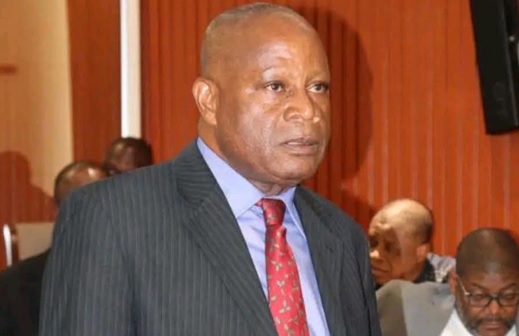
Senator Questions Selective Justice, Drug Investigations, Tenured Officials’ Removal, and Transparency Over Foya Housing Project
MONROVIA, LIBERIA — Senator Cllr. Augustine S. Chea has challenged President Joseph Nyuma Boakai to demonstrate his administration’s commitment to good governance through concrete action, warning that the declaration of October as Good Governance Month risks becoming a symbolic exercise unless the government addresses mounting questions about accountability, the rule of law, and equal justice.
In a critical commentary, Chea argued that good governance cannot be established through presidential proclamations, speeches, conferences, and public ceremonies but must be demonstrated through respect for the Constitution, transparency in public administration, institutional independence, and the impartial application of the law.
He said nearly three years into the Boakai administration, a series of controversial decisions and unresolved questions had created an opportunity for the government to reassess its governance record.
“Governance cannot be proclaimed; it must be practiced,” Chea declared, urging the President to use October as an opportunity for a genuine course correction rather than another government-sponsored observance.
TENURED OFFICIALS’ REMOVALS RAISE LEGAL QUESTIONS
Chea identified the removal of public officials holding tenured positions as one of the troubling issues confronting the administration.
He questioned whether officials whose appointments enjoy statutory protections had been removed or replaced in accordance with the applicable laws, arguing that tenure should not depend on which political party controls the Executive Mansion.
The senator maintained that the issue extends beyond the individuals affected, raising broader concerns about the security of public appointments and the enforcement of legal safeguards.
He called for governance practices that respect statutory requirements and constitutional protections regardless of political affiliation.
KOFFA CONTROVERSY AND SEPARATION OF POWERS
The former Speaker J. Fonati Koffa controversy also featured prominently in Chea’s assessment.
He questioned the constitutional implications of the attempt by lawmakers to remove Koffa, the role of the Executive in relation to the rival blocs within the House of Representatives, and the government’s posture toward the Supreme Court’s intervention.
According to Chea, the central issue is not whether Liberians support Koffa or the lawmakers who sought his removal, but whether constitutional procedures can be circumvented when they conflict with political interests.
He warned that the Executive’s relationship with the Legislature must be scrutinized to ensure that political alliances do not undermine the separation of powers.
Chea argued that where the Constitution establishes specific procedures for removing a legislative leader, political convenience cannot replace the prescribed requirements.
FOYA HOUSING PROJECT: CHEA DEMANDS TRANSPARENCY
Chea also raised questions concerning the multimillion-dollar housing project associated with President Boakai in Foya, Lofa County.
He questioned the project’s financing arrangements, its relationship to the national budget, compliance with public procurement requirements, and differing descriptions of its funding sources, including references to ECOWAS and state-owned enterprises.
The senator argued that such questions should not be dismissed as political attacks.
Instead, he called for the publication of relevant contracts, procurement records, financing arrangements, budgetary authorizations, and project agreements.
According to Chea, full disclosure would help establish whether the project complies with applicable laws and serves the public interest.
The questions raised in his commentary require documentary examination and responses from the relevant authorities before any conclusion can be reached about the project’s legality or financing.
ANTI-CORRUPTION FIGHT UNDER SCRUTINY
Chea described the administration’s anti-corruption campaign as another critical test of its commitment to good governance.
While acknowledging the importance of fighting corruption, he warned that public confidence could deteriorate if the campaign is perceived as selective or politically motivated.
He cited cases involving former officials of the Congress for Democratic Change (CDC) administration, including former Finance Minister Samuel D. Tweah, alongside questions surrounding allegations involving individuals associated with the ruling Unity Party.
Chea also referenced the cases involving Abdullah Kamara and Arthur Massaquoi in questioning whether the same standards are applied across political lines.
He argued that corruption investigations and prosecutions must be guided by evidence and due process rather than political considerations.
However, allegations of selective prosecution must themselves be assessed against the facts of individual cases, including investigative decisions, available evidence, and the reasons for any prosecutorial action or inaction.
RAPE ALLEGATIONS AND QUESTIONS ABOUT EQUAL TREATMENT
The senator also questioned the handling of rape allegations involving Deputy Youth and Sports Minister J. Bryant McGill.
According to Chea, concerns have emerged over reported differences in the treatment of suspects, particularly regarding the role of DNA evidence in decisions about arrest and investigation.
He questioned why DNA evidence was reportedly cited as a requirement in one case when other suspects accused of rape had been arrested without such evidence.
The issue, he argued, concerns consistency in law enforcement and whether political connections could influence investigative decisions.
Nevertheless, the specific circumstances of each case, the applicable legal standards, and the police’s actual reasons for their decisions would need to be established before determining whether unequal treatment occurred.
Chea maintained that justice must be administered consistently, irrespective of a suspect’s political status or connections.
COCAINE INVESTIGATIONS: CHEA CALLS FOR IMPARTIALITY
The senator devoted considerable attention to the major cocaine-trafficking investigations involving seizures reportedly valued at approximately US$19 million and US$317 million.
He argued that the cases represent a major test of the government’s commitment to impartial law enforcement, warning against any perception that investigations are being directed primarily at former CDC officials while allegations involving individuals associated with the current administration receive less scrutiny.
Chea also raised concerns over the reported detention of former Vice President Jewel Howard-Taylor and allegations involving other former CDC officials.
At the same time, he referred to allegations that individuals linked to an international drug-trafficking network had identified President Boakai’s son, Joseph Boakai Jr., popularly known as Jojo, as someone with whom they had dealings.
These allegations have not, on the information presented in Chea’s commentary, been independently established. No conclusion about Joseph Boakai Jr.’s involvement or innocence can properly be drawn from the allegations alone.
Chea argued that any credible allegations involving individuals connected to the current administration should be investigated using the same standards applied to others.
He called for clarity on whether the President’s son had been interviewed or investigated and whether investigators possessed evidence supporting or disproving the allegations.
The senator further questioned whether the Inspector General of Police should remain involved in the drug investigations amid concerns about possible conflicts of interest and allegations involving senior officials.
He argued that an independent investigative process would help protect the credibility of the cases and public confidence in the outcome.
The appropriate authorities would need to establish the factual basis for the allegations, disclose what can lawfully be made public, and ensure that any investigative decisions are free from improper political interference.
The principle at stake is that allegations against politically connected individuals must receive neither preferential protection nor prejudicial treatment.
US DEPORTEES: GOVERNMENT URGED TO EXPLAIN LEGAL BASIS
Chea also questioned the government’s acceptance of third-country nationals deported from the United States.
He called on the administration to explain the legal instruments, diplomatic arrangements, or statutory authority under which the individuals were transferred to Liberia and to clarify their legal status in the country.
He further raised questions about reports that the United States paid US$5 million to the Liberian government in connection with the arrangement.
Chea argued that transparency was necessary to establish the legal and financial terms of the arrangement and to determine whether the government had complied with its constitutional and international obligations.
The reported payment and the precise terms of the arrangement require confirmation through official documents and statements from the governments involved.
POLITICAL INTOLERANCE AND NATIONAL DIVISION
Beyond legal and financial controversies, Chea expressed concern about what he described as growing political intolerance and polarization.
He argued that government officials should respond to criticism through dialogue and engagement rather than hostility, warning that the marginalization of dissenting voices could further deepen Liberia’s political divisions.
According to the senator, opposition and criticism are essential elements of democratic governance and should not automatically be treated as threats to the government.
He urged President Boakai and his officials to engage political opponents, listen to differing perspectives, and create opportunities for meaningful national dialogue.
Chea maintained that national unity requires mutual respect, tolerance, and a willingness to find common ground across political divisions.
OCTOBER PRESENTS BOAKAI WITH AN OPPORTUNITY
In concluding his commentary, Chea challenged the administration to use Good Governance Month to address the issues he raised and demonstrate a measurable commitment to institutional accountability.
He argued that the greatest danger is the gradual normalization of questionable governance practices, warning that public institutions can deteriorate when unresolved concerns become accepted as routine.
For Chea, the declaration of Good Governance Month should therefore be judged not by the activities organized during October but by whether the government takes meaningful steps to address concerns about constitutional compliance, transparency, law enforcement, and accountability.
He urged President Boakai to make the month a turning point in his administration’s governance record.
“Let’s walk the talk,” Chea concluded.
The central challenge raised by the senator is whether Good Governance Month will produce demonstrable improvements in the administration of public affairs or remain a declaration whose promises are not matched by measurable action.
See more Liberia News Network stories in Google Search by adding LNN as one of your Preferred Sources.
★ Add LNN as a Preferred Source