
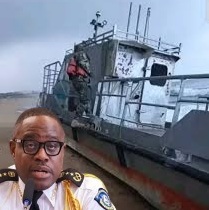
MONROVIA, LIBERIA — Liberia’s Inspector General of Police, Gregory O.W. Coleman, is facing growing questions over his revelation that senior government officials were allegedly connected to the country’s massive cocaine-trafficking scandal, with the public demanding to know why those officials have not been publicly identified and held accountable.
The controversy intensified after Coleman reportedly suggested that the trafficking network behind Liberia’s record-breaking cocaine seizures had connections at the highest levels of government.
In a July 30–31, 2026, briefing, Coleman said investigators had identified state actors who allegedly helped transport the cocaine using police vehicles. Two police commanders were subsequently charged in connection with the operation. However, his broader remarks about alleged high-level government involvement raised additional questions about whether the investigation would extend beyond the officers already accused.
A July 31 report by FrontPageAfrica, republished by AllAfrica, noted that Coleman had not named the senior government officials he appeared to implicate or presented publicly available evidence supporting that broader allegation.
The central question is whether the investigation has produced evidence against other senior officials and, if so, what action has followed.
Arrests Raise Further Questions
Liberia has been rocked by major cocaine seizures, including approximately 3,971 kilograms discovered in Duazon, with an estimated street value initially reported at about US$317 million.
The investigation implicated serving police officers. Authorities subsequently charged two police commanders accused of helping escort the cocaine shipment.
These developments demonstrated that the investigation had reached within the security establishment. But they also intensified public interest in Coleman’s suggestion that the alleged trafficking operation had connections beyond the officers already charged.
If investigators have credible evidence implicating senior civilian officials, the public has a legitimate interest in knowing whether those individuals have been questioned, investigated or referred for prosecution.
Nevertheless, the absence of a public announcement naming additional officials does not necessarily establish that investigators have done nothing. Authorities may be pursuing leads that cannot yet be disclosed without jeopardizing the investigation.
Was the Revelation Based on Evidence?
Coleman’s reported remarks raise an important accountability issue: what specific evidence supports the claim that senior government officials were involved?
Were investigators relying on financial records, communications, witness statements, surveillance findings or other evidence? Have the findings been submitted to the Ministry of Justice for prosecutorial review?
These are questions that the police leadership and justice authorities should address without compromising legitimate investigative procedures.
The seriousness of the allegation makes transparency essential. Public statements suggesting high-level involvement should be accompanied by a credible explanation of the investigative steps being taken, even where particular details must remain confidential.
A Test of Equal Justice
Liberia’s anti-drug campaign cannot be measured solely by the quantity of cocaine seized or the number of suspects arrested. Its credibility will also depend on whether investigators follow the evidence wherever it leads.
If evidence implicates a government official, that person’s position should not provide protection from investigation. Equally, no official should be publicly treated as guilty merely because an investigator has suggested a connection.
Coleman therefore faces a difficult but necessary responsibility: to clarify the scope of his allegations and explain what investigators have established concerning the purported involvement of senior civilian officials.
The Ministry of Justice also has a responsibility to ensure that credible evidence is assessed impartially and that appropriate charges are brought where the legal threshold is met.
The Questions Liberia Deserves Answered
The public deserves clear answers to several questions:
- Which senior government officials, if any, have been identified through evidence gathered during the investigation?
- Have those individuals been questioned or formally investigated?
- Has the Liberia National Police referred evidence concerning any civilian officials to the Ministry of Justice?
- If investigators have not established sufficient evidence to arrest or charge additional officials, what remains to be verified?
- Will the authorities provide a public update explaining the investigation’s progress?
These questions do not presume the guilt of any individual. Rather, they seek to establish whether the authorities are pursuing the allegations consistently and transparently.
Ultimately, Coleman’s revelation has created an expectation that the investigation will establish the facts behind the alleged high-level connections to the cocaine trade. The public is entitled to ask what has been established, what remains unresolved and whether everyone implicated by credible evidence will be treated equally under the law.
See more Liberia News Network stories in Google Search by adding LNN as one of your Preferred Sources.
★ Add LNN as a Preferred Source