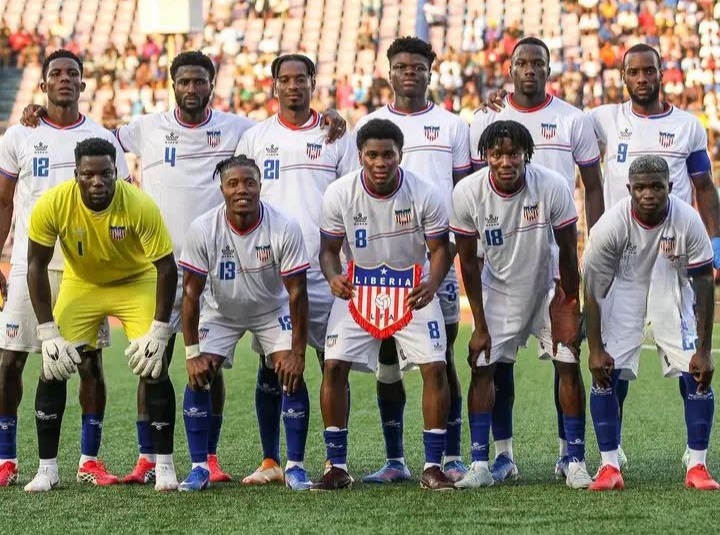
For twenty-four years, heartbreak has been a constant companion, with the shadow of Japan 2002 looming large, and now we face yet another painful start.
Some defeats sting deeply. Others bring embarrassment. But then there are those that compel an entire nation to reflect on whether something is fundamentally amiss.
For Liberia, the 1-3 loss to Rwanda in Kigali today was more than just another setback in football. It marked yet another painful chapter in a narrative that Liberians have been grappling with for nearly a quarter of a century—a tale filled with hope, expectation, investment, and ultimately, disappointment.
This raises a question that many Liberians might hesitate to voice: IS THE LONE STAR CURSED? While there’s no tangible evidence of a supernatural curse, if we consider a curse as a metaphor for a nation ensnared in a seemingly unending cycle of missed chances, poor performances, and unfulfilled promises, then Liberia’s football saga certainly fits that description.
It has been twenty-four years since Liberia last graced the Africa Cup of Nations. The Lone Star has only qualified for AFCON twice—in 1996 and 2002.
Since that 2002 tournament in Mali, generation after generation has endeavored to bring Liberia back to Africa’s premier football stage.
Yet, time and again, they have fallen short. The Confederation of African Football (CAF) itself recognizes Liberia as one of the nations enduring a prolonged wait to return to the continental championship. And now, after all the speeches, preparations, fundraising efforts, promises, and government backing, this latest journey has commenced with a painful reminder. Rwanda 3, Liberia 1. The dream didn’t just falter; it fell hard.
THE GHOST OF JAPAN
One of the most heartbreaking moments in Liberian football history is how the nation once came alarmingly close to achieving something greater than AFCON. The 2002 World Cup in Japan and South Korea.
The “Weah-11”, a golden generation of Liberian football. A nation dreaming beyond its wildest hopes. Liberia finished second in its qualifying group, just behind Nigeria.
The Lone Star earned 15 points from eight matches, falling short by only one point, which meant Nigeria secured the World Cup spot. Just one point. That’s how close Liberia was to being part of the world’s biggest football event.
For a country that had George Weah—one of the most renowned footballers globally—the disappointment was immense. The chance to go to Japan and South Korea vanished.
Perhaps that was the moment the haunting began, as Liberia has spent the years since then repeatedly nearing dreams that always seem to fade just when they come into view.
THEN CAME THE 24-YEAR SILENCE
The 2002 AFCON appearance was supposed to mark a new beginning for Liberia. Instead, it turned out to be a farewell.
The Lone Star managed to draw with the host nation Mali and Algeria, but ultimately lost a close match to Nigeria in their final group game. This was only their second AFCON appearance, following their debut in 1996. Since then, however, there has been silence. No AFCON appearances, no comebacks, no significant achievements.
Twelve qualification cycles have passed since the “Weah-11” era came to an end. A recent analysis of those campaigns reveals a staggering 68 competitive AFCON qualifying matches, resulting in just 17 wins, 14 draws, and 37 losses. During this time, Liberia scored 57 goals but conceded 123.
These statistics are harsh and reveal a narrative that emotions often obscure. This isn’t merely a case of bad luck; there have been persistent issues that have hindered progress.
AND THEN CAME RWANDA
This latest campaign was meant to be a turning point. The government stepped up. President Joseph Nyuma Boakai declared AFCON qualification a national priority. The Ministry of Youth and Sports, along with the Liberia Football Association, rallied resources. Player appearance fees and winning bonuses were raised from US$1,000 to US$2,500 per game.
There was a fundraising initiative. Corporate backing was secured. Political interest was reignited. A new coach, Mohammed Adil Erradi, was brought in.
A fresh squad was assembled. Hope was rekindled. Liberians began to believe that maybe—just maybe—this would be the year the long-standing curse would be lifted. Then came Kigali. Rwanda struck first, scoring three goals against Liberia, with only one consolation goal in return. The very campaign aimed at ending 24 years of disappointment started with yet another loss. It feels almost cruelly familiar.
WHAT MORE DOES THE LONE STAR NEED?
This is where the conversation takes a turn for the uncomfortable. Liberia can no longer attribute every setback to the players alone.
It’s also unfair to place all the blame on the coach. Simply having government funding won’t create a winning national team on its own. While money can pay players, finance travel, enhance preparation, and improve training facilities, it cannot instill tactical discipline.
It can’t generate confidence or develop a football culture in an instant. And it certainly can’t erase the structural issues that have persisted for decades.
The question Liberia needs to face isn’t just: “Why did we lose to Rwanda?” The more pressing question is: “Why does Liberia keep finding itself in this situation?”
Why do we consistently enter qualifying campaigns with high hopes only to end up explaining yet another failure?
Why does national-team preparation often become a last-minute rush when a major qualifying match is on the horizon?
Why hasn’t the emergence of young talent translated into a senior national team that can compete consistently?
Why does Liberia keep hoping for a miracle instead of focusing on building a system that ensures long-term success?
THE “WEAH-11” SHADOW
There’s an uncomfortable truth to acknowledge: Liberian football has been overshadowed by the “Weah-11” generation for many years. This isn’t meant to diminish the talent of the players who followed that era; it’s simply a reflection of history’s weight.
The “Weah-11” generation of players transcended the role of just footballers; they became a symbol of hope, inspiring Liberians to believe that their nation could stand toe-to-toe with anyone. When George Weah himself played alongside teammates like James Debbah, Kelvin Sewgbe, Jonathan Sogbie, Joe Nagbe, Zizi Roberts, and others in the Lone Star jersey, millions felt a surge of belief.
Howbeit, time has moved on. The “Weah-11” era eventually faded, and Liberia has struggled to establish a sustainable framework that could replicate the legacy of that generation.
Perhaps the issue isn’t just the absence of another “Weah-11”. Maybe it’s that Liberia has spent too long hoping for another remarkable generation to come along and save a system that should be consistently nurturing exceptional football talent.
THE GOVERNMENT HAS DONE ITS PART – OR HAS IT?
The government’s increased financial commitment is commendable, but it also raises a valid need for accountability. If public funds are being allocated to the Lone Star, the people of Liberia have the right to know what those investments are accomplishing.
What is the long-term development strategy? Where is the focus on youth football? What about the academies? How are we systematically developing coaches? What steps are being taken to strengthen domestic football? How do we ensure that the Lone Star remains competitive beyond just one qualifying campaign and doesn’t fall apart again?
If the solution to every football crisis is merely to “give the team more money,” Liberia risks pouring resources into a bottomless pit without addressing the underlying issues.
A LOSS TO RWANDA IS NOT THE END
Rwanda should not be used as an excuse for giving up. The AFCON campaign is still ongoing. Liberia has more matches ahead, including the one against Mali on September 29.
The qualification group also features Cape Verde, which makes the path challenging but not impossible.
The loss in Kigali stings, but it also provides important insights. It shows Liberia where the Lone Star currently stands. It highlights what the coaches need to address. It reminds the administrators that investment must lead to proper preparation. And it emphasizes to the players that wearing the Lone Star is more than just donning a jersey; it involves shouldering the emotional burden of a nation that has been waiting for 24 years.
SO, IS THE LONE STAR CURSED?
Perhaps we shouldn’t respond to this question with superstition. Maybe the Lone Star isn’t cursed after all; perhaps it’s trapped. Trapped between a glorious past and an uncertain future.
Trapped between the memories of the “Weah-11” generation and the reality faced by those who came after.
Trapped between the promises made by the government and the footballing structures that have yet to deliver consistent results.
Trapped between the immense expectations of the nation and performances that often fall painfully short.
The most significant danger may be that Liberians have grown used to disappointment. That is the true curse. When losing becomes the norm. When failing to qualify for AFCON feels routine. When another unsuccessful qualification campaign is just another headline in the sports section. When yet another generation grows up without witnessing Liberia at Africa’s premier football tournament. That is when football faces a challenge that goes beyond the scoreboard.
Liberia doesn’t need another miracle; it requires a football revolution—not just a change in personalities, but a shift in mindset.
There’s a need for a transformation in youth development, coaching, accountability, and preparation.
We must rethink how the national team is managed. The Lone Star can’t keep relying on the glories of 1996, 2002, and the “Weah-11”. Those moments are cherished, but they belong to the past.
We need to focus on building the future. After Rwanda’s 3-1 win, the message is clear: the Lone Star is still alive, and the dream of AFCON is not over. However, the outdated methods have once again been called into question.
Twenty-four years is far too long; one generation has already waited, and another is still waiting. Somewhere in Liberia tonight, a young boy is likely kicking a ball in the dirt, dreaming of donning the Lone Star jersey and competing in the Africa Cup of Nations.
Liberia owes that child more than just another empty promise; it owes him a football system that can turn that dream into reality.
Until we achieve that, every qualification campaign will be shadowed by the same troubling question: Is the Lone Star cursed, or have we simply chosen not to break the cycle?
See more Liberia News Network stories in Google Search by adding LNN as one of your Preferred Sources.
★ Add LNN as a Preferred Source