
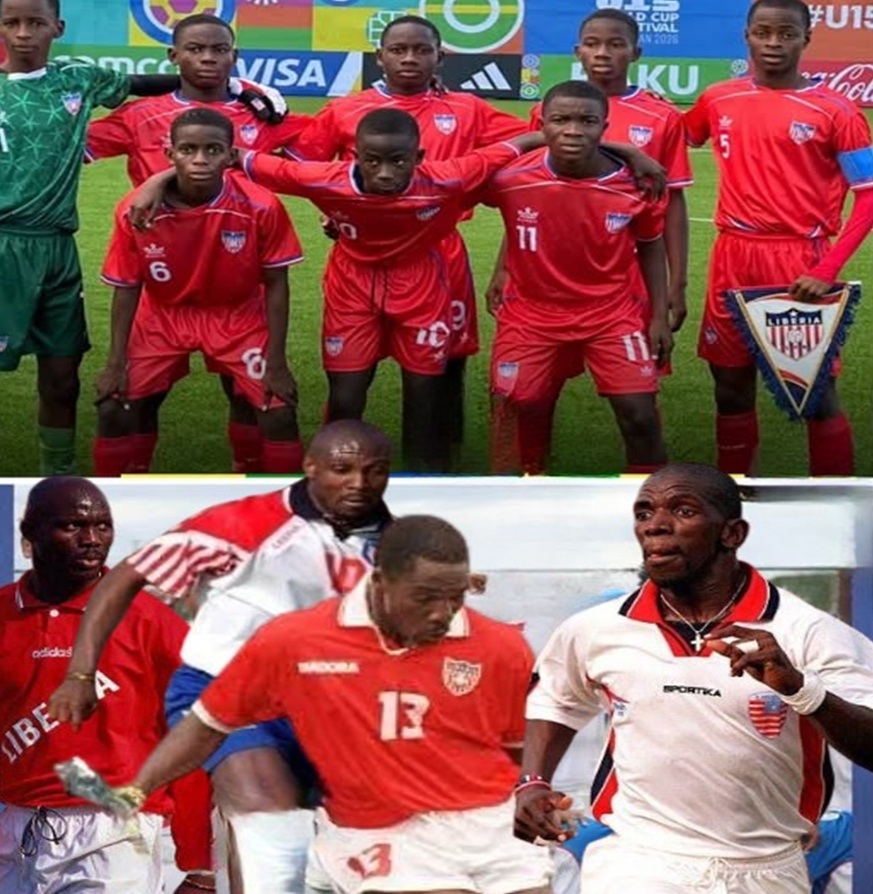
Liberia’s participation in the inaugural FIFA U-15 World Cup and Festival in Baku, Azerbaijan, represents more than just a football tournament. It serves as a moment of national introspection—a reminder of a dream that has slipped away from the country for generations and a new chance to start crafting a different narrative.
\n
The Young Lone Star’s 1–1 draw against Belize today, October 24, has provided Liberia with a point to build upon. Howbeit, the importance of this historic involvement goes far beyond the initial scoreline. It raises a question that has plagued Liberian football for decades; when will the nation finally secure a spot in the senior FIFA World Cup?
Liberia has produced players whose names are etched in the annals of African football history. Yet, despite their skills and accomplishments, the country has never made it to the finals of the senior men’s FIFA World Cup.
\n
George Weah stands out among those who showcased what Liberian football can contribute to the world. In 1995, he became the first African player to win the FIFA World Player of the Year award, solidifying his status as one of the greatest footballers of his time.
His successes brought global attention to Liberia, but even his remarkable impact was not enough to propel the national team to the senior World Cup finals.
\n
Weah wasn’t the only one carrying Liberia’s football dreams. James Debbah, another iconic figure in the nation’s football history, showcased the kind of attacking prowess that earned the Lone Star respect in African football. His collaboration with Weah during Liberia’s notable campaigns raised hopes that the country could finally make its mark on the global stage.
Then there was Kelvin Sebwe, whose contributions were part of a generation that instilled belief in Liberians that their national team could hold its own against tougher opponents.
\n
Alongside other players from that time, Sebwe helped define an era when the Lone Star drew attention and the dream of World Cup qualification felt tantalizingly within reach.
Jonathan Sogbie also deserves recognition among the Liberian football legends when considering the nation’s football legacy and the players who kept the public’s interest alive in the national team.
\n
These individuals and their peers represent more than just a list of well-known names. They symbolize generations of talent, dedication, and national hope. Their careers played a crucial role in establishing Liberia’s standing in African football, even as the ultimate goal—a spot in the senior FIFA World Cup finals—remained elusive.
This is the bittersweet reality of Liberian football; a nation capable of nurturing exceptional individual talent has yet to convert that potential into qualification for the world’s premier football tournament.
\n
The young players in Baku now provide a new reason to revisit this unfinished narrative. Their involvement in FIFA’s first U-15 World Cup and Festival marks a significant milestone for Liberia. It introduces young footballers to international competition, diverse playing styles, and the responsibilities of representing their country on a global stage.
Howbeit, the challenge lies in ensuring that this opportunity evolves into more than just a memorable journey.
\n
Liberia should not mistake participation for genuine progress. The true challenge will arise after the tournament, when these young players return home and the initial excitement of their achievement starts to wane.
Will they discover a football system ready to cultivate their skills? Will there be competitive youth leagues, skilled coaches, adequate training facilities, and a clear route to the senior national team? Or will they face the same hurdles that have hindered generations of Liberian players?
\n
These are the issues that the Liberia Football Association and the broader sporting community must address with sincerity.
A competitive national team cannot thrive on patriotism alone. It demands investment, disciplined management, regular competition, technical growth, and ongoing support for young athletes.
\n
Talent needs to be recognized early, nurtured consistently, and shielded from the institutional shortcomings that can derail promising careers.
Liberia has witnessed the heights that individual talent can reach. Weah’s international success, Debbah’s contributions, Sebwe’s dedication, and the efforts of other generations show that the country possesses ample footballing talent. What is crucial now is establishing a system that can transform that talent into collective achievement.
\n
The government, private sector, educational institutions, clubs, and football officials all have a part to play. Support for grassroots football must extend beyond mere speeches and ceremonial acknowledgments. It should result in improved facilities, youth academies, school competitions, qualified coaching, and pathways for talented players to advance.
The LFA, in particular, must ensure that the lessons learned in Azerbaijan are integrated into a long-term development program. These young players should not return home to find that the necessary structures for advancing their careers are absent.
\n
Additionally, the pressure of ending Liberia’s senior World Cup drought should not rest solely on their shoulders. They are still young and learning the game. Their role is to compete, improve, and represent their country with pride.
It is the football system around them that must create a pathway to the highest level.
\n
Liberia has waited far too long for a senior World Cup appearance. Each generation has inherited this dream, celebrated its heroes, and questioned why the country has yet to reach that final milestone.
Perhaps some of the boys in Baku will one day help Liberia qualify. Maybe their greatest contribution will be to inspire the next generation. No one can predict the trajectory of their careers, but what matters now is whether the country will invest in their potential.
\n
The 1–1 draw against Belize is just one result in a long journey. It does not define the team’s future or resolve the broader issues surrounding Liberian football.
Howbeit, it serves as a timely reminder that international exposure must be accompanied by intentional, sustained development.
\n
The accomplishments of Weah, Debbah, Sebwe, Sogbie, and other Liberian stars should not be remembered only with nostalgia. Their careers should motivate a national effort to ensure that future generations have the coaching, facilities, competition, and institutional support necessary to take the next step.
Liberia’s historic presence in Baku is worth celebrating, but the country must look beyond this immediate tournament and tackle the larger challenge of building a national team that can consistently compete at the highest level.
\n
The dream of reaching the senior World Cup is still alive but unfulfilled. While the Young Lone Star may not be the team to achieve this milestone, their journey presents a chance to start laying the groundwork for future success with a more serious approach.
Let Baku be more than just a historic location. Let it serve as a pivotal moment—a time when Liberia transitions from merely celebrating its football talents to actively investing in the infrastructure that future stars will require to lead the Lone Star to the senior FIFA World Cup.
See more Liberia News Network stories in Google Search by adding LNN as one of your Preferred Sources.
★ Add LNN as a Preferred Source