For 179 years, Liberia has had a remarkable maritime asset: a coastline that links its communities to the Atlantic and the broader West African region.
However, for much of its modern history, the economic potential of this coastline has not been fully realized. However, the Government of Liberia seems ready to change that story.
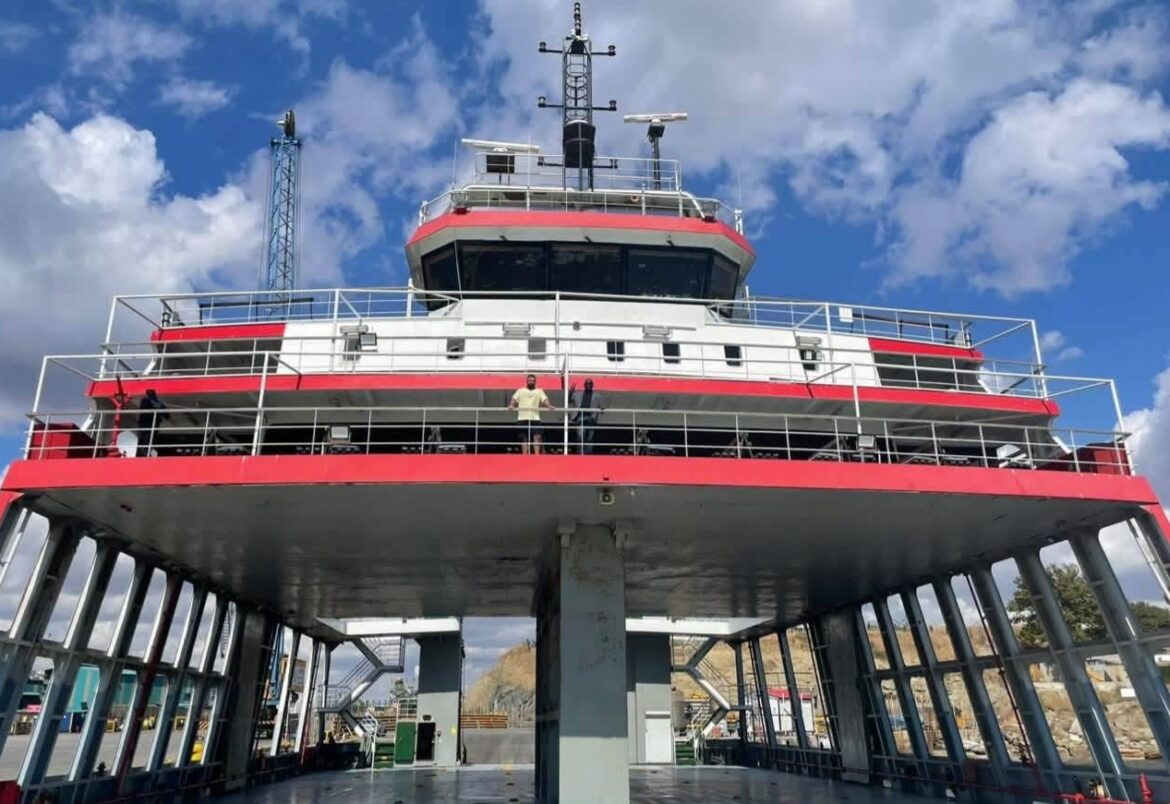
The Liberia Maritime Authority’s (LiMA) proposal to acquire a modern, multi-purpose ferry that can transport passengers, containers, trucks, buses, SUVs, earth-moving equipment, and other vehicles is much more than just a transportation initiative.
It embodies the Government’s larger goal of enhancing infrastructure, connectivity, and economic opportunities throughout Liberia.
According to LiMA Commissioner/CEO Cllr. Neto Zarzar Lighe, the ferry would operate along Liberia’s coastline and, when feasible, extend to neighboring coastal nations.
Crucially, the project is structured as a Public-Private Partnership, enabling the government to establish the necessary policy, regulatory, and oversight framework while private-sector expertise manages operations, investment, and commercial activities.
This is exactly the type of collaboration that can help Liberia turn its maritime potential into real economic advantages.
A floating extension of Liberia’s transportation network
The proposed ferry indisputably holds great significance due to its capacity. It’s not just a passenger vessel; it can transport trucks, buses, containers, heavy equipment, and people, effectively serving as a floating extension of Liberia’s transportation and logistics system.
As the country continues to invest in road infrastructure, maritime transport offers a vital alternative. When roads are congested, challenging, far away, or temporarily blocked, the sea can serve as another route for transporting individuals and essential goods.
This could be especially beneficial for coastal communities. Farmers, traders, businesses, construction firms, and everyday travelers could gain access to markets and neighborhoods through this additional means of transport. Heavy machinery could be moved more efficiently to where it’s needed, and commercial goods could be shipped without solely depending on long-distance roadways. In this way, the ferry initiative aligns well with the Government’s larger infrastructure goals.
During Liberia’s 179th Independence celebration, President Joseph Nyuma Boakai emphasized the importance of infrastructure development and enhanced connectivity for national progress, including the dedication of the Gbarnga-Salayea Road Corridor. This maritime project could enhance those investments rather than compete with them.
A new opportunity for the Blue Economy
The proposal carries a significant economic message. Liberia’s maritime sector holds great potential for boosting employment, logistics, tourism, trade, and regional integration.
LiMA’s National Maritime Strategy has clearly highlighted collaboration, innovation, and partnerships as key elements for promoting Liberia’s maritime interests and enhancing the advantages of the country’s Blue Economy.
Thus, the proposed ferry aligns with a larger initiative to transform Liberia from merely possessing a coastline to actively extracting economic benefits from its maritime resources.
If executed effectively, this project could create opportunities not just for vessel operators, but also for dock workers, mechanics, engineers, logistics firms, traders, hospitality businesses, and various other service providers.
Is this Liberia first ferry in 179 years?
That question certainly warrants a thoughtful response. Liberia has a rich history of maritime trade that goes back to the nineteenth century, so it wouldn’t be accurate to claim that Liberians have never utilized ferries, boats, or coastal vessels since gaining independence. What seems to be new is the scale and purpose of the vessel currently being proposed: a modern, multi-purpose ferry designed as part of the national transportation infrastructure, capable of transporting passengers as well as commercial vehicles, containers, and heavy equipment, potentially connecting Liberia with neighboring coastal nations. This initiative could surely mark a significant revival and modernization of Liberia’s coastal transportation system.
The importance of getting the PPP right
The importance of establishing the PPP correctly cannot be overstated. The proposed Public-Private Partnership will definitely be essential for the project’s success.
Government’s oversight must ensure that safety, affordability, environmental protection, maintenance, and service reliability are prioritized.
Meanwhile, a skilled private-sector operator can provide the technical know-how and commercial discipline necessary to keep the vessel running effectively over time.
Additionally, the ferry should be complemented by suitable landing facilities, cargo-handling systems, passenger terminals, and dependable scheduling. A top-notch vessel can only realize its full potential if the supporting infrastructure is equally efficient.
A maritime vision worthy of Liberia
Liberia’s 179th year of independence is a fitting time to rethink our approach to national development. While the country has made significant investments in road infrastructure, it is essential to also focus on our maritime potential.
The proposed LiMA ferry presents a valuable opportunity to link coastal communities, boost trade, support local businesses, create jobs, and enhance Liberia’s role in the regional maritime economy.
More importantly, it reflects a government that views Liberia’s geography as an asset rather than a hindrance.
If this initiative is carried out with transparency, professionalism, and sustainability, it could become a landmark project in Liberia’s maritime development—a new connection over the sea that links Liberians to one another and integrates Liberia more effectively into the broader West African coastal economy.
This is certainly the kind of maritime vision that Liberia should strive to promote.
See more Liberia News Network stories in Google Search by adding LNN as one of your Preferred Sources.
★ Add LNN as a Preferred Source