
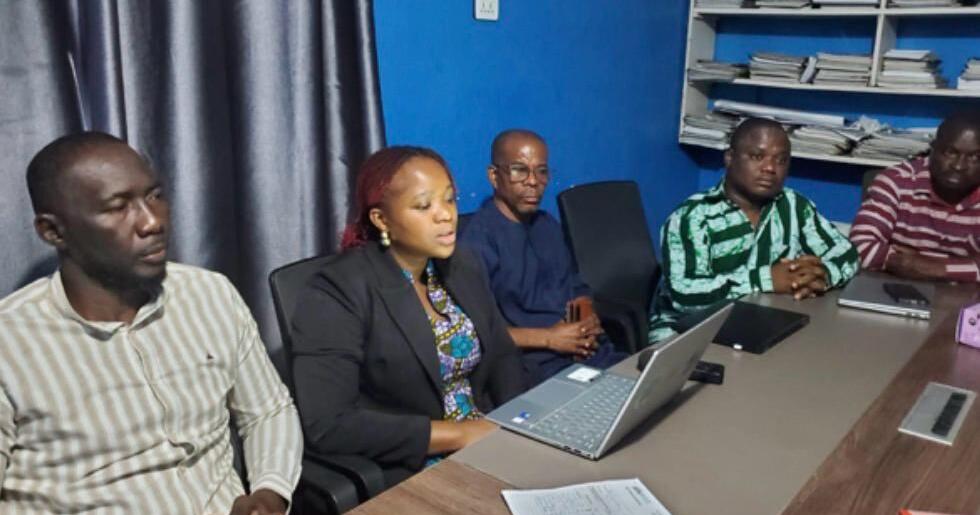
The Civil Society Organizations (CSO) Consortium on Minerals, Mining, and Inclusive Sustainable Development is calling on the Government of Liberia and the Legislature to impose a moratorium on the allocation and ratification of new Mineral Development Agreements (MDAs) until a comprehensive, modern Mineral and Mining Law is enacted.
The Consortium, a coalition of eight civil society organizations, says Liberia must reform its mining laws to address longstanding governance, economic, environmental, and social challenges that have prevented many Liberians from benefiting fully from the country’s mineral wealth.
In a statement issued following consultations and stakeholder engagements, the Consortium emphasized that reforming the country’s mining legislation must involve more than updating existing legal provisions. It said the process should establish a stronger framework for transparency, accountability, environmental protection, community participation, and equitable distribution of mining benefits.
“Our position is that the revision of Liberia’s Mineral and Mining Law must go beyond updating existing provisions. It must fundamentally address the governance, economic, environmental, and social challenges that have historically prevented Liberians, including women, persons with disabilities, and other marginalized persons, from realizing the full benefits of their mineral wealth,” the Consortium declared.
The group is urging the government to suspend the allocation and ratification of new MDAs until the necessary legal reforms are completed. It argues that continuing to negotiate long-term mining agreements under the existing legal framework could entrench weaknesses in governance and limit the country’s ability to secure fair and sustainable returns from its natural resources.
“The Consortium calls on the Government of Liberia, especially the Executive Branch, through the Office of President Joseph Nyumah Boakai Sr., and the Legislature to institute a moratorium on the allocation and ratification of new Mineral Development Agreements until a comprehensive and modern Mineral and Mining Law is enacted,” the statement said.
“We strongly believe that entering into new or additional long-term mineral development agreements under an outdated legal framework risks perpetuating existing governance weaknesses and limiting Liberia’s ability to secure fair and sustainable benefits from its mineral resources.”
The Consortium’s position follows consultations held on October 1, 2026, and a multi-stakeholder roundtable convened in Monrovia on October 21, 2026. The engagements brought together representatives of development partners, government institutions, the private sector, civil society organizations, and communities affected by mining activities.
Participants discussed the need for a mining law that reflects Liberia’s current economic, environmental, and social priorities while ensuring that decisions about mineral resources are transparent, inclusive, and responsive to the needs of affected communities.
The Consortium said meaningful reform must strengthen transparency and public participation in decisions concerning mineral resources, in keeping with Article 7 of Liberia’s Constitution. It stressed that communities should have timely access to information about proposed mining projects and meaningful opportunities to participate in decisions that affect their land, livelihoods, and environment.
The group also called for stronger enforcement of existing laws and clearer accountability mechanisms to ensure that mining companies meet their legal obligations. It emphasized the importance of protecting community rights under the Land Rights Law of 2018 and ensuring that communities receive a fair share of the benefits generated by mining activities.
Beyond the extraction of raw minerals, the Consortium wants the revised law to promote domestic value addition, create more employment opportunities for Liberians, and expand procurement from Liberian-owned businesses. It said the country should derive broader economic benefits from its mineral resources rather than rely primarily on the export of unprocessed materials.
Environmental protection and mine-site rehabilitation were also identified as essential components of reform. The Consortium called for stronger safeguards to prevent environmental degradation and ensure that companies take responsibility for restoring sites affected by mining. It further emphasized the need to incorporate gender considerations into mining governance, including measures to protect women and other vulnerable groups from sexual and gender-based violence.
The coalition also underscored the importance of greater transparency in concession agreements, beneficial ownership, government revenues, and tax incentives. It called for stronger disclosure and accountability mechanisms, including support for the work of the Liberia Extractive Industries Transparency Initiative (LEITI).
Effective implementation, the Consortium said, will require better coordination among key public institutions, including the Ministry of Mines and Energy, the Environmental Protection Agency, the Liberia Revenue Authority, the National Bureau of Concessions, and LEITI. Clearer institutional responsibilities and stronger oversight would help close regulatory gaps and improve compliance across the mining sector.
The proposed reforms should also address the realities of artisanal, small-scale, and mechanized mining, including sand mining and quarrying. The Consortium said the law must account for the different challenges posed by these activities while promoting responsible practices, protecting livelihoods, and ensuring compliance with environmental and safety standards.
The coalition comprises the Center for Transparency and Accountability in Liberia, Integrity Watch Liberia, the Sustainable Development Institute, Medica Liberia, ActionAid Liberia, Integrated Development and Learning, Civil Society Independent Forest Monitors, and Sustain Earth and Equity Defenders.
The Consortium did not specify how long the proposed moratorium should remain in place or provide a timeline for completing the legislative reforms. However, it stressed that its position should not be interpreted as opposition to mining investment. Rather, it wants future agreements to be negotiated under a stronger legal framework that safeguards the public interest and delivers lasting benefits to the country.
See more Liberia News Network stories in Google Search by adding LNN as one of your Preferred Sources.
★ Add LNN as a Preferred Source