
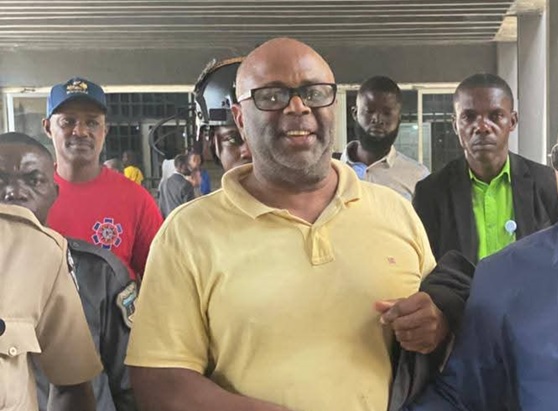
MONROVIA, LIBERIA — A forensic examination conducted in Rwanda has placed DNA evidence at the center of the criminal trial involving former National Security Agency staffer Peter Bon Jallah, with scientists reporting that genetic material recovered from four pieces of evidence matched the DNA profile obtained from the accused.
The forensic examination was conducted by the Rwanda Forensic Institute following the submission of evidence by the Liberia National Police for scientific analysis. The resulting report, dated January 22, 2026, identifies a male DNA profile recovered from a white T shirt, black T shirt, shorts and a boxer as matching the DNA profile obtained from Jallah.
Jallah is currently on trial before Criminal Court “E” on charges including gang rape, statutory rape and kidnapping. He has pleaded not guilty to the allegations and maintains his innocence.
The reported DNA findings give prosecutors a scientific connection between Jallah and four pieces of evidence collected during the investigation. The boxer, according to the information presented in the case, was collected from the victim, while the other clothing items were reportedly recovered from the crime scene.
The Rwanda examination was undertaken to determine whether biological material recovered from the evidence could be associated with individuals connected to the investigation. Scientists compared the DNA profiles generated from the evidence with the reference DNA profile obtained from Jallah.
The report concluded that Jallah could not be excluded as the contributor of the DNA detected on the four items.
That finding does not, however, answer every factual question surrounding the evidence. A DNA match can establish an association between a person and biological material, but the circumstances under which the DNA came onto an item remain matters for the court to consider together with the rest of the prosecution’s evidence.
The distinction could become important as the trial proceeds because the presence of DNA does not independently establish the precise time the biological material was deposited or the circumstances in which it came into contact with the clothing.
The forensic report also contains a finding involving tissue or toilet paper collected from the crime scene. Unlike the four clothing items, that sample produced a mixed DNA profile, indicating that genetic material from more than one person was detected.
The scientists reported that the DNA profile obtained from the tissue did not match Jallah or the victim. Both were therefore excluded as contributors to the genetic material identified on that particular item.
The contrasting findings could make the testimony of the forensic examiner particularly important when the evidence is presented in court.
Pascal, who is expected to explain the examination, could provide the court with details about how the samples were handled and tested, how the DNA profiles were generated and how the laboratory reached its conclusions regarding the four pieces of clothing.
The prosecution is expected to rely on the forensic testimony to explain the scientific basis of the DNA evidence and its connection to Jallah.
The defense, meanwhile, will have an opportunity to question the examiner and challenge the interpretation, handling and significance of the forensic findings. Such questioning could address the collection of the evidence, the possibility of contamination, the condition of the samples, the laboratory procedures used and the limits of what a DNA association can establish.
The Rwanda report therefore adds a significant scientific component to a case that must still be determined through the totality of evidence presented before Criminal Court “E.”
For the prosecution, the reported DNA association provides an evidentiary link that it can place alongside witness testimony, physical evidence and other investigative findings.
For the defense, the central issue may not simply be whether Jallah’s DNA profile appears on the items, but what that presence proves about the specific allegations against him.
The court will ultimately be required to assess the forensic findings together with all other admissible evidence before determining whether the prosecution has met its burden of proof.
Jallah remains presumed innocent unless and until the prosecution proves the charges against him beyond a reasonable doubt.
See more Liberia News Network stories in Google Search by adding LNN as one of your Preferred Sources.
★ Add LNN as a Preferred Source