
MONROVIA – Liberia’s hard-won peace has always rested on a delicate balance between memory and vigilance. Nearly two decades after the guns fell silent, unresolved grievances and rumors of identity-based mobilization still carry the power to unsettle fragile trust. The latest warning from former Press Union of Liberia leaders on rumors of ethnically driven military group reflects anxiety that silence, mixed messaging, and social media speculation could inflame tensions rooted in painful civil-war history. Their call for a clear government position is less about politics than about restoring confidence in institutions charged with protecting citizens without bias. In a nation where ethnic and religious divisions once fueled violence, clarity from leadership is not merely procedural—it is preventive diplomacy for stability and cohesion. THE ANALYST reports.
Former leaders of the Press Union of Liberia (PUL) are calling on the Government of Liberia to clarify its position on what they describe as rising ethnic and religious tensions amid reports of the establishment of a so-called National Fula Security of Liberia (NFSL), which some have characterized as a paramilitary organization.
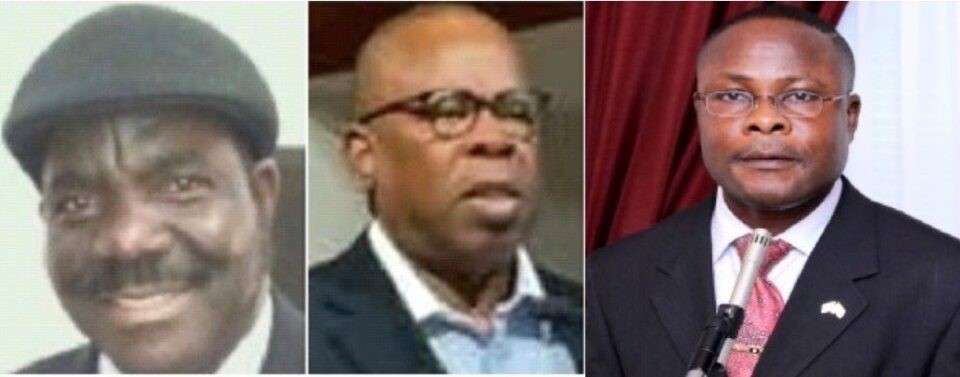
In a press statement issued from Sacramento, California, on February 22, 2026, Isaac D.E. Bantu, Emmanuel D. Abalo, and Gabriel I.H. Williams said they are concerned that growing tensions involving members of the Mandingo and Fula communities could undermine Liberia’s fragile peace, recalling that the country’s 14-year civil conflict was also fueled by ethnic and religious divisions.
The former PUL leaders urged the Executive Mansion to issue an immediate public statement clarifying the government’s position on the reported security formation, emphasizing that freedom of religion is guaranteed under the Liberian Constitution but that national security responsibilities rest with the state.
They warned that silence from authorities allows rumors to spread and communities to retreat into suspicion.
“As a fragile postwar country, Liberia sits on a fault line when leaders go quiet at a time they are expected to exercise wise leadership,” the former PUL officials said, adding that uncertainty about the law and government policy weakens trust in public institutions.
They also expressed concern about what they described as conflicting signals from officials, citing a reported disagreement between Justice Minister N. Oswald Tweh and Presidential Press Secretary Kula Bona Nyei Fofana regarding a Justice Ministry order halting the activities of the alleged NFSL.
According to the former PUL leaders, public disagreement among officials on national security matters can erode public confidence and complicate enforcement of the law.
The statement further referenced recent reports of a leak of the President’s State of the Nation Address, warning that administrative and security lapses can create instability.
The former PUL leaders drew historical parallels to past periods when information leaks and political divisions preceded national crises, and they cautioned against allowing similar patterns to take root.
They called on the President, Ministry of Justice, Liberia National Police, and National Security Agency to issue a single, unified position on the matter. They also urged Muslim and Christian leaders, civil society organizations, and human rights institutions to jointly condemn hate speech, vigilantism, and ethnic or religious scapegoating.
While stressing the need for calm and coexistence, the former PUL leaders warned that they would advocate for international sanctions against individuals they believe might exploit ethnic or religious differences for political gain.
The appeal underscores continuing concern among civil society voices that unresolved identity-based tensions, if left unaddressed, could threaten Liberia’s stability, and highlights calls for stronger communication from government authorities as rumors continue to circulate in public discourse.
