The Forestry Development Authority (FDA) has formally handed greater responsibility for the management, protection and sustainable use of forest resources to local communities through the signing of Community Forest Management Agreements (CFMAs).
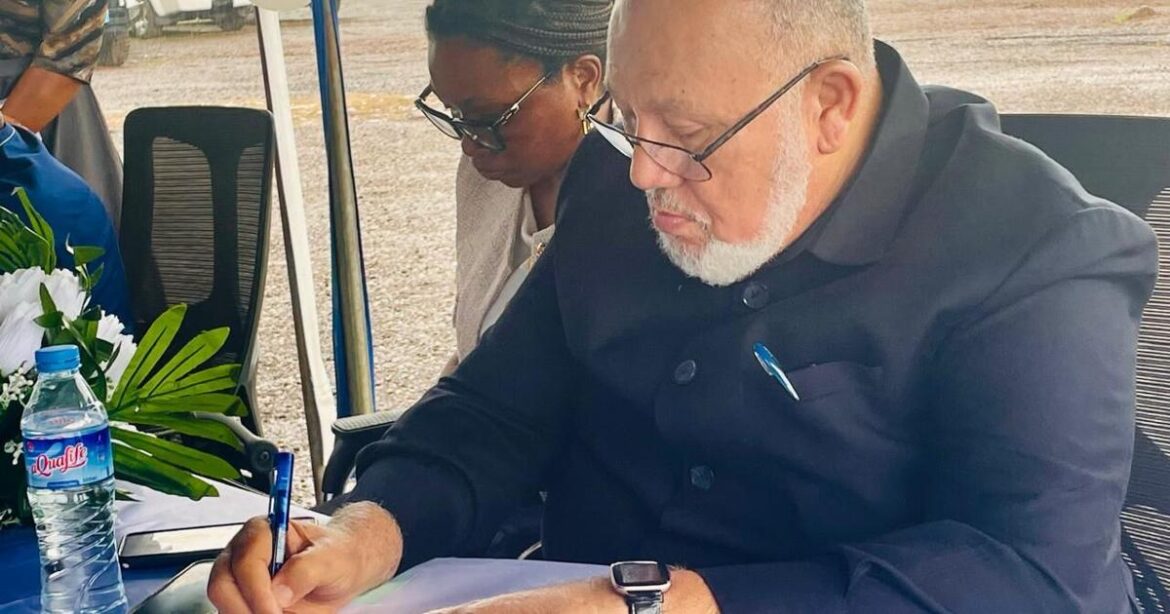
The agreements were signed on Friday, August 21, 2026, during a ceremony that brought together FDA officials, community leaders, traditional authorities, women and youth representatives, development partners and civil society organizations involved in Liberia’s community forestry program.
The signing represents a major step in Liberia’s effort to place communities at the center of forest governance while ensuring that the country’s forest resources are protected and used sustainably.
The FDA is mandated to sustainably manage and conserve Liberia’s forests and related resources for present and future generations. The Authority has also identified community forestry as an important mechanism for improving forest governance and strengthening local participation.
Speaking at the ceremony, FDA Managing Director Hon. Rudolph J. Merab, Sr. told the beneficiary communities that the agreements should be viewed not simply as rights but as a responsibility to protect the forests entrusted to them.
Merab said the government had decided, under Liberian law, to involve communities directly in the management of the country’s natural resources.
He cautioned the communities against using their new authority to destroy forests through uncontrolled farming, tree cutting or activities that threaten biodiversity.
“The forest is for you to manage as a forest, not to destroy it,” Merab emphasized.
He said Liberia is home to one of the largest remaining forest resources in West Africa, making responsible management critical to the country’s environmental future.
“If we manage it properly, we’ll always have it. If we do not manage it properly, we will lose it,” he warned.
Merab also warned that community members must respect the terms of agreements they enter into with partners and third parties.
He said communities cannot sign an agreement and subsequently undertake activities outside the terms of that agreement.
According to him, the government expects the beneficiaries to uphold their commitments to conservation and ensure that the forests remain productive for future generations.
FDA Deputy Managing Director, Nora G. Bowier described the ceremony as a historic milestone for Liberia’s forestry sector.
Bowier said the signing of the CFMAs under Liberia’s Community Rights Law officially entrusts communities with the management, protection and sustainable use of their forest land.
She said the arrangement is intended to allow communities to lead conservation efforts while promoting economic development, improving livelihoods and building resilience to climate change.
“This ceremony is just not a formality,” Bowier said, describing it instead as a celebration of empowerment and partnership.
She noted that the communities had gone through a lengthy and consultative process involving boundary clarification, planning and other requirements before reaching the signing stage.
Liberia’s broader forestry policy also recognizes community participation as an important part of forest governance. A national report submitted to the United Nations Forum on Forests describes Community-Based Forestry Management as a mechanism for implementing Liberia’s Community Rights Law of 2009 and increasing the participation of local communities, women and youth in forest governance and benefit-sharing.
Representing the Food and Agriculture Organization of the United Nations (FAO), Godwin Phylix Cudjoe, Officer-in-Charge of the FAO Representation in Liberia, described the signing as a major achievement for community participation in forest governance.
Cudjoe said the agreements demonstrate Liberia’s commitment to biodiversity conservation, climate resilience, sustainable livelihoods and inclusive natural-resource governance.
He explained that the Community-Based Forestry and Protected Area Management Project is jointly implemented by FAO and the United Nations Development Programme (UNDP), in partnership with the FDA and with funding from the Embassy of Sweden.
The project is intended to help forest-dependent communities become active stewards of their forests while improving their socioeconomic well-being.
Cudjoe praised the Swedish government for its financial support and recognized the contribution of UNDP, FDA and civil society organizations, including The Nature Compact, the Sustainable Development Institute (SDI) and the Foundation for Community Initiatives (FCI).
He said the organizations worked closely with the communities through a rigorous nine-step process leading to the signing of the agreements.
The FAO representative said community forests are important not only for protecting biodiversity but also for mitigating climate change, strengthening food security and improving rural livelihoods.
He said the initiative also seeks to ensure meaningful participation by women, youth, persons with disabilities and other marginalized groups in decisions affecting forest resources and community development.
For the communities, the agreements therefore carry both environmental and economic implications.
The expectation is that communities will be able to protect their forests while developing sustainable livelihood opportunities from forest resources without undermining the ecological systems on which their communities depend.
While the CFMA signing gives communities greater control over their forest resources, The Nature Compact warned beneficiaries to exercise caution before entering into commercial arrangements with outside companies or other third parties.
The organization’s Chief Executive Officer urged communities to understand exactly what resources exist within their forests before agreeing to allow outsiders to operate there.
He warned against signing third-party agreements without first determining how benefits would be distributed, what employment opportunities would be created and how community development needs would be addressed.
“Do not sign a third-party agreement if you do not know what is in your forest,” he cautioned.
The warning highlights one of the major challenges facing community forestry: ensuring that communities are sufficiently informed and organized to negotiate agreements that protect their interests.
The Nature Compact representative said his organization would remain available to provide technical assistance in collaboration with the FDA.
The signing also marked the culmination of a lengthy process for some beneficiary communities.
A representative of the communities said some had been waiting since 2015 to receive their formal documentation.
He expressed appreciation to the FDA and development partners for remaining engaged with the communities throughout the process.
The Sustainable Development Institute representative similarly acknowledged that the project faced significant delays and challenges.
He said the initiative was originally designed as a 10-month project but continued for more than three years. Among the challenges were misinformation and difficulties in one of the participating communities.
Despite the setbacks, he highlighted positive experiences in communities in River Gee and Sinoe, particularly livelihood activities designed to strengthen cooperation among community members.
He said communities in the two counties had already mobilized or saved more than L$2 million before additional project funds were injected, describing the achievement as an indication of the potential for collective livelihood initiatives.
Despite the progress, the FDA says funding remains an important challenge to expanding community forestry.
Merab said the lifting of a moratorium on community forests by the FDA Board of Directors would allow additional communities to participate, but cautioned that expansion would require financial resources.
He called for continued engagement with international partners, including FAO and UNDP, to support communities and help finance forest-management activities.
This funding issue could become critical as communities move from receiving agreements to actually implementing their forest-management plans.
The CFMA signing marks a shift from communities being beneficiaries of forest programs to becoming direct actors in the management of Liberia’s forest resources.
But the new responsibility comes with significant obligations.
The communities must protect biodiversity, prevent forest degradation, respect agreed management plans and ensure that any future commercial arrangements are transparent and beneficial to the people they represent.
FAO stressed that the signing is only the beginning and that the long-term success of community forests will depend on continued collaboration, transparency, accountability and strong local leadership.
For the FDA and its partners, the ultimate test will be whether the agreements can deliver on two objectives at the same time: protecting Liberia’s forests while improving the lives of the communities that depend on them.
The signing on Friday has formally placed that responsibility in the hands of local communities. The next challenge is ensuring that they have the knowledge, resources, accountability systems and institutional support needed to succeed.
See more Liberia News Network stories in Google Search by adding LNN as one of your Preferred Sources.
★ Add LNN as a Preferred Source