
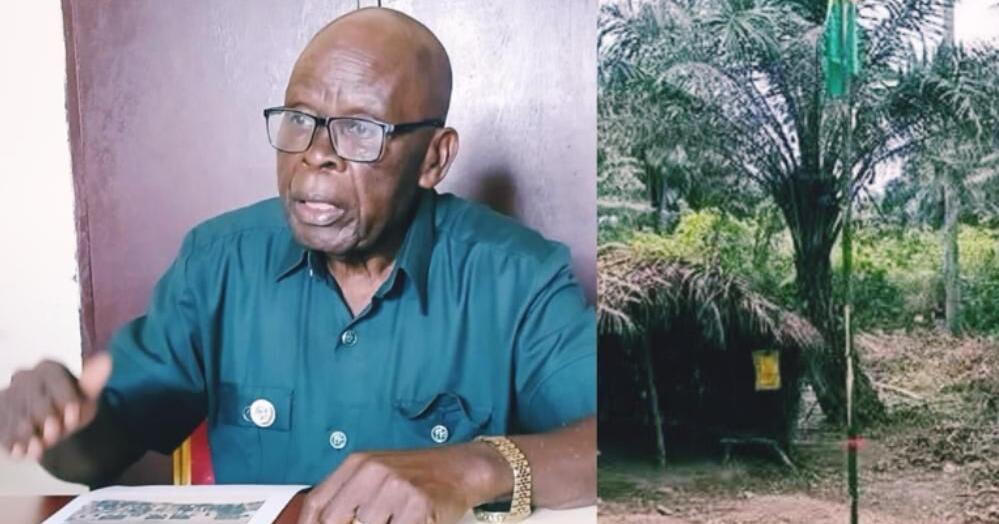
The Chairperson of the Independent National Commission on Human Rights (INCHR), Cllr. Dempster T. Brown has raised alarm over escalating fear and insecurity among residents of Lofa County following a fact-finding mission to the Sulumba border point in Foya District.
Addressing a press conference after the April 2, 2026, mission conducted in collaboration with the Office of the High Commissioner for Human Rights (OHCHR), Cllr. Brown disclosed that tensions linked to reported incursions by Guinean military forces have significantly disrupted livelihoods and heightened human rights concerns in affected communities.
According to the INCHR, the situation began intensifying on February 9, 2026, when Guinean troops reportedly crossed into Liberian territory along the Makona River, establishing unauthorized positions and restricting access to farmland and cross-border trade routes. The following day, the presence of reinforcements, including a helicopter, further escalated tensions, triggering panic and mass displacement.
Preliminary data from the Liberia Refugee Repatriation and Resettlement Commission (LRRRC) indicates that approximately 3,380 individuals, predominantly women, have been displaced across 59 border communities. Many residents fled to Foya and surrounding areas amid fears of continued military activity, including reported nighttime movements by Guinean forces.
“The persistence of foreign military presence and unresolved boundary disputes continues to pose serious threats to human rights and community safety,” Brown emphasized, noting that citizens are increasingly unable to exercise basic rights, including freedom of movement, livelihood, and personal security.
The mission also documented a violent incident involving a Liberian national, Edward Lebble, who was reportedly shot by Guinean soldiers and later treated at the John F. Kennedy Memorial Hospital in Monrovia. The Commission described the incident as a grave concern requiring urgent investigation and accountability.
Beyond security threats, the crisis has severely impacted economic activities and social services. Farming and cross-border trade, the backbone of local livelihoods, have largely come to a halt.
Additionally, over 640 children have been left out of school due to the closure of educational institutions, raising concerns about long-term educational disruption, particularly among girls.
The INCHR further reported that women and children face heightened vulnerability, including risks of gender-based violence, exploitation, and deepening poverty.
Cllr. Brown highlighted critical operational challenges confronting security personnel deployed in the area, pointing to inadequate infrastructure as a major impediment to effective response. “The lack of electricity and reliable mobile communication networks continues to undermine coordination among security forces,” he said, adding that reliance on foreign telecommunications systems poses additional risks.
Security checkpoints, the report noted, are located several minutes away from the actual border, creating gaps that may have enabled unauthorized crossings. Limited visibility at night further constrains surveillance and response capabilities.
The Commission also confirmed the seizure of sand mining equipment belonging to BK Enterprise by Guinean authorities, despite prior verification that the operations were lawful. The action, according to INCHR, has deprived both the company and surrounding communities of vital economic opportunities.
While humanitarian assistance, including food, non-food items, and communication tools, has been provided to displaced populations, the Commission stressed that significant gaps remain in shelter, healthcare, and psychosocial support.
Cllr. Brown called on the Government of Liberia to take urgent and coordinated action, including strengthening border security, investing in infrastructure such as solar-powered systems and secure communication networks, and ensuring the prompt reopening of schools.
He also urged authorities to conduct independent investigations into reported human rights violations, including the shooting of civilians and seizure of private property, while accelerating diplomatic efforts to resolve the boundary dispute with Guinea.
“The situation at the Sulumba border represents a serious and evolving human rights concern,” Brown concluded. “Addressing it requires not only immediate security interventions but also long-term strategies to restore stability, protect civilians, and rebuild community resilience.”
Despite ongoing diplomatic engagements between Liberia and Guinea, the INCHR warned that the continued presence of foreign troops and the absence of clearly enforced boundaries leave the situation fragile, with fear and uncertainty still gripping affected communities in Lofa County.
