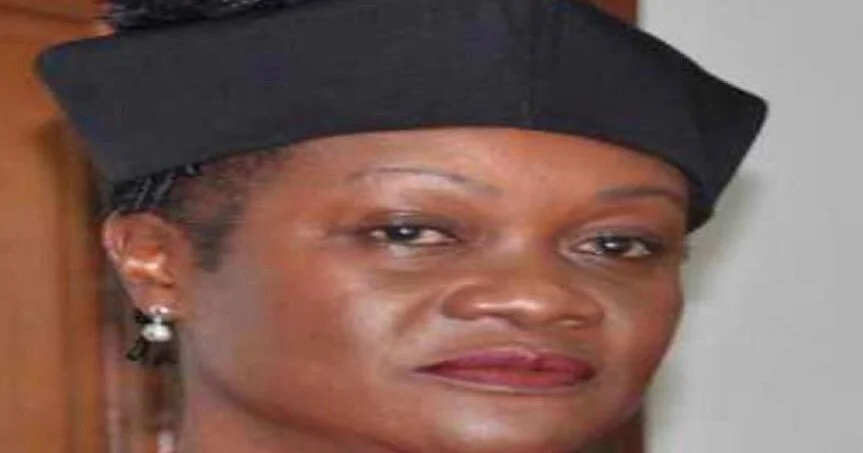
Nearly a year after Chief Justice Yamie Quiqui Gbeisay Sr. announced what was described as a historic move to audit the stewardship of his predecessor, former Chief Justice Sie-A-Nyene G. Yuoh, questions are mounting over the status of the process, with no publicly released audit report, timeline, or official update from either the Judiciary or the General Auditing Commission (GAC).
The audit, announced during the formal opening of the October Term of the Supreme Court of Liberia on October 13, 2025, was presented as a major step toward strengthening transparency and accountability within the Judiciary.
For the first time in Liberia’s history, a sitting Chief Justice had invited an audit into the administration of a predecessor following the end of that official’s tenure.
Chief Justice Gbeisay said the decision was taken to preserve institutional records and address longstanding public concerns about corruption allegations against government officials.
“We deemed it proper to do so for the sake of record because in this country, the general notion is that everyone who serves in government is corrupt,” Chief Justice Gbeisay said at the time.
The announcement came shortly after former Chief Justice Yuoh retired in August 2025 after reaching the constitutional retirement age of 70.
Her tenure had been marked by heightened public scrutiny, including disagreements involving the Judiciary and Executive Branch, as well as public concerns about administrative decisions within the Supreme Court.
Gbeisay, who served as an Associate Justice under Yuoh from 2022 to 2025 before being nominated by President Joseph Nyuma Boakai on June 30, 2025, appeared determined to establish a new standard for judicial accountability.
Following his assumption of office, the Chief Justice introduced several reforms, including directing judges, magistrates, and senior judicial officials who had not declared their assets to do so within 30 working days or face administrative action.
He also established a Judicial Malpractice and Ethics Committee and created complaint channels through SMS and WhatsApp platforms at courts across the country.
Those actions were widely viewed by observers as an attempt to restore public confidence in an institution often criticized for lacking internal accountability.
However, months after the announcement, the status of the Yuoh audit remains unclear.
As of August 2026, neither the Supreme Court nor the GAC has publicly released an audit report, announced the completion of the exercise, or provided a detailed explanation regarding the delay.
There has also been no public confirmation of when auditors began work, what areas of the Judiciary’s administration were reviewed, or when the findings are expected to be released.
The lack of information has fueled speculation among legal observers and accountability advocates about whether the process remains active or has stalled.
A senior legal practitioner, speaking on condition of anonymity, said the Chief Justice now faces a difficult institutional challenge.
“If Gbeisay pushes too hard, he risks internal resistance because many officials who served under the previous administration remain part of the Judiciary. But if nothing happens, questions will be raised about whether the audit was only intended as a symbolic gesture,” the lawyer said.
The delay has also raised questions about the relationship between judicial independence and public accountability.
Liberia’s Constitution guarantees the separation of powers among the three branches of government, while the GAC Act of 2014 grants the national audit institution authority to conduct audits across government institutions.
The Supreme Court previously addressed aspects of this relationship in the case of GAC v. The Legislature (2016), ruling that while the GAC has authority to conduct accountability audits, it cannot interfere with the constitutional functions of another branch of government.
Legal analysts say Chief Justice Gbeisay avoided a direct confrontation by inviting the audit rather than waiting for an external demand.
However, some constitutional experts argue that questions remain about the legal framework surrounding an audit initiated voluntarily by the head of another constitutional branch.
One constitutional lawyer told this newspaper that an audit must generally be based on defined objectives, financial periods, and risk assessments rather than solely on efforts to address public perception.
“You audit financial records, systems, and transactions. The purpose must be clearly defined,” the lawyer said.
The proposed audit has generated interest because of several areas within the Judiciary that critics and observers have previously questioned, including administrative spending, payroll management, and infrastructure projects.
Among the issues frequently mentioned are:
Questions have been raised about previous expenditures related to plans for a new Supreme Court complex, including architectural designs and feasibility studies.
On the same day Chief Justice Gbeisay announced the audit, the Supreme Court Marshal reportedly presented a new blueprint for a proposed Judiciary complex to President Boakai for possible engagement with international partners.
Observers say an audit could help clarify previous spending, contractual arrangements, and the development process surrounding the project.
Another area of interest involves changes made under the government’s salary harmonization program, including adjustments to judicial allowances and other benefits.
Some judicial officials have privately expressed concerns about changes to compensation structures, but a comprehensive review would be required to determine the accuracy of those claims.
Questions have also been raised about personnel changes during the 2023 political transition period, including reports of increased staffing within government institutions before the transfer of power.
A review of payroll records could determine whether recruitment procedures and financial commitments followed established regulations.
For Chief Justice Gbeisay, the unresolved audit represents a major test of his broader reform agenda.
Supporters argue that completing the process would demonstrate the Judiciary’s willingness to embrace transparency and accountability.
Critics, however, warn that allowing the initiative to fade without explanation could damage public confidence and raise questions about whether the announcement was primarily symbolic.
Nearly one year after the historic announcement, the central question remains unanswered:
Will the audit of former Chief Justice Yuoh become a landmark example of judicial accountability — or will it become another reform promise lost in Liberia’s long history of unfinished accountability efforts?
For now, the silence surrounding the process continues to challenge the credibility of the very reform agenda it was meant to advance.
See more Liberia News Network stories in Google Search by adding LNN as one of your Preferred Sources.
★ Add LNN as a Preferred Source