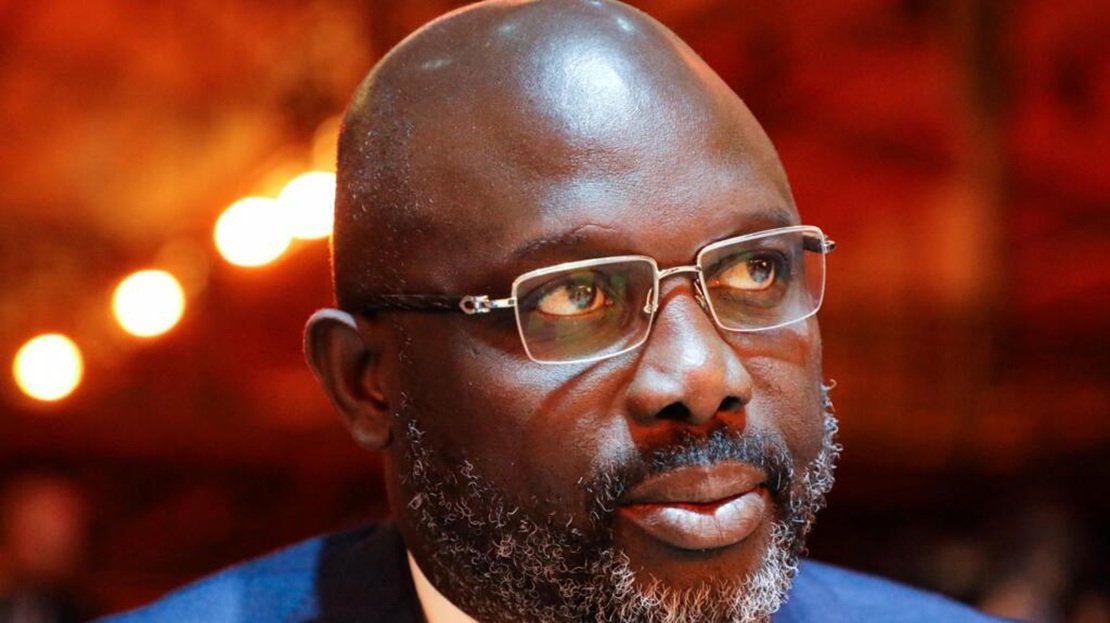
The question raised in Part One was not whether George Weah made mistakes as president. He did.
The more difficult question is this: Why did criticism of George Weah from sections of Liberia’s intellectual and professional class sometimes appear to go beyond criticism of his policies and performance and become a broader rejection of the man, his background, his political movement and, perhaps, the people who identified with him?
That question deserves a serious answer—not because George Weah should be placed above criticism, but because Liberia cannot build a healthy democracy if political disagreement becomes a struggle between social classes.
Weah’s presidency deserves rigorous examination. His administration faced legitimate criticism over governance, corruption, appointments, accountability and the failure to deliver some of the transformation promised in 2017.
But there is another truth that must not be lost in that conversation:
George Weah did not invent corruption in Liberia.
Corruption was already deeply rooted in Liberia long before Weah entered the Executive Mansion.
It existed under governments led by presidents with impressive academic credentials. It existed under governments celebrated by Western governments and international organizations. It existed under administrations staffed by some of the country’s most educated professionals.
Therefore, if Liberia genuinely wants to understand the Weah presidency, it must resist the temptation to rewrite the country’s history as though corruption arrived with him.
Corruption Did Not Begin With Weah
Weah’s failure, where the evidence establishes failures on his part, was not creating Liberia’s culture of corruption.
The larger question is whether he did enough to dismantle it.
That distinction is important.
Liberia’s corruption problem is institutional and historical. It did not suddenly appear in 2018.
And some of the people who occupied powerful positions in previous governments were among Liberia’s most respected intellectuals, professionals and technocrats.
This is why the standard of accountability must be applied consistently.
If corruption is wrong under George Weah, it was wrong under Ellen Johnson Sirleaf.
If abuse of public office is wrong under Joseph Boakai, it was wrong under the governments that preceded him.
If an official must answer questions today because of allegations involving public resources, similar questions should have been asked when comparable controversies arose under previous administrations.
Justice cannot have a political expiration date.
The Ellen Johnson Sirleaf Question
Ellen Johnson Sirleaf deserves recognition for many things. She became Africa’s first elected female president, enjoyed extraordinary international recognition and brought Liberia significant diplomatic and institutional credibility.
But international recognition did not mean that everything under her administration was beyond criticism.
Her government faced controversies involving public officials, government contracts, state institutions and allegations of conflicts of interest and favoritism.
Her son, Robert Sirleaf, became an influential figure during her presidency and chaired the National Oil Company of Liberia.
These issues deserve historical scrutiny.
Not because Ellen Johnson Sirleaf should be reduced to allegations against her administration, but because Liberia’s intellectual class should be willing to apply the same critical lens to every government.
Joseph Boakai also served as vice president throughout the Sirleaf administration.
Today, officials associated with the Weah administration have faced investigations and prosecution under the Boakai government.
Where evidence exists, such prosecution is appropriate.
But Liberia should be careful not to create the impression that corruption began when Weah became president and ended when he left office.
That would not be history. It would be political storytelling.
Was Everything Under Weah Really Bad?
Another problem with the debate surrounding Weah is the tendency in some quarters to present virtually everything associated with his administration as a failure.
That is also unfair.
Weah’s government had serious weaknesses. But it also implemented programs and projects that affected ordinary Liberians.
His administration introduced tuition-free undergraduate education at public universities and colleges.
Road construction and rehabilitation reached several communities in and around Monrovia, including neighborhood roads that had remained neglected for years.
His administration also invested in health infrastructure, including hospitals and health facilities.
These achievements do not erase the failures of the government.
They do not excuse corruption.
They do not mean every project was perfectly executed.
But neither should those achievements disappear simply because the president was George Weah.
Indeed, the record from the early months of the Weah administration shows how aggressively the government sought to demonstrate visible results. In June 2018, the Executive Mansion said that within five months the administration had begun work on a military hospital, paid WAEC fees for 34,000 students, installed hundreds of streetlights, advanced road projects, supported JFK Hospital renovation and launched other infrastructure and social initiatives. Those were government-reported accomplishments and should be evaluated independently, but they demonstrate that the administration was not doing nothing.
A serious intellectual assessment of a presidency must therefore be capable of saying:
This was wrong.
This was right.
This failed.
This worked.
That is how history should be written.
But What Happens When the Standard Changes?
This is where the debate becomes even more uncomfortable.
President Joseph Boakai came to office promising accountability and a different style of governance.
That promise gives the public the right to ask whether the same standards being applied to the previous administration are being applied to the current one.
One example is the controversial presidential project in Foya, President Boakai’s hometown.
The project has generated substantial public debate because of its reported cost, ownership, purpose and financing. Investigative reporting has placed estimates as high as US$10 million, while another account put the project at approximately US$5.5 million. President Boakai has said the presidential villas are owned by the Government of Liberia and linked them to a proposed regional peace and development center. There have nevertheless been conflicting explanations surrounding the project, which is precisely why questions about procurement, funding and accountability deserve transparent answers.
The question, therefore, is not whether the project is automatically evidence of corruption.
It is not.
The question is:
Would the same intellectual voices that demanded answers from George Weah demand equally rigorous answers from Joseph Boakai?
If the project was properly procured, publicly funded and legally executed, the government should have no difficulty providing the documentation.
If it was financed by private or foreign interests, the public deserves to know the identity of the financiers, the terms of the arrangement and what Liberia gave in return.
Transparency would settle the controversy far more effectively than political arguments.
And What About Nepotism and Regional Favoritism?
The same principle applies to government appointments.
Every president has the constitutional authority to appoint officials, and an appointment should not be considered improper merely because the appointee comes from the president’s county, region, political party or social network.
But Liberia’s political history makes perceptions of favoritism particularly sensitive.
The Boakai administration made a large number of appointments across ministries, agencies and public institutions beginning immediately after taking office. The Executive Mansion’s own records document appointments to major positions in finance, justice, information, public works, internal affairs, national security, the petroleum sector and numerous other institutions.
The legitimate question is therefore not simply where an appointee comes from.
It is:
Was the person qualified?
Was the appointment transparent?
Was merit considered?
Are the appointees performing?
Those are questions the intellectual community should ask of every president.
Not just George Weah.
Why Was Weah Judged Differently?
This is ultimately the heart of the argument.
If Liberia condemns nepotism under one president, it must condemn it under another.
If Liberia demands transparency about government spending from one administration, it must demand transparency from the next.
If an expensive government project raises questions under Weah, a similarly expensive government project should raise questions under Boakai.
If an appointment is criticized as political patronage under Weah, the same principle should be applied when another president makes appointments.
The standard cannot change because the president changes.
The Intellectual Class Has a Responsibility Too
This is not an argument against Liberia’s intellectuals.
Quite the opposite.
Liberia needs its intellectuals.
It needs lawyers to challenge unconstitutional conduct.
It needs economists to expose waste.
It needs journalists to investigate corruption.
It needs academics to analyze government policy.
It needs civil society to hold presidents accountable.
But intellectual credibility depends upon independence.
The intellectual who criticizes corruption only when it is committed by political opponents is not strengthening the fight against corruption.
The journalist who investigates one government while protecting another is not strengthening journalism.
And the academic who applies one standard to a president he dislikes and another to a president he supports is not strengthening public discourse.
Liberia needs intellectuals who are loyal to principles, not personalities.
The Real Question About George Weah
George Weah was not perfect.
His administration made mistakes.
His government deserves scrutiny.
Where evidence establishes corruption or abuse of public office, those responsible should answer.
But Weah should not be blamed for inventing problems that existed before his presidency.
Nor should every accomplishment of his administration be erased because his political style was different from that of Liberia’s traditional elite.
His administration paved roads in communities that had waited for infrastructure.
It expanded access to public higher education through tuition-free undergraduate education.
It invested in health facilities and other infrastructure.
Whether those programs were sufficient is a legitimate debate.
Whether they were perfectly executed is another legitimate debate.
But they happened.
And history should record them.
The Final Question
Perhaps the question is therefore not whether Liberia’s intellectuals hate George Weah.
That would be too simplistic.
The more important question is whether some members of the intellectual establishment have sometimes allowed political preference, social class and personal perception to influence the way they judge political leaders.
And that question must be asked honestly.
George Weah was not the first Liberian president to face corruption allegations.
He was not the first president to appoint political allies.
He was not the first president to face accusations of favoritism.
He was not the first president to struggle with governance.
And he will not be the last.
What should change is the standard by which all presidents are judged.
Liberia Must Grow Beyond the Weah Debate
Ultimately, Liberia needs to move beyond the question of whether George Weah was good or bad.
The country needs a political culture where every president is judged by the same standard.
Where corruption is corruption regardless of who commits it.
Where competence matters more than credentials.
Where roads are evaluated by whether they serve people—not by who constructed them.
Where free education is judged by the opportunities it creates—not by the political party that introduced it.
Where hospitals are judged by the lives they save.
Where government projects are judged by transparency, value and public benefit.
Where appointments are judged by merit and performance rather than the president’s political affiliation or place of origin.
And where intellectuals challenge power without becoming partisans of power.
George Weah did not create Liberia’s problems.
He inherited many of them.
His failure, where established by evidence, was that he did not solve enough of them.
But Liberia must be equally honest about the fact that the intellectual and political establishment had decades before Weah to solve many of those same problems.
Some succeeded.
Many failed.
And some of the very people now demanding accountability from Weah’s former officials once occupied positions of authority themselves.
That is why the historical record must be broader than George Weah.
The story of Weah is not simply the story of a footballer who became president.
It is the story of a Liberia divided between its intellectual elite and its ordinary citizens; between international approval and domestic legitimacy; between political tradition and political disruption.
And perhaps the greatest lesson is this:
Liberia does not need leaders who are merely acceptable to intellectuals, foreigners or political elites.
It needs leaders who are accountable to the Liberian people.
And it needs intellectuals courageous enough to hold every leader to the same standard—including the leaders they admire.
See more Liberia News Network stories in Google Search by adding LNN as one of your Preferred Sources.
★ Add LNN as a Preferred Source