By Kruah Thompson
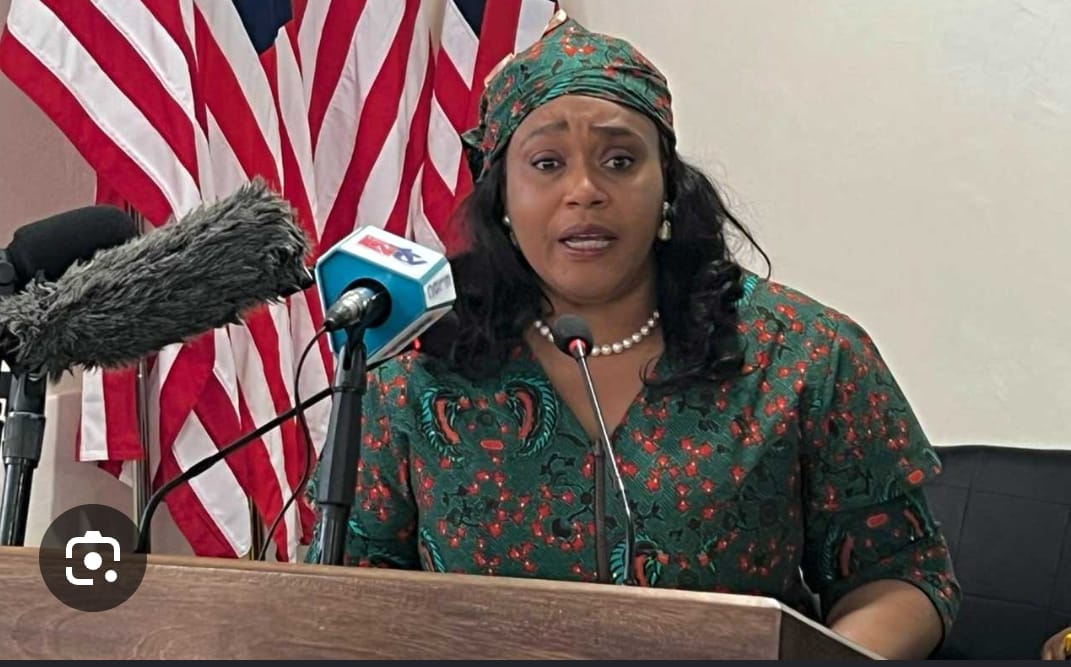
MONROVIA, August 12, 2026 — Education Minister Dr. Jarso Jallah says the Government of Liberia has allocated funding for grants to public primary schools across the country as part of efforts to abolish registration fees and remove financial barriers preventing children from enrolling in school.
Dr. Jallah said the grants are intended to support schools in implementing the government’s free-registration policy and prevent school authorities from shifting the financial burden to parents.
She made the disclosure Tuesday, August 11, during the Ministry of Information’s regular press briefing in Monrovia.
According to the Minister, once the grants are distributed, public primary schools will not be permitted to collect registration fees. She said the government intends to sustain the initiative through an equitable funding formula based on the actual cost of educating each child, regardless of where the child attends school.
Dr. Jallah said the Ministry of Education is working with the Ministry of Finance and Development Planning and international partners to develop an education investment strategy aimed at establishing a more equitable formula for financing public education.
She said the initiative is being supported through the Excellence in Learning Project, launched by President Joseph Nyuma Boakai in 2025, which provides a framework for distributing grants to public primary schools across the country.
The Minister said the policy followed a government assessment that identified financial constraints as one of the major reasons many Liberian children remain out of school.
She said recent enrollment data collected by the Ministry and compared with figures from the 2022 census revealed significant gaps in school enrollment.
“If we consider the census from 2022 in major contexts, you will see the difference between the numbers recorded from that time to the one we recently conducted,” she said.
According to Dr. Jallah, the data also showed that Liberians across various age groups remain outside the formal education system, with the inability of families to afford education-related costs among the major contributing factors.
In response, she said the Ministry has introduced two major reforms: removing registration fees at public primary schools and strengthening the system for approving schools to operate.
“Both reforms ask the same question: can we trust the school with my child? Free registration removes cost barriers, and digitized permit systems remove the trust barriers,” she said.
Dr. Jallah acknowledged concerns that some schools could introduce other charges to compensate for the removal of registration fees.
She said the Ministry is reviewing charges for identification cards, uniforms and other school-related items to determine whether they represent legitimate operational costs or could be used as alternative registration fees.
“We have fees that are a burden to parents, and we are looking into the facts to determine whether those fees are truly going to support the school to operate,” she said.
The Minister stressed that parents should not be required to pay registration fees at public primary schools, which remain tuition-free.
She said the Ministry is also establishing an enforcement mechanism to ensure compliance with the policy, including sanctions against school authorities found violating the regulation.
“We are not punishing schools; it’s about removing barriers from families,” Dr. Jallah said.
As part of the enforcement process, she disclosed that the Ministry is recruiting 116 interns who will be deployed to support schools and county-level education officials in implementing the policy.
The Ministry has also engaged the Ministry of Local Government to involve county superintendents and other local authorities in monitoring compliance, while communication is being forwarded to the Liberia National Police.
“So we have a structure of enforcement built around this policy,” she said.
Dr. Jallah said the reforms were not introduced arbitrarily, explaining that the process began in 2024 with an assessment of enrollment data and the identification of counties experiencing significant enrollment gaps.
She said the government’s objective is to remove financial barriers to primary education while ensuring that public schools receive adequate support to operate without relying on registration fees paid by parents.
See more Liberia News Network stories in Google Search by adding LNN as one of your Preferred Sources.
★ Add LNN as a Preferred Source