
Published: October 20, 2026
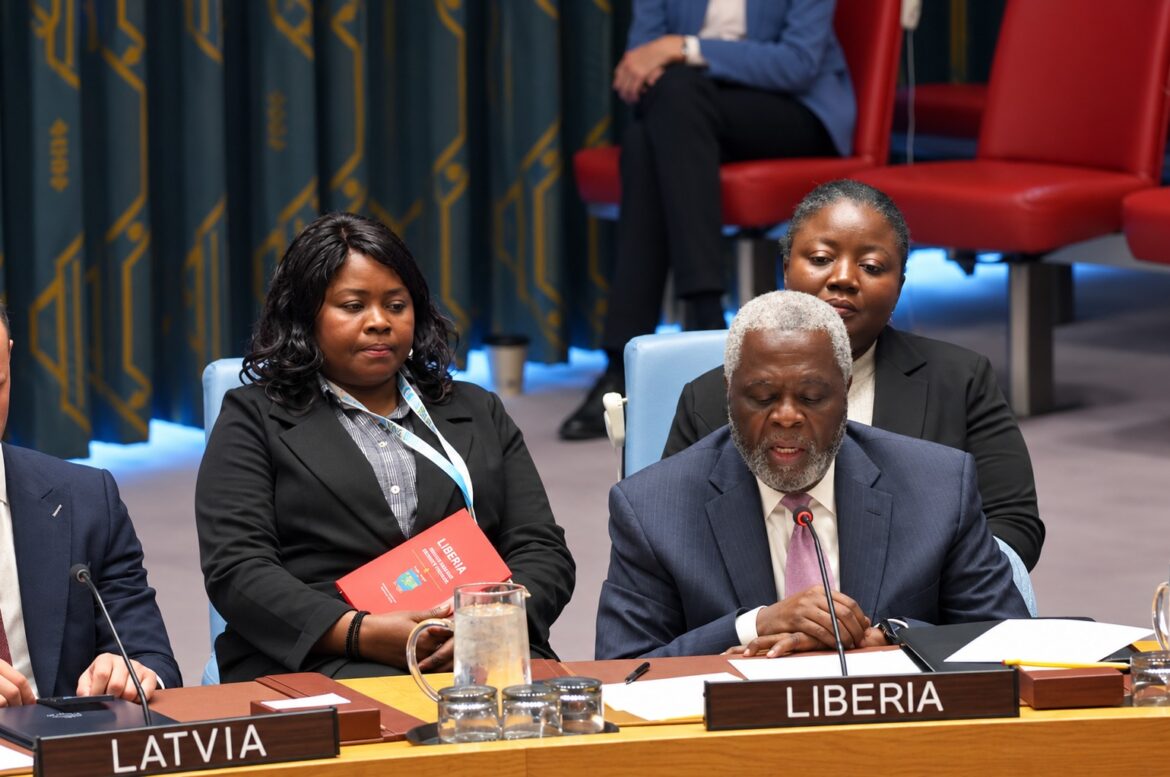
Ambassador Lewis G. Brown II, speaking for the Security Council’s African members, urged faster deployments and stronger support for Haiti’s Gang Suppression Force.
UNITED NATIONS — The international force sent to break Haiti’s gangs has fewer than a third of its authorized personnel, Liberia’s U.N. ambassador told the Security Council on Monday. He spoke a day after an ambush on Salvadoran members of the force left some of them unaccounted for.
\n
Ambassador Lewis G. Brown II, Liberia’s permanent representative, spoke on behalf of the A3, the council’s African members: the Democratic Republic of the Congo, Somalia and Liberia. He said the Gang Suppression Force has 1,563 uniformed personnel, short of its authorized strength of 5,500.
\n
“Mandates must be matched by the means to implement them,” Brown said. He urged partners to speed up deployments and provide predictable financing, equipment, mobility, communications, medical support and logistics.
\n
Brown opened by condemning “in the strongest terms” the Oct. 18 ambush on Salvadoran personnel serving with the force. He expressed solidarity with El Salvador and with the families of those still missing, and called for every effort to secure their safe recovery.
\n
“Those responsible must be held accountable. The attack underscores the urgent need for this Council to continue to stand with the Haitian people,” he said.
\n
Brown framed the bloc’s position around a single test. “For the A3, the measure of progress is whether Haitians can live safely, trust their institutions, and choose their leaders,” he said.
\n
He said civilian protection must guide every operation. Citing the secretary-general’s latest report, he said 1,123 people were killed and 440 injured in Haiti between July 15 and Oct. 12. He said reports of casualties during security operations, including among people with no ties to gangs, “require particular attention.” He called on all security forces to prevent civilian harm, track casualties reliably, and ensure prompt and impartial investigations of alleged violations.
\n
“Public confidence is a security asset; protecting civilians helps preserve it,” Brown said.
\n
On Haiti’s political transition, the A3 welcomed the work of Haitian authorities and the Provisional Electoral Council to prepare for elections. The bloc took note of the postponement of the election campaign and the extension of candidate registration. It encouraged the electoral council, with support from the U.N. Integrated Office in Haiti, known as BINUH, to set out “a realistic and credible way forward, with clear milestones and the resources required to meet them.”
\n
Security conditions must inform election planning, but “insecurity must not become an indefinite barrier to restoring democratic governance,” Brown said. He called for inclusive dialogue among Haitian stakeholders and coordinated support from regional and international partners, including the Caribbean Community.
\n
The A3 welcomed resolution 2829 (2026), which extended the mandates of the Gang Suppression Force and the U.N. Support Office in Haiti. It also welcomed resolution 2831 (2026), which renewed the Haiti sanctions regime.
\n
“Gangs do not arm or finance themselves in isolation,” Brown said. He urged all member states, particularly countries of origin and transit, to enforce the arms embargo fully, disrupt trafficking networks and investigate those financing gang violence. He called for full cooperation with the council’s Sanctions Committee and its Panel of Experts, while safeguarding humanitarian aid and legitimate civilian activity.
\n
The bloc condemned gang violence, including sexual violence used to terrorize communities. It said children recruited by gangs must be treated primarily as victims, with access to protection, education, psychosocial care and reintegration support. Brown welcomed the Haiti Peace Dividends Fund and urged partners to back nationally led programs linking reintegration, livelihoods, justice and community violence reduction.
\n
He said Haiti’s humanitarian appeal remains badly underfunded. As of Oct. 16, only 49.1% of the US$880.3 million humanitarian response plan had been funded. He urged donors to close the gap and called for safe, rapid and unhindered humanitarian access.
\n
“Haitian ownership does not mean leaving Haiti to confront this crisis alone,” Brown said. He said international support must align with Haiti’s own priorities and fully respect its sovereignty.
\n
Liberia is serving a two-year term on the Security Council for 2026 and 2027.
See more Liberia News Network stories in Google Search by adding LNN as one of your Preferred Sources.
★ Add LNN as a Preferred Source