
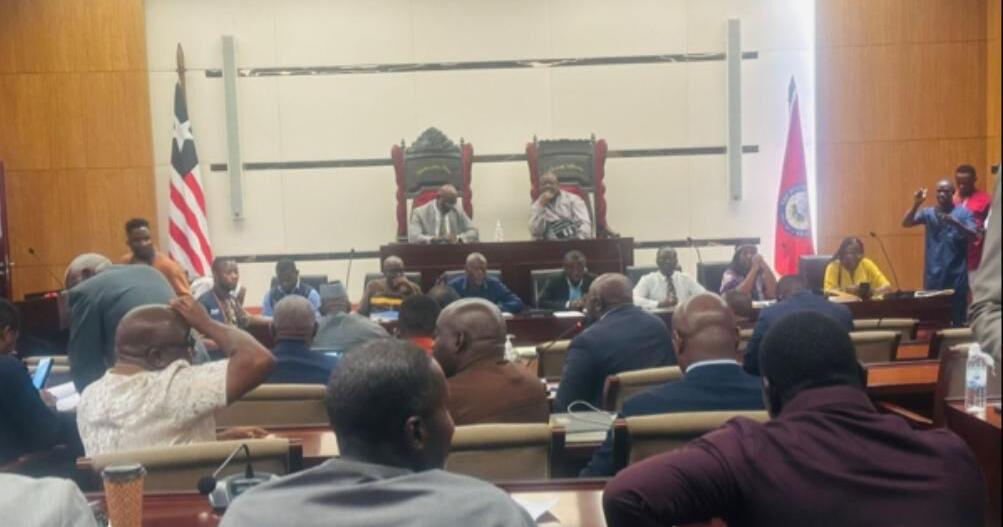
In a decisive move aimed at strengthening governance, promoting transparency, and safeguarding public resources, the House of Representatives of Liberia has unanimously passed a law prohibiting active government officials from serving on boards or management of public institutions.
Sponsored by Representative Anthony Williams of Maryland County, the legislation seeks to prevent conflicts of interest, ensure accountability, and prioritize the national interest over individual or political gain, marking a landmark development in Liberia’s governance framework.
In an exclusive interview with the Daily Observer, Representative Williams explained that the law aligns with both international best practices and Liberia’s National Code of Conduct, which restricts appointed officials from engaging in active partisan politics while holding government positions. “This move is designed to strengthen governance and prevent abuse of power. By prohibiting active officials from serving on boards or management of public institutions, we are ensuring that public resources are managed independently, efficiently, and in a manner that serves the broader national interest,” he said.
Williams further emphasized that the legislation was crafted with the aim of promoting integrity, good governance, and oversight within public entities, recognizing that past appointments of government officials to boards often led to politicization, conflicts of interest, and weakened institutional oversight.
The law, officially titled “AN ACT TO PROHIBIT ACTIVE GOVERNMENT OFFICIALS FROM SERVING ON THE BOARDS OR MANAGEMENT OF ANY PUBLIC INSTITUTION, AND TO ESTABLISH A FRAMEWORK FOR INDEPENDENT SUPERVISION AND TRANSPARENT OVERSIGHT,” comprehensively defines its scope, governance structures, and enforcement mechanisms.
It establishes that public institutions are entities wholly or partially owned by the Government of Liberia, created either by statute or executive order, and engaged in commercial, regulatory, or service delivery functions.
Active government officials, according to the legislation, include any individual currently holding elected or appointed positions within the Executive, Legislative, or Judicial branches, such as ministers, deputies, commissioners, lawmakers, and presidential advisors.
Boards of directors are defined as governing bodies responsible for strategic oversight, fiduciary accountability, and policy direction of public institutions, while independent supervisors are Liberian citizens appointed to boards who do not occupy any active government role.
The law stipulates that benefits and remuneration include all forms of compensation granted to board members, including monetary and non-monetary payments, honoraria, approved reimbursements, and sitting fees.
The legislation specifically prohibits dual service by any active government official, and all current appointments will be rendered null and void ninety days after the law takes effect. No waiver, executive order, or ministerial discretion is permitted to override these provisions. The President is mandated to appoint qualified independent Liberian citizens to public institution boards, provided they do not hold any active government position.
To qualify, appointees must have a minimum of ten years of professional experience in finance, law, governance, or the relevant sector, demonstrate ethical conduct and public service, have no active political leadership role, and possess a clean criminal record with no pending corruption investigations.
All appointments are required to maintain gender balance and equitable regional representation, ensuring that no single gender or region dominates any board composition. These measures reflect Liberia’s commitment to inclusive governance under both national laws and international protocols.
Boards are tasked with approving strategic plans and budgets, overseeing financial audits and compliance, ensuring alignment with national development priorities, and submitting quarterly performance reports to the Legislature. The Legislature, in turn, is empowered to review annual reports, conduct public hearings to assess board performance, and recommend sanctions or reforms when necessary.
The General Auditing Commission is required to conduct annual audits of all public institutions governed by boards and submit its findings to the Legislature for review and action. In addition, all public institutions must submit updated organizational charts, current board and management rosters, and compliance roadmaps to the Chief Clerk of the House of Representatives and the Secretary of the Senate to ensure full adherence to the law.
The Governance Commission will issue implementation guidelines, provide technical support for board restructuring, monitor compliance, and report quarterly to the Legislature.
Budgetary allocations from the Ministry of Finance will be contingent upon compliance, and any public institution found non-compliant will be subject to administrative sanctions, including suspension of discretionary funding, public disclosure of non-compliance, and potential dismissal of responsible leadership.
Individuals who knowingly circumvent the law will face immediate removal from office, disqualification from future public appointments for five years, and criminal prosecution under applicable anti-corruption laws.
The law also establishes strict compensation standards for board members and chairs. Board chairs will receive between US$3,000 and US$4,000 per official sitting, while board members will receive between US$2,000 and US$3,000 per official sitting. Compensation includes all forms of honoraria, sitting fees, and related benefits and will be disbursed in U.S. dollars or the Liberian dollar equivalent based on the prevailing exchange rate. All compensation is subject to statutory deductions and audit verification to ensure fiscal discipline and prevent excessive or preferential payments.
The legislation mandates that boards must consist of no fewer than five and no more than nine members, all meeting the established criteria. Each board is responsible for the strategic oversight, budget approvals, monitoring financial compliance, and ensuring alignment with national priorities.
The Legislature retains oversight authority and can conduct public hearings, while the General Auditing Commission will provide external audit verification. By separating political authority from enterprise oversight, the law aims to prevent politicization of public institutions, improve governance standards, and foster public trust in the management of government entities.
Representative Williams emphasized that the law represents a transformative approach to public service, moving Liberia closer to international best practices in corporate governance. It reflects principles outlined in the Organisation for Economic Cooperation and Development (OECD) Guidelines on Corporate Governance, the African Union Charter on Public Service, and ECOWAS governance protocols, all of which advocate for the separation of political authority from enterprise oversight to ensure efficiency, accountability, and transparency.
“With this law, Liberia is taking a firm stance on the independence of public institution management. It sends a clear signal that public service is about duty to the nation and not personal gain,” he stated.
The law is enforceable 30 days after publication in official handbills and becomes binding upon enactment by the signature of the President. It mandates that all existing appointments of active government officials to boards or management are voided, and any provision inconsistent with the law is repealed. Executive orders or statutory provisions authorizing dual service in public institutions are nullified, ensuring immediate compliance with the new governance standards.
Institutional realignment under the law requires all public entities to submit revised organizational charts, rosters, and compliance roadmaps to legislative authorities to ensure full adherence. The Governance Commission will monitor and enforce compliance, providing guidance and reporting quarterly on the progress of implementation. The Ministry of Finance will condition budgetary allocations on compliance, reinforcing the link between fiscal support and good governance practices.
The law emphasizes the importance of transparency in financial management and accountability for both board members and public officials. By requiring standardized remuneration and oversight, the legislation aims to remove disparities, favoritism, and opportunities for corruption. Compensation thresholds for board members and chairs ensure that boards are professionally incentivized without overstepping national budgetary constraints. All financial disbursements are subject to audits by the General Auditing Commission, ensuring alignment with national standards and fiscal discipline.
In addition to strengthening governance and oversight, the law seeks to improve institutional performance, strategic planning, and operational efficiency. By establishing independent boards, the government ensures that decisions on public institutions are made by qualified professionals who are free from political interference. This approach is expected to enhance the quality of public service delivery, safeguard national assets, and improve public confidence in government operations.
Representative Williams highlighted the broader impact of the law on Liberia’s governance framework, stating that it aligns with ongoing reforms aimed at improving transparency, accountability, and ethical standards across all government institutions. By preventing active officials from serving on boards, the law eliminates conflicts of interest, reduces opportunities for misuse of public resources, and ensures that management decisions are guided by professionalism and adherence to national priorities. “This legislation is a major stride toward accountable governance that prioritizes the nation’s interest. It ensures that public service is about duty, integrity, and responsibility rather than personal enrichment,” he said.
The law also provides a clear framework for appointing independent supervisors to boards. Supervisors must have no current government role, possess relevant professional experience, demonstrate ethical conduct, and be free from criminal convictions or corruption investigations. Appointments must maintain gender balance and regional equity, reinforcing Liberia’s commitment to inclusive governance. These measures ensure that boards are representative, professional, and accountable, fostering public trust and institutional credibility.
The House of Representatives emphasized that the new law is a preventive measure as much as a corrective one. By voiding existing appointments of active officials and establishing strict appointment criteria, the legislation prevents future conflicts of interest and reinforces ethical governance. Institutions are required to submit detailed compliance roadmaps and organizational charts, allowing legislative authorities to track implementation and ensure adherence to the law.
Non-compliance carries sanctions, including budgetary restrictions, public disclosure, and leadership accountability, ensuring that all entities operate within the legal framework.
In conclusion, the passage of this law represents a milestone in Liberia’s governance reform agenda. By separating political authority from institutional oversight, establishing independent boards, and enforcing strict accountability measures, Liberia is taking concrete steps to strengthen public sector management, reduce corruption, and enhance transparency. The law also serves as a model for other African nations seeking to align public sector governance with international standards.
Representative Williams summarized the significance of the legislation, stating, “With this law, Liberia is sending a strong message that public service is about duty, not personal gain. It is a major stride toward accountable governance that prioritizes the nation’s interests and safeguards the integrity of our public institutions.”
