
The House of Representatives has entered a politically sensitive and legally consequential phase following the removal of Montserrado County District #10 Representative Yekeh Kolubah from its official roster, a development that now places the Legislature on a strict statutory timeline to notify the National Elections Commission (NEC) of a vacancy that could trigger a by-election.
According to information from the House Chief Clerk’s Office, Rep. Kolubah has been struck from the official roster and the seat has been treated as vacant. Under Liberia’s New Elections Law, the Legislature is required to formally notify the NEC within 30 days of the occurrence or declaration of a vacancy in order to initiate the legal process for a by-election.
With Kolubah already removed from the roster, the countdown has officially begun, leaving 26 days remaining for the House to transmit formal notification to the NEC. The Commission would then be responsible for initiating the electoral process to fill the seat in accordance with constitutional and statutory requirements.
The development marks a significant escalation in a long-running political and disciplinary dispute involving the outspoken lawmaker, whose tenure in the House has frequently been marked by controversy, confrontations, and legal challenges.
Despite the administrative action taken by the House leadership, supporters and staffers aligned with Rep. Kolubah remain hopeful that the decision may not be final.
They are drawing comparisons to previous high-profile legislative disputes, particularly referencing the case involving former Speaker J. Fonati Koffa, where judicial intervention was sought to determine procedural legitimacy and legislative authority.
In Kolubah’s case, his supporters are banking on the possibility that the Supreme Court could intervene and potentially order the House of Representatives to return to the status quo ante.
Such an order, if issued, would effectively reverse the administrative removal and require the House to reinstate Kolubah while allowing him to be afforded what his camp describes as “full due process” in line with constitutional protections.
Legal observers note that while the House retains internal disciplinary powers, those powers are often subject to judicial review where questions of due process, constitutional interpretation, and legislative procedure arise. The outcome of any potential court action could therefore significantly influence whether the vacancy declaration proceeds or is suspended.
Meanwhile, political tension within the House has been further heightened by disputes surrounding the resolution that reportedly led to Kolubah’s expulsion or removal process. After Tuesday’s legislative session, confusion emerged regarding the authenticity and validity of signatures attached to the resolution.
At least three lawmakers are now reportedly disputing aspects of the signature process, raising questions about procedural compliance and internal agreement on the decision. The controversy has fueled further debate within political and legal circles about whether the process met all required legislative standards.
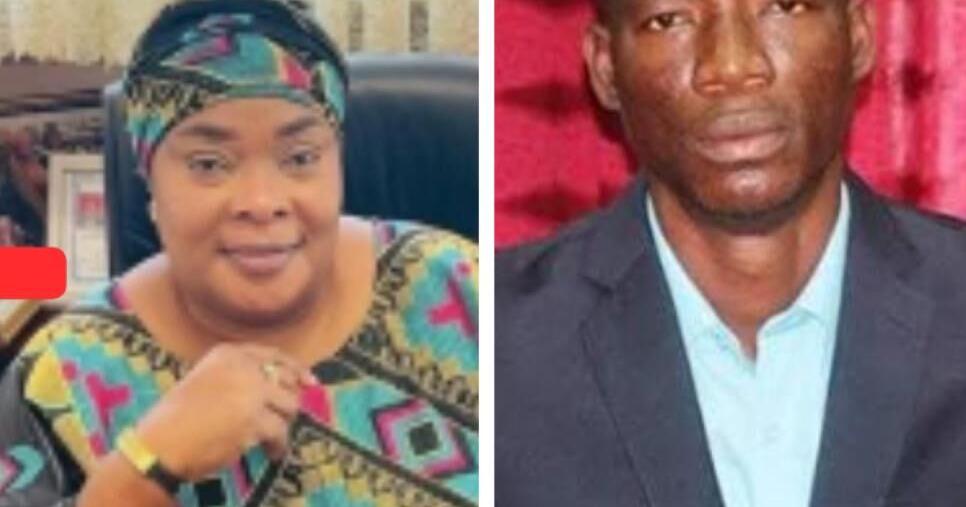
Amid the growing uncertainty, Bong County Electoral District #6 Representative Moima Briggs-Mensah publicly addressed the issue, confirming that she did sign the resolution in question. Her clarification comes in response to media reports suggesting that she could not have signed the document because she was allegedly outside the country at the time.
Those reports indicated that Rep. Briggs-Mensah was in Sierra Leone attending an ECOWAS delocalized meeting focused on issues affecting street children, raising doubts about her physical presence when signatures for Kolubah’s expulsion were solicited. However, the lawmaker firmly dismissed those claims and maintained that she personally endorsed the resolution.
“If I were given that resolution 27 times to expel Rep. Kolubah, I would sign it 27 times,” Rep. Briggs-Mensah stated a comment that underscores the firmness of her position and reflects the intensity of sentiment surrounding the legislative action.
Her statement has since added another layer to an already politically charged atmosphere, as lawmakers, observers, and political supporters continue to debate both the process and the motivations behind the move against Kolubah.
Beyond the immediate controversy, Rep. Briggs-Mensah also used the opportunity to highlight upcoming constituency engagements and legislative outreach activities in Bong County.
She announced that the House Committee on Gender, Children and Social Welfare — working in collaboration with UN Women — will conduct an outreach meeting with women in District #6, Bong County, scheduled for April 29.
The engagement is expected to focus on gender inclusion, community welfare, and social development issues affecting women and children within the district, reflecting ongoing legislative efforts to strengthen community-level participation in governance.
In addition, Rep. Briggs-Mensah disclosed that she will deliver her 2026 Annual Report to constituents two days after the outreach meeting. The report is expected to provide an update on her legislative work, development initiatives, and constituency-level interventions over the past year.
While these developments continue at the constituency level, the broader political focus remains fixed on the House’s handling of the Kolubah matter and the ticking statutory deadline to notify the NEC.
The 30-day window, of which 26 days remain, is now seen as a critical period that could determine whether a by-election is eventually triggered or whether judicial intervention alters the trajectory of the process.
For now, uncertainty continues to define the situation. On one hand, the House appears to have initiated a procedural pathway toward declaring the seat vacant. On the other, legal and political resistance, coupled with the possibility of Supreme Court intervention, leaves the final outcome unresolved.
As the deadline approaches, attention is expected to intensify both within the Legislature and in the courts, with stakeholders closely watching whether the House proceeds with formal notification or whether legal challenges halt the process altogether.
What remains clear is that the Kolubah case has once again placed the intersection of legislative authority, electoral law, and judicial oversight at the center of Liberia’s political discourse, with implications that could extend beyond a single district seat.
