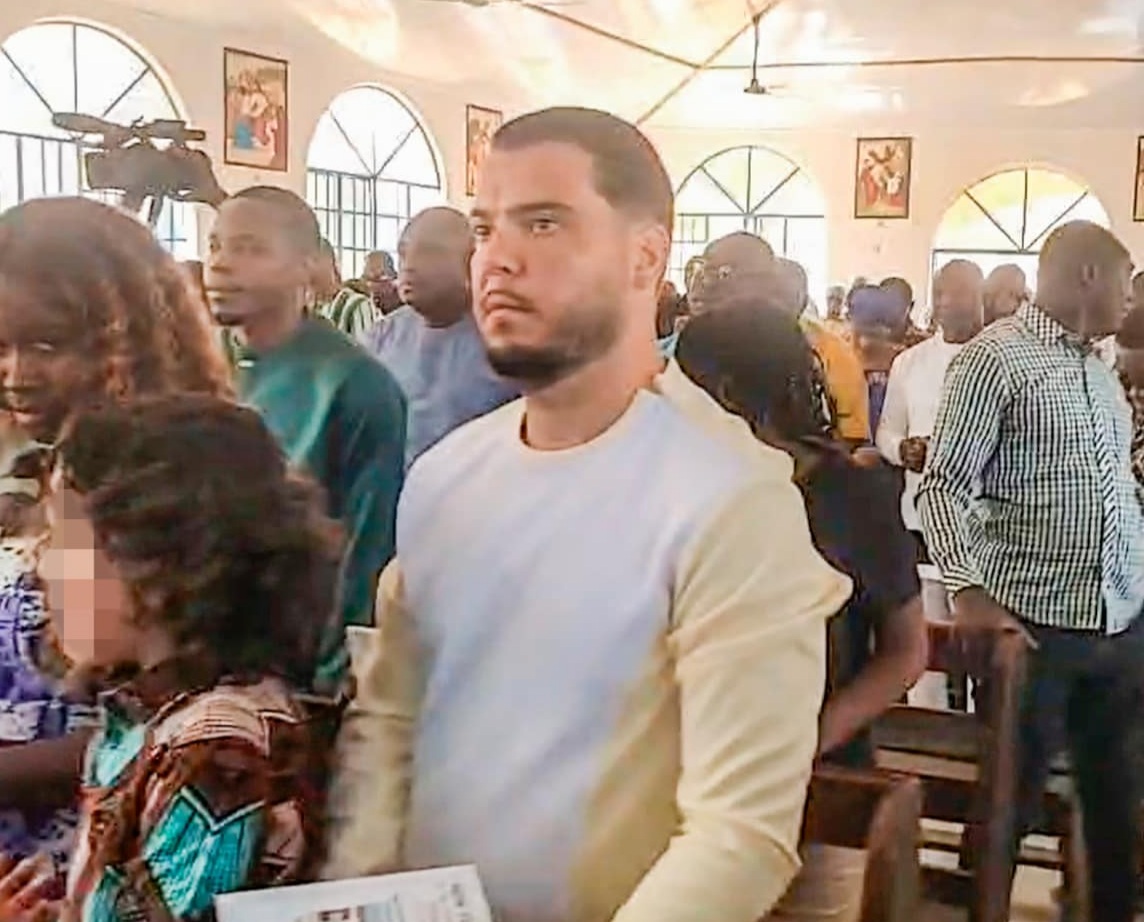
Church footage, alleged access to officials and growing Dutch pressure raise wider questions about Sierra Leone’s security institutions and the regional cocaine trade
FREETOWN — A question that began with the reported presence of one of Europe’s most wanted drug traffickers in Sierra Leone has developed into a much larger regional security and accountability issue.
Jos Leijdekkers, popularly known as “Bolle Jos,” is a convicted Dutch drug trafficker who was sentenced in absentia in the Netherlands to 24 years in prison for cocaine trafficking and other serious crimes. Dutch authorities have been pursuing his arrest, while multiple international investigations have placed him in Sierra Leone.
But the bigger question is no longer simply where Leijdekkers is hiding.
It is how he allegedly managed to establish himself in Sierra Leone, maintain access to influential circles, appear alongside members of President Julius Maada Bio’s family and senior government officials, and reportedly continue operating despite international efforts to locate him.
And now another question is emerging:
Did the alleged network extend beyond Sierra Leone into Liberia, Ghana or Guinea?
That question requires investigation rather than assumption.
The church footage that changed the story
The controversy exploded after photographs and video from a January 1, 2025 New Year’s Day church service in Tihun, President Bio’s home area, appeared to show Leijdekkers sitting close to the presidential family.
Reuters used facial-recognition analysis to verify the man’s identity as Leijdekkers and reported that he was seated beside a woman identified by sources as President Bio’s daughter, Agnes Bio. Other investigative reporting also placed him close to the presidential family during the service.
The footage itself does not establish that President Bio knew Leijdekkers’ identity or participated in his alleged criminal activities.
That distinction must remain clear.
But the footage creates a serious institutional question:
How could a fugitive described by Dutch authorities as one of Europe’s most wanted criminals appear so openly at an event attended by the country’s president and senior officials?
That question becomes even more significant given subsequent reports concerning Sierra Leonean security and immigration officials.
The “Omar Sheriff” mystery
Leijdekkers has reportedly used the name “Omar Sheriff” while in Sierra Leone.
The controversy over his identity raises questions about how a wanted international fugitive was allegedly able to live in the country for an extended period without being apprehended.
Reuters reported that Leijdekkers had allegedly been in Sierra Leone since early 2023 and that sources described him as receiving high-level protection. Those claims have not been established through a criminal conviction in Sierra Leone.
The question for Sierra Leone’s immigration and security institutions is therefore straightforward:
What identity did the country recognize him under, what documents did he possess, and how did he obtain or maintain them?
Those are questions that should be answerable through official records.
The immigration chief controversy
The case became even more damaging when video surfaced showing Alusine Kanneh, then Sierra Leone’s chief immigration officer, receiving a birthday gift from a man identified as Leijdekkers at a Freetown restaurant.
President Bio subsequently removed Kanneh from his position. The government did not publicly provide a detailed explanation for the dismissal at the time.
The footage does not prove what the gift contained or that Kanneh knowingly assisted drug trafficking.
But the episode raises a legitimate question about access.
Why was the country’s senior immigration official socializing with a man identified internationally as a wanted Dutch drug trafficker?
And what, if anything, did immigration authorities know about the man’s identity and activities?
The same footage reportedly showed senior officials from Sierra Leone’s drug-enforcement structures present at the gathering, further increasing the need for a transparent explanation.
From Sierra Leone to the wider region
The implications become much more serious if allegations concerning Leijdekkers’ broader network are substantiated.
International reporting has described Sierra Leone as a transit point in the cocaine trade between Latin America and Europe. Spanish authorities have also linked Leijdekkers to a major cocaine shipment allegedly organized from Sierra Leone, although he has not been charged in that particular case.
Meanwhile, Dutch Justice Minister David van Weel said in July 2026 that the Netherlands was seeking greater cooperation from West African countries, including Liberia and Ghana, over Leijdekkers and his alleged criminal network. The Dutch government has been attempting to build regional pressure on Sierra Leone to hand him over.
That development changes the regional dimension of the story.
The question is no longer whether Sierra Leone alone has a problem.
It is whether West Africa is dealing with a cross-border trafficking network capable of moving cocaine, money and criminal influence through multiple countries.
If credible evidence eventually establishes connections to Liberia, Ghana or Guinea, those countries would need to investigate independently rather than simply rely on the Sierra Leonean account.
At present, however, claims of a specific operational network extending into those countries should be treated as allegations requiring evidence, not established facts.
What does this mean for President Bio?
President Bio has not been publicly established by the evidence cited here as a participant in Leijdekkers’ alleged drug-trafficking activities.
That is an important distinction.
Being photographed or filmed in the same location as a fugitive does not, by itself, establish criminal knowledge or participation.
But the political and institutional questions surrounding the case are different.
President Bio is ultimately the country’s head of state and head of government. His administration therefore faces questions about how Sierra Leone’s immigration, police and drug-enforcement institutions handled a fugitive who was allegedly living openly in the country.
The issue becomes particularly sensitive because Leijdekkers was reportedly able to appear at a major public religious gathering attended by the presidential family.
The appropriate question is therefore not simply:
“Was President Bio standing near a drug lord?”
It is:
“What did Sierra Leone’s institutions know, when did they know it, and what did they do with that information?”
What an independent investigation should establish
A credible investigation would need to establish several basic facts:
- When did Leijdekkers first enter Sierra Leone?
- Under what name and travel documents did he enter?
- Did he obtain residency, citizenship or other official documentation?
- Who facilitated his accommodation and business activities?
- What government officials had contact with him?
- What financial transactions or businesses were associated with him?
- Did Sierra Leonean officials knowingly provide protection or assistance?
- What exactly happened to the former immigration chief’s case?
- Did Leijdekkers maintain connections with drug-trafficking networks operating elsewhere in West Africa?
- Is there evidence linking his alleged operations to Liberia, Ghana or Guinea?
- What information have Dutch, Belgian, Spanish and other international authorities provided to Freetown?
- And why has a fugitive of such international significance remained outside the reach of law enforcement?
These are questions of evidence—not political speculation.
The pressure from the Netherlands
The Netherlands is no longer treating the matter as a routine extradition issue.
Dutch officials have sought regional support for greater pressure on Sierra Leone to surrender Leijdekkers. Dutch Justice Minister David van Weel has reportedly discussed the issue with Ghana and said countries including Liberia and Ghana are increasingly concerned about the situation.
That means Sierra Leone now faces scrutiny not only from Dutch law enforcement but also from regional partners and international agencies concerned about organized crime and cocaine trafficking.
For President Bio, the stakes are therefore increasingly institutional and diplomatic.
The government must demonstrate that Sierra Leone is capable of identifying and pursuing international criminals regardless of their wealth, nationality, political connections or proximity to powerful people.
The bigger West African question
The Leijdekkers case should also force a broader conversation across West Africa.
Liberia, Sierra Leone, Guinea and Ghana share porous borders, busy ports, airports and extensive commercial links.
A sophisticated international trafficking organization does not need to operate entirely inside one country.
It can move people, money and narcotics across borders while exploiting differences between national law-enforcement systems.
That is why allegations involving Liberia, Ghana or Guinea should not be dismissed—but neither should they be treated as proven without documentary, financial, law-enforcement or judicial evidence.
The unanswered question
The central issue is no longer merely whether Jos Leijdekkers was present at a church service in Sierra Leone.
The bigger question is:
How did one of Europe’s most wanted convicted drug traffickers allegedly establish himself in Sierra Leone, gain access to influential circles, appear alongside members of the presidential family and senior officials, and reportedly remain there despite international efforts to locate and extradite him?
And perhaps even more importantly:
Did the alleged network stop at Sierra Leone’s borders, or did its operations reach Liberia, Ghana, Guinea and other parts of West Africa?
President Bio has not been established by the cited evidence as a participant in Leijdekkers’ alleged criminal enterprise.
But as international scrutiny intensifies, his administration faces a fundamental test of institutional credibility: whether Sierra Leone can provide a credible, independently verifiable account of how a wanted international drug trafficker allegedly operated inside the country for years, who knew about his presence, who interacted with him, whether his alleged activities crossed national borders—and whether anyone inside the system helped him evade justice.
That is the question that now demands answers.
See more Liberia News Network stories in Google Search by adding LNN as one of your Preferred Sources.
★ Add LNN as a Preferred Source