
The approval of a US$266 million financing package by the International Monetary Fund under its Resilience and Sustainability Facility (RSF) marks a significant turning point in Liberia’s economic and climate policy trajectory. But beyond the headline figure, the real question is whether the funding can address the country’s deep-rooted vulnerability to climate shocks and structural economic fragility.
The 21-month arrangement, endorsed on April 27, 2026, is designed to support Liberia’s climate adaptation agenda, strengthen infrastructure resilience, and enhance pandemic preparedness—all while reinforcing macroeconomic stability.
Unlike traditional IMF programs that focus narrowly on fiscal stabilization, the RSF represents a shift toward long-term structural resilience. It is aimed at helping countries like Liberia confront climate risks that increasingly threaten economic growth and social stability.
“The approval reflects growing international confidence in Liberia’s reform trajectory and commitment to sustainable development,” said Finance Minister Augustine Kpehe Ngafuan.
The IMF itself underscored Liberia’s recent economic gains, noting that growth reached 5.1 percent in 2025, largely driven by mining expansion. Yet, this growth model—heavily reliant on extractive industries—remains vulnerable to external shocks and does little to cushion the country against climate-related disruptions.
That is where the RSF package becomes critical.
What the US$266M Really Means for Liberia
At its core, the package represents three interlinked opportunities such as climate-proofing the economy, strengthening external buffers, and unlocking additional financing.
Liberia is among the countries most vulnerable to climate change despite contributing minimally to global emissions. The funding is expected to support investments in flood control systems, coastal protection, and climate-resilient infrastructure.
Part of the financing will support the Central Bank of Liberia, helping to stabilize the balance of payments and build foreign reserves—critical in a context of global uncertainty, including rising oil prices and geopolitical tensions.
Perhaps most importantly, IMF approval often acts as a “seal of credibility,” encouraging other development partners to provide additional funding.
As IMF Deputy Managing Director Bo Li noted, the facility is expected to “leverage synergies with development partners,” effectively multiplying its impact.
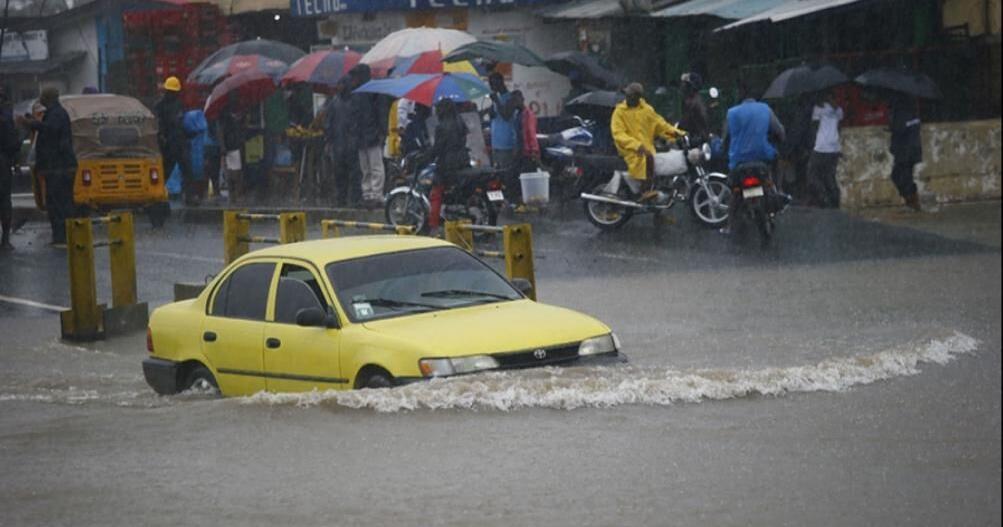
The country’s climate challenges are neither abstract nor distant—they are immediate and intensifying.
Coastal Erosion—communities in areas like West Point and Buchanan face constant threats from rising sea levels, with entire settlements at risk of displacement; Flooding in Urban Centers—a Monrovia regularly experiences severe flooding during the rainy season, disrupting livelihoods and damaging infrastructure; Agricultural Instability—erratic rainfall patterns are affecting crop yields, threatening food security in a country where subsistence farming remains widespread, and deforestation and land degradation—unsustainable land use practices are weakening natural buffers against climate shocks.
“These are not future risks—they are current realities,” the Executive Director of the Environmental Protection Agenda said at an event last year. “Climate change is already shaping economic outcomes in Liberia.”
The issue is, is the RSF capable of closing the resilience gap adequately? However, the effectiveness of the US$266 million package will depend on how strategically it is deployed. If directed toward resilient roads, drainage systems, and coastal defenses, the funds could significantly reduce the economic losses associated with climate disasters.
The package also emphasizes governance reforms—ensuring that climate financing is transparent, accountable, and results-driven.
One of the biggest tests will be whether the funding reaches vulnerable communities, where the effects of climate change are most severe.
“Resilience is not built in policy documents—it is built in communities,” a civil society advocates have often said.
While the government has welcomed the IMF’s decision, some caution that financing alone is not a solution.
The country’s past challenges with public financial management, project implementation delays, and governance gaps raise concerns about absorptive capacity—the ability to effectively utilize large-scale funding.
“Liberia has often struggled not with accessing funds, but with executing projects efficiently,” said an economist familiar with IMF programs.
There is also the question of conditionality. RSF disbursements are tied to specific reform benchmarks, meaning that failure to meet targets could delay funding.
The RSF approval comes at a time when Liberia is pursuing its ARREST Agenda for Inclusive Development, which aims to balance economic growth with social and environmental sustainability.
The challenge now is integration—ensuring that climate resilience is not treated as a standalone issue but embedded across sectors, from agriculture and energy to urban planning.
Minister Ngafuan acknowledged this broader vision, emphasizing that the financing will support “critical reforms aimed at strengthening macroeconomic stability, enhancing climate resilience, and improving institutional capacity.”
Liberia’s access to the RSF places it among a select group of countries benefiting from this relatively new IMF instrument. Combined with ongoing support under the Extended Credit Facility (ECF), which has already disbursed over US$105 million, the country now has a significant financial cushion to pursue reforms.
But the stakes are high.
If effectively managed, the US$266 million package could reduce vulnerability to climate shocks, strengthen economic stability, improve investor confidence, and enhance long-term development prospects.
If mismanaged, it risks becoming another missed opportunity in a country that has often struggled to translate financial inflows into sustainable outcomes.
Ultimately, the IMF’s approval is both a vote of confidence and a test.
It signals that Liberia is on a reform path credible enough to attract international support. But it also places responsibility squarely on the government to deliver measurable results.
As the country’s future is shaped increasingly by climate uncertainty, the question is no longer whether funding is available—but whether it can be transformed into resilience.
“This is a moment of opportunity,” a Liberian political analyst noted on social media Tuesday night. “But opportunity alone does not guarantee change. Execution does.”
