
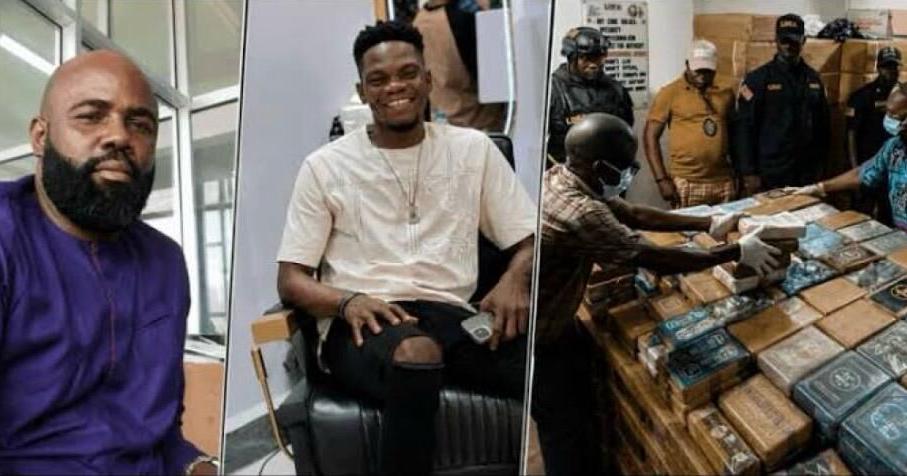
The Independent National Commission on Human Rights (INCHR) has called on the Liberian Government to expedite the prosecution of suspects in the high-profile US$19 million drug trafficking case, warning that prolonged delays in the judicial process could erode public confidence in the country’s justice system and weaken the fight against organized crime.
In a statement issued Thursday, the Commission also urged President Joseph Nyuma Boakai to endorse and swiftly transmit the proposed Health Equity Fund Bill to the Legislature, arguing that access to justice and access to healthcare are inseparable pillars of a democratic society committed to protecting human rights.
While addressing two seemingly distinct national issues—drug trafficking and healthcare financing—the Commission framed both as constitutional and human rights obligations that test Liberia’s commitment to the rule of law, accountability, and the protection of human dignity.
Although the INCHR commended the Joint Security and international partners for conducting what it described as a “meticulous, coordinated, and highly professional” investigation into the alleged US$19 million narcotics case, it stressed that a successful investigation alone is insufficient without timely judicial action.
“The Liberian people deserve timely, transparent, and impartial justice. Delays undermine public confidence, weaken deterrence, and risk compromising the integrity of criminal proceedings,” the Commission declared.
The rights body urged the Ministry of Justice to ensure the speedy prosecution of every individual formally charged while calling on security agencies to intensify efforts to locate suspects who remain at large.
“The fight against illicit drugs cannot be selective,” the Commission stated.
The remarks come amid heightened public interest in one of Liberia’s largest recent narcotics investigations, a case that has attracted significant domestic and international attention because of both the scale of the alleged drug shipment and concerns over transnational organized crime.
For the INCHR, ensuring that the case proceeds without unnecessary delay is not simply about securing convictions—it is about demonstrating that Liberia’s justice institutions can effectively enforce the law regardless of the status or influence of those accused.
Why the INCHR’s Intervention Matters
The Commission’s intervention carries particular significance because of its constitutional mandate.
Established by an Act of the Legislature in 2005 and later entrenched under Article 15 of the constitutional framework governing fundamental rights and reinforced through subsequent legislation, the commission serves as the country’s principal national human rights institution. It was created partly in response to recommendations of the country’s post-war governance reforms and obligations arising from the Comprehensive Peace Agreement, with the responsibility to monitor human rights, advise government, investigate abuses, and promote compliance with both domestic and international human rights standards.
Unlike law enforcement agencies, the INCHR does not prosecute criminal cases. Instead, it serves as an independent oversight institution, ensuring that government actions remain consistent with constitutional guarantees and international legal obligations.
Its decision to publicly intervene in the drug trafficking case therefore reflects broader concerns about public confidence in Liberia’s justice system.
Historically, several major corruption and organized crime cases in Liberia have generated significant public attention during investigations but later faced criticism over prolonged court proceedings, weak prosecutions, or limited convictions.
Against that backdrop, the Commission’s warning about delays is widely viewed as an appeal for institutions to demonstrate that justice can be both independent and efficient.
Rather than treating narcotics trafficking solely as a criminal justice problem, the Commission framed it as a direct threat to fundamental human rights.
According to the INCHR, the consequences of illicit drug trafficking extend beyond criminal networks to affect families, communities, public health, economic development, and national security.
“Drug abuse and illicit trafficking destroy lives and families; expose children and young people to addiction; fuel violent crime and corruption; undermine public health; threaten the right to life and security; weaken economic opportunities; and impede sustainable national development.”
The Commission added, “A society overwhelmed by drugs cannot fully guarantee the dignity, security, and freedoms of its citizens.”
This framing reflects an increasingly accepted international approach that views narcotics trafficking not merely as a law enforcement challenge but as an issue with profound social, developmental, and human rights implications.
While demanding swift prosecution, the INCHR was equally emphatic that constitutional protections must remain intact.
Citing Article 21(h) of Liberia’s Constitution alongside Article 11(1) of the Universal Declaration of Human Rights, the Commission reminded government officials, journalists, and the public that every accused person remains presumed innocent until proven guilty by a competent court.
It cautioned against public condemnation, humiliation, or prejudgment of suspects before judicial proceedings conclude.
“The fight against drugs and the protection of human rights are not competing objectives. They are complementary obligations of a democratic society governed by the rule of law.”
This balanced position reflects one of the Commission’s core responsibilities: ensuring that the State combats crime without sacrificing constitutional guarantees.
The statement also serves as a reminder to the media to exercise restraint in reporting criminal proceedings, avoiding language that presumes guilt before verdicts are delivered.
In the same statement, the Commission turned its attention to another longstanding national challenge—the financing of healthcare.
The INCHR welcomed the Ministry of Health’s submission of the proposed Health Equity Fund Bill and called on President Boakai to endorse and forward the legislation to the Legislature without delay.
Describing the proposal as Liberia’s first comprehensive national health insurance framework, the Commission said the bill represents an important opportunity to expand access to healthcare, particularly for vulnerable populations who remain excluded because of financial hardship.
“Access to quality healthcare is a fundamental human right enshrined in our Constitution and the international treaties Liberia has ratified.”
The Commission argued that the legislation would move Liberia closer to universal health coverage while fulfilling both domestic constitutional obligations and international human rights commitments.
It also pledged to support the bill’s timely passage once submitted to lawmakers.
Although addressing two different policy areas, the Commission’s statement conveys a unified message about governance.
By urging for swift prosecution in a major narcotics case with advocacy for universal healthcare, the INCHR underscores that the protection of human rights extends beyond responding to abuses. It also includes ensuring that citizens have access to justice, security, healthcare, and equal protection under the law.
The statement illustrates the Commission’s evolving role as more than a reactive institution responding to violations. Increasingly, it is positioning itself as a policy advocate, encouraging government institutions to uphold constitutional principles across sectors.
The Commission’s intervention comes at a critical time for Liberia’s democratic institutions.
The outcome of the US$19 million drug trafficking case is likely to be viewed as an important measure of the country’s resolve to combat organized crime while respecting due process.
Similarly, the government’s handling of the proposed Health Equity Fund Bill will signal its commitment to expanding social protection and fulfilling the constitutional right to health.
For the INCHR, these are not unrelated challenges. They represent two sides of the same democratic obligation: a State that protects its citizens from criminal threats while ensuring their rights, dignity, and welfare are equally safeguarded.
In calling for both swift justice and improved healthcare access, the Commission has reinforced a central principle of democratic governance—that the rule of law is measured not only by how effectively a government punishes wrongdoing, but also by how faithfully it protects the rights and well-being of its people.
