Published: October 9, 2026
MONROVIA — Former Foreign Affairs Minister D. Maxwell Saah Kemayah and other former senior government officials, including former Internal Affairs Minister Varney A. Sirleaf, have been found guilty in the high-profile Saudi Arabia-donated rice corruption case before Criminal Court “C” at the Temple of Justice in Monrovia.
However, the jury returned a hung verdict on the charges of theft and criminal conspiracy against Kemayah, meaning jurors failed to reach a unanimous decision on those two counts.
The distinction is significant because the jury’s inability to reach a verdict on the theft and criminal conspiracy charges does not constitute a conviction or an acquittal on those counts.
The outcome marks a major development in the closely watched corruption trial involving the alleged misappropriation of humanitarian assistance donated by the Kingdom of Saudi Arabia to support disaster relief efforts and vulnerable communities in Liberia.
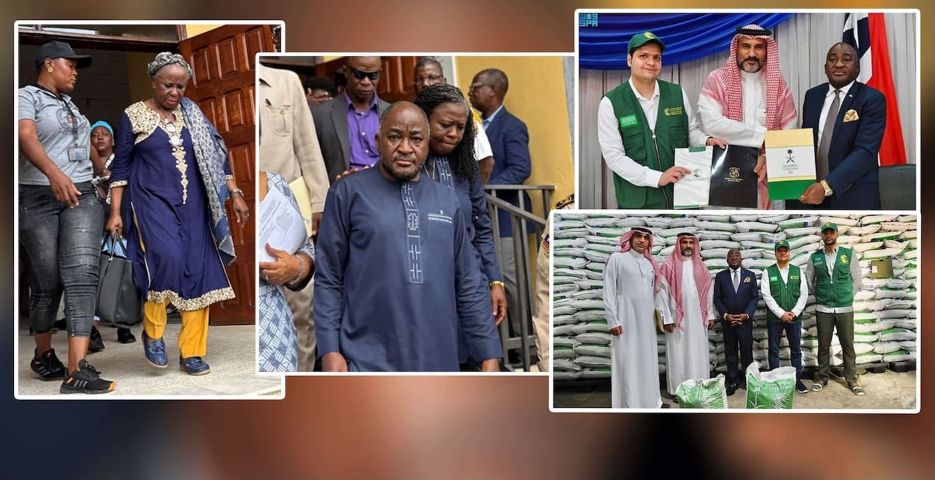
The case centered on the handling, storage and distribution of thousands of bags of rice donated to the Liberian government, with prosecutors alleging that a substantial portion of the consignment was diverted or could not be properly accounted for.
According to the indictment, the donation comprised 29,412 bags of 25-kilogram rice, with prosecutors alleging that 25,054 bags were misappropriated or distributed outside authorized channels.
The disputed commodity was valued at approximately US$425,918.
Kemayah, who served as foreign affairs minister under former President George Manneh Weah, was among several former government officials prosecuted over their alleged roles in managing and distributing the donated rice.
Throughout the proceedings, state prosecutors presented witnesses and documentary evidence concerning the movement of the commodity between the National Disaster Management Agency (NDMA) and the General Services Agency (GSA).
The prosecution sought to establish how the rice was received, stored, transferred and subsequently distributed, arguing that irregularities in the handling of the donation resulted in the alleged misappropriation of thousands of bags.
Kemayah consistently denied stealing or unlawfully diverting the donated rice.
Testifying in his defense, the former foreign minister maintained that his involvement was primarily connected to facilitating the humanitarian donation through Liberia’s diplomatic relationship with Saudi Arabia.
He argued that responsibility for the physical storage, management and distribution of the commodity rested with the government institutions assigned to handle the consignment.
The defense challenged the prosecution’s account, maintaining that the movement of the rice between government agencies was part of administrative arrangements rather than evidence of criminal wrongdoing.
Former Internal Affairs Minister Varney A. Sirleaf, who also served as chairman of the NDMA Board, was among the officials found guilty in the case.
During the trial, Sirleaf testified that the decision to transfer the donated rice to the GSA was an institutional arrangement rather than a unilateral directive from Kemayah.
His testimony supported the defense’s argument that the movement of the commodity involved several government institutions and was intended to address storage and inventory concerns.
Former GSA Director-General Mary T. Broh also testified during the proceedings, providing an account of the involvement of various government institutions in handling the donated rice.
Her testimony challenged aspects of the prosecution’s allegations concerning the movement and management of the commodity.
The jury’s decision produced differing outcomes for the defendants and the charges brought against them.
While Kemayah was found guilty on other counts, jurors were unable to reach a unanimous verdict on the separate charges of theft and criminal conspiracy against him.
The specific counts on which Kemayah was convicted, as well as the complete findings concerning the other defendants, were not immediately available in the information provided.
The hung verdict leaves the theft and criminal conspiracy charges unresolved, subject to further proceedings and decisions by the court.
The case has attracted considerable public attention because of the involvement of former senior government officials and the nature of the commodity at the center of the prosecution.
The rice was donated as humanitarian assistance, raising questions about accountability, transparency and the management of international donations intended to benefit vulnerable Liberians.
With the jury’s findings delivered, attention now turns to the court’s next proceedings, including the disposition of the unresolved charges, sentencing on any convictions and possible legal challenges by the defendants.
The Liberian Investigator (TLI) will continue following the proceedings and provide updates on the court’s formal findings, the specific convictions and any subsequent legal developments.
See more Liberia News Network stories in Google Search by adding LNN as one of your Preferred Sources.
★ Add LNN as a Preferred Source