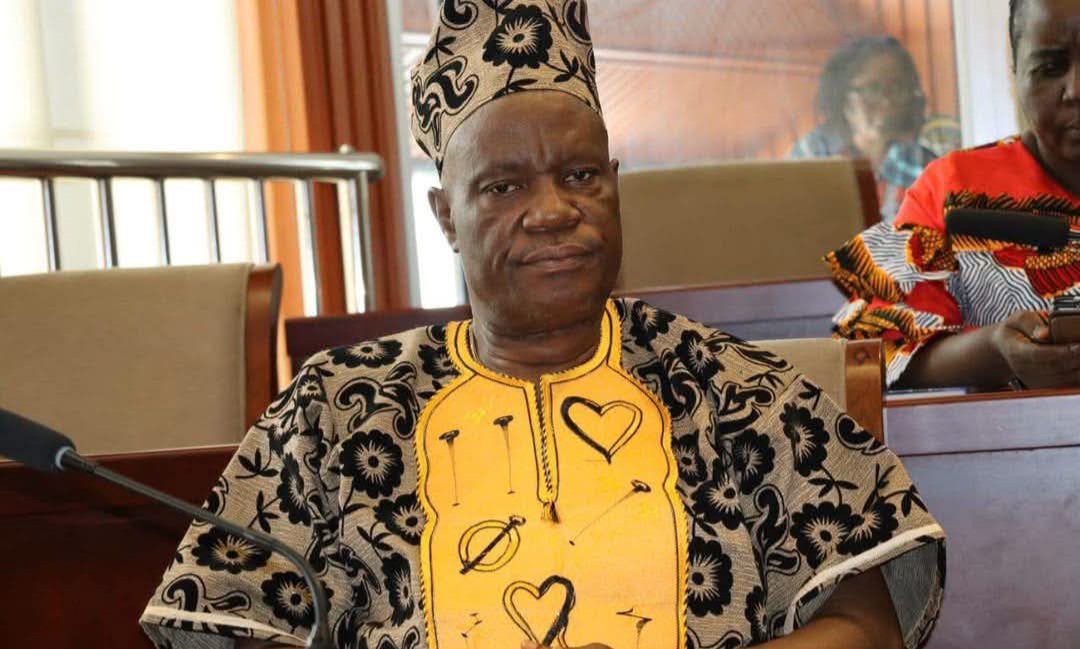
MONROVIA, LIBERIA – The expulsion of Senator Samuel G. Kogar from the Movement for Reconstruction and Democracy (MDR) has exposed a deeper political fault line within the party over its relationship with the Unity Party-led government.
The MDR Executive Committee voted on Saturday, August 29, 2026, to remove Kogar from the party, but Chairman Cllr. Cooper W. Kruah’s explanation suggests the dispute extends beyond the complaint that triggered the disciplinary process.
At the center of the disagreement is the MDR’s decision to remain firmly aligned with President Joseph Nyuma Boakai and the Unity Party.
Kruah made clear that the party views that alliance as a political commitment that members are expected to respect.
He accused Kogar of taking positions that were inconsistent with the party’s agreed direction, particularly when he publicly expressed views without consulting MDR leadership.
The chairman said the party could not accept a situation in which one of its members participated in a government partnership while simultaneously adopting an opposition posture toward that same administration.
That position appears to have transformed Kogar’s expulsion from an internal disciplinary matter into a broader debate about political loyalty, party autonomy and the limits of dissent within a governing alliance.
Kruah said MDR remains committed to the Unity Party partnership and continues to support President Boakai.
He warned that any conduct considered detrimental to that relationship could trigger disciplinary action where it violates the party’s governing rules.
The immediate basis for Kogar’s expulsion, however, was a complaint considered through the party’s internal process.
Kruah said the senator received the complaint and was afforded an opportunity to respond. The process later reached a stage at which Kogar and his lawyer did not appear for a scheduled hearing.
The MDR leadership treated the absence as a relinquishment of the opportunity to defend himself and proceeded with its deliberations.
The resulting recommendation was Kogar’s expulsion, which the Executive Committee subsequently adopted.
Kruah then ordered the removal of Kogar’s image from the party headquarters and demanded the return of party property in the senator’s possession.
The timing and circumstances of the decision added another striking element to the development.
Kogar reportedly arrived near the party headquarters as the proceedings were taking place but did not enter the building.
He remained in his vehicle across from the headquarters, photographed the proceedings and left shortly afterward.
The episode underscored the widening distance between the senator and the party leadership.
Kogar’s expulsion nevertheless does not automatically end his political role as a senator.
The MDR’s action is a party decision, while Kogar’s mandate as an elected member of the Liberian Senate is a separate constitutional matter.
That distinction could become increasingly important as the senator determines his next political steps.
The development also raises questions about how much room exists within Liberia’s governing coalition for politicians who disagree with the position of their respective parties.
For the MDR, the answer appears increasingly firm. Membership comes with adherence to the party’s constitution, internal decisions and political commitments.
Kruah said the party would continue to defend its relationship with the Unity Party and the Boakai administration.
See more Liberia News Network stories in Google Search by adding LNN as one of your Preferred Sources.
★ Add LNN as a Preferred Source