
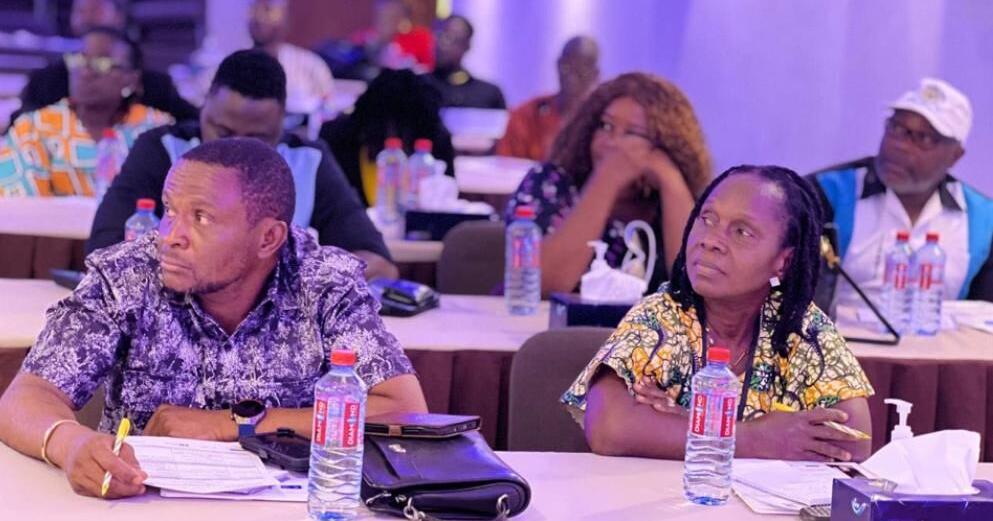
A three-day human resource management training aimed at strengthening the administrative and institutional capacity of the Legislature officially opened Monday, May 11, with stakeholders emphasizing that effective democratic governance depends not only on elected lawmakers, but also on the competence and professionalism of the staff supporting legislative operations.
The training, which runs through Wednesday, May 13, is being organized by the Netherlands Institute for Multiparty Democracy (NIMD) with support from the European Union through the Liberia Electoral Support Project managed by the United Nations Development Program (UNDP).
Participants are drawn from 15 departments within both the Liberian Senate and House of Representatives, including human resource, accounting, legal, and administrative divisions.
The initiative follows an internal institutional capacity assessment conducted within the Legislature, which identified significant gaps in human resource management, workplace systems, administrative modernization, and staff performance management.
For years, the Legislature has faced criticism over inefficiency, weak administrative systems, inadequate oversight support, and poor institutional coordination. While much public attention often focuses on lawmakers themselves, governance experts say the effectiveness of any legislature also depends heavily on the strength of its technical and administrative workforce.
Officials involved in the assessment say the findings revealed longstanding structural deficiencies affecting employee productivity and institutional performance.
Speaking at the opening ceremony, NIMD Country Director Oscar Bloh described the training as a direct response to concerns raised by staff members themselves.
“This is an event that emerged from an internal capacity assessment of 15 departments of both the Senate and the House of Representatives,” Bloh explained. “The staff members identified human resource gaps as a major institutional challenge, and that if those gaps were addressed, the productivity and effectiveness of those departments would improve immensely.”
According to him, the assessment uncovered deeper systemic weaknesses beyond personnel training alone.
“Challenges around equipment, modernized systems of administration, lack of IT equipment, lack of websites—those basic capital systems and processes required for effective performance—have existed for years,” he said.
Bloh noted that the training will focus on professional conduct, personnel management, ethical leadership, staff performance management, employee relations, and compliance with civil service rules and standing orders.
He stressed that the broader goal is institutional transformation rather than short-term workshops.
“This training is literally part of institutional capacity strengthening,” he said. “The participants identified their own needs and were involved in developing the training content. We hope the knowledge gained here will be practically applied within the Legislature.”
The training also reflects growing international attention toward strengthening Liberia’s democratic institutions beyond electoral processes alone.
Over the past two decades, Liberia has made significant democratic gains following years of civil conflict, including multiple peaceful elections and improved constitutional governance. However, many have repeatedly argued that weak public institutions remain a major obstacle to effective service delivery and accountability.
Representing UNDP, Aagon Tingbah emphasized that institutional reform depends largely on the quality of human resource systems.
“Effective institutions are built not only through laws and policies, but through competent, motivated, and ethical human resources,” Tingbah said.
He warned that weak human resource systems directly affect public trust in governance.
“When human resources function effectively, institutions are better positioned to deliver quality services, uphold integrity, and respond to citizens with efficiency and transparency,” he added.
According to Tingbah, the recent assessment identified several operational deficiencies, including weak performance management systems, inadequate staff development, payroll administration challenges, and insufficient compliance with civil service regulations.
“These are not merely administrative issues,” he stressed. “They are governance issues.”
The UNDP official said strengthening institutional professionalism within the Legislature could have broader implications for accountability and democratic governance across Liberia.
“Strong human resource management contributes directly to stronger institutions, better legislative oversight, and increased public trust in governance systems,” he noted.
One of the recurring concerns raised during the opening session was the issue of institutional continuity within the Legislature—a challenge common across many developing democracies where turnover, politicization, and weak administrative systems often undermine long-term institutional growth.
NIMD Program Manager Darren Domah said the organization’s work in Liberia over the past two years has focused heavily on strengthening democratic institutions, including political parties, youth structures, and legislative systems.
He disclosed that previous assessments had identified major capacity gaps not only within human resource departments but also within legal drafting and information technology divisions.
“As a result of those identified gaps, we provided a three-day refresher training for the legal sections of the Legislature,” Domah explained, noting that the training involved legal experts including former Chief Justice Philip Banks.
According to Domah, the current HR training represents another phase in a broader institutional strengthening agenda.
“This is not necessarily a new classroom for anyone,” he told participants. “It is an opportunity to relearn, refresh ourselves, exchange experiences, and evolve with new developments in human resource management.”
He added that the organization deliberately engaged experienced local facilitators through the Liberia Institute of Public Administration (LIPA) to ensure the training remained practical and context specific.
Speaking on behalf of Senate Pro-Tempore Nyonblee Karnga-Lawrence, Senate Human Resource Director N. Ivan Yiah welcomed the initiative and encouraged participants to fully engage throughout the training.
“We believe we will achieve a lot as we work as a team to ensure that the human capital management of the National Legislature is improved,” Yiah said.
He acknowledged that many public sector workers often operate without adequate facilities and systems, making professional development essential.
“We hope participants will attentively listen to the facilitators, ask questions, and learn what is necessary,” he added.
The training comes at a time when Liberia’s democratic institutions are under increasing public scrutiny over accountability, transparency, and effectiveness.
Many say strengthening the Legislature’s administrative backbone could significantly improve legislative research, policy analysis, payroll management, committee coordination, and oversight functions.
The initiative also highlights a broader shift among international development partners toward supporting institutional resilience rather than focusing solely on elections.
By targeting staff development, institutional systems, and internal governance procedures, organizers say they hope to help build a Legislature that functions more efficiently regardless of political transitions.
For many observers, the significance of the training lies not simply in the lessons being taught over three days, but in whether the institution itself commits to implementing the reforms identified during the assessment process.
Bloh cautioned that training alone will not solve the problem unless lawmakers and legislative leadership invest in the infrastructure, technology, and systems needed for staff to apply what they learn.
“The knowledge and manuals must translate into practice,” he said. “Otherwise, the same institutional gaps will remain.”
