
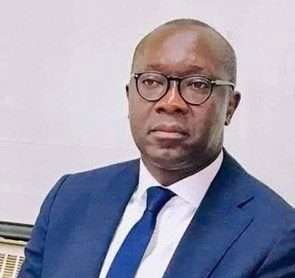
MONROVIA – A bigger budget is not automatically a better one. That is the core warning from Gbarpolu County Senator Amara M. Konneh. He has dissected the 845-page Draft FY2027 National Budget of US$1.539 billion. His findings unsettle the Executive’s claim of broadening the base without raising rates. Core domestic revenue rises by only about US$61 million. Much of the new tax burden simply replaces shrinking non-tax collections. Meanwhile, nearly 79 cents of every dollar runs government and pays debt. Only 21 cents goes to actual development. Agriculture gets about 1.2 percent despite double-digit food inflation. Konneh’s questions now frame the legislative hearings. THE ANALYST reports, it is said by economic analysts that ordinary Liberians will feel the answers in their pockets.
Gbarpolu County Senator Amara M. Konneh has raised sharp questions about the credibility of the revenue assumptions in the Draft FY2027 National Budget. He warned that the Government is spending more to run itself and less to build the country, especially its farms and counties.
In a statement on the draft fiscal package, Konneh welcomed President Joseph N. Boakai’s submission of the Draft FY2027 National Budget to the Legislature last week. Submitting the budget and subjecting it to legislative scrutiny, he noted, are important parts of democratic accountability.
The 845-page draft proposes a total resource envelope of US$1.539 billion (L$280.65 billion), up from an estimated US$1.303 billion in FY2026. Konneh described the size of the envelope as notable.
“The task now before the Legislature is to test whether the underlying revenue assumptions are credible, whether the expenditure choices reflect national priorities, and whether the budget can be implemented as presented to provide meaningful relief to our people,” he stated.
According to Konneh, the Senate Plenary voted on Tuesday to include the Committee on Public Accounts and Audits (PAC) in the budget review, alongside the Committee on Ways and Means and Finance.
He expressed gratitude for the decision. He and his PAC colleagues, he said, will use that forum to present their detailed analysis of the revenue and expenditure components of the draft budget.
Konneh explained that the statement, a tradition he started two years ago, sets out the issues he believes the budget discussions should address. “It is not a final judgment on the budget,” he stressed.
Revenue Credibility in Question
The Draft Budget says the Government is “broadening the base without raising rates.” “On paper, yes, but the numbers tell a more complicated story,” Konneh countered. Tax revenue, according to him, rises by US$225 million to US$1.072 billion, while non-tax revenue falls by US$164 million. As a result, core domestic revenue increases by only about US$61 million, or 4.7%.
In effect, Konneh argued, nearly three-quarters of the new tax burden simply replaces shrinking non-tax collections rather than expanding the economy. The tax surge relies heavily on a 49.3% jump in import taxes from US$280.8 million to US$419.4 million.
It also relies on a 46.4% rise in taxes on goods and services, a new value-added tax (VAT), mobile money fees, and e-receipt fines. For these reasons, the Senator noted, the budget “looks far more like a recomposition of existing tax streams than a genuine expansion of the economic base.”
“Broadening the tax base should mean bringing more economic activity into the tax net,” Konneh stated. “It should not simply mean collecting substantially more from the same traders, businesses, consumers, and families already carrying the burden.”
The Legislature’s task now, he said, is to request a clear breakdown of the projected tax increase. Lawmakers need to know how much is attributable to real economic growth, how much to new policy measures, including VAT, and how much to improved administration and compliance. That breakdown, according to Konneh, will tell whether the base is truly widening or whether existing taxpayers and formal businesses are simply being squeezed harder.
The Senator also pressed for relief. “But we must also provide relief. That is compassionate taxation. Let our people breathe a little and feel the impact of rescue in their pockets,” he pleaded.
Spending More, Building Less
“We are spending more to run government and less to build the country, especially its farms and counties,” Konneh declared. The FY2027 Draft Budget, he noted, grows by US$236.25 million, an 18.1% increase, to US$1.539 billion. However, only US$16.44 million of that increase, just 7%, goes to additional public investment through Public Sector Investment Projects (PSIP).
Instead, according to Konneh, most of the additional resources are absorbed by grants, which account for 32% of the increase, as well as goods and services, compensation, and debt payments. Of every US$1 in the draft budget, he stated, nearly US$0.79 goes to running the government in Monrovia and paying debt, while only 21 cents goes to actual development. PSIP’s share of total spending, he added, actually declines from 24% in FY26 to 21.3% in FY27.
Konneh then posed the question of what this means for ordinary Liberians. It means more money for government operations, he answered, including US$7.28 million more for intelligence services. It also means significant increases for foreign travel, fuel, food, and catering.
Health and Education Lines Scrutinized
At the same time, the overall Health Sector budget increases from US$110.9 million in FY26 to US$135.8 million in FY27. Compensation increases by about US$3.3 million, Konneh noted. That increase, however, is not directed to doctors at the John F. Kennedy Medical Center (JFK), Phebe, Jackson F. Doe, and other frontline facilities. It is concentrated at the Ministry of Health in Monrovia, he said.
The Senator acknowledged that the draft budget specifies upward adjustments for only 358 health workers. Exact increases, he explained, await the Ministry of Finance and Development Planning’s (MFDP) harmonized pay scale, to be published during hearings. Meanwhile, spending on goods and services covering laboratory consumables, drugs, and medical supplies increases by only about US$1 million. Subsidies supporting certain community health clinics remain flat.
The Education Sector, on the other hand, increases from US$143.6 million to US$163.5 million. Yet funding for educational materials, supplies, and stationery for the counties declines by about US$200,000, according to Konneh. He described those inputs as “the core of delivering quality instruction in our classrooms.”
Konneh welcomed the pay increase for Master’s holders of at least US$650, BSc holders of US$400, and C-Certificate holders of US$200. However, he noted that the compensation line for the Booker Washington Institute (BWI) and other multilateral schools remains flat. “I support these raises and the ambition for roads, electricity, and schools,” he stated. BSc teachers earning US$250, he added, will see a US$150 monthly increase.
In agriculture, inputs for the Central Agricultural Research Institute (CARI) fall sharply from about US$290,000 to only US$31,000. Social benefits appear to increase by 65%, Konneh observed. That increase, he argued, is driven almost entirely by a US$23.68 million government contribution to the National Social Security and Welfare Corporation (NASSCORP) to settle employees’ withholding arrears, rather than by direct assistance to vulnerable families.
“A bigger budget should mean better instructional delivery in our schools, better hospitals and clinics, improved water and sanitation, stronger support for farmers, and more jobs—not merely an expansion of the cost of running government bureaucracy,” Konneh asserted.
He also called on the Legislature to become more inquisitive about a new category labeled “Unspecified” appearing across important sectors. The category includes approximately US$4.5 million in Health, US$1.1 million in Education, and US$1.0 million in Agriculture. “We need to understand precisely what these expenditures represent, who will spend the money, and what specific activities they are intended to finance,” he insisted.
Households Already Paying More
On the impact on households, Konneh said families are complaining of hardship because they are already paying more. The tax measures in the budget, he warned, risk making everyday life even more expensive.
Food, transportation, and fuel costs remain a significant burden for many Liberian households, the Senator noted. The Legislature, therefore, should carefully examine revenue measures that could affect the cost of the basic household basket. These include trade taxes projected to rise by nearly US$138.6 million, alongside measures intended to provide relief.
Relief for citizens, if it is to be effective, must be targeted and verifiable, according to Konneh. It must protect access to basic food and transportation and ensure that health facilities and schools receive their appropriated funding on time. It must also ensure that social spending reaches the counties as well as Monrovia.
Agriculture Gets About 1.2 Percent
Agriculture accounts for a large share of employment in Liberia, Konneh pointed out. Yet the sector grew by only 2.6% in 2025, according to the World Bank, and receives about 1.2% of the Draft Budget. “This should command our collective attention,” he urged.
Domestic food inflation is reported at 11.1% by the Central Bank of Liberia (CBL), he noted. The Legislature, he said, should examine whether the allocation for agriculture is sufficient to increase domestic production and reduce dependence on imported food. That allocation covers seeds, extension services, storage, feeder roads, agricultural research, and access to markets.
Lawmakers should also examine, Konneh proposed, whether a phased increase in agriculture’s share of the national budget to 10% over two years is feasible. Such an increase, he stressed, must be properly costed and capable of effective implementation.
County Development Outside Roads
Excluding roads, the Draft Budget allocates only about US$11.2 million for development across all 15 counties, according to Konneh. That sum comprises US$5.9 million for District Development, US$2.8 million for the County Development Fund, and US$2.5 million for County Service Complexes. Roads, by comparison, receive more than US$106 million.
“Investment in roads is necessary,” Konneh acknowledged. But the Legislature, he said, should examine whether the balance between road investment and other county-level development is appropriate. Such development includes clinics, schools, markets, water points, agriculture, and local economic infrastructure.
The Executive should also state clearly how the US$11.2 million will be allocated among the 15 counties, he demanded. Konneh proposed a benchmark of at least US$30 million in total, equivalent to US$2 million per county, for county development outside roads. He described it as a proposal the Legislature can test against available resources and implementation capacity.
“After all, a road without home-grown food to transport from farms to markets is of little use to the communities through which it passes,” he argued.
Gbarpolu as an Illustration
To illustrate the county-level questions lawmakers will be asking, Konneh turned to his own county. The Draft Budget, he said, identifies about US$2.55 million in clearly allocated funding for Gbarpolu. It comprises US$806,667 for Local Government, US$1.37 million for Health, and US$376,072 for Education.
Of the health allocation, US$1.2 million is for Emirates Hospital, the Western Region Referral Hospital. That leaves only about US$170,000 for 12 health centers across six districts. According to Konneh, that is approximately US$14,166 per health center per year, or just US$1,180 per health center per month. “How much meaningful impact can that have on our people? Very little,” he lamented.
Among 194 development projects totaling US$328.5 million for the entire country, none specifically names Gbarpolu with a stated allocation, the Senator disclosed. The budget lists a power plant, the Tubmanburg to Bopolu power line, and the Dakorta and Kpayekwelleh bridges, but it does not state the costs. “My people and I welcome these initiatives, but we need the costs and budget codes so the Legislature and our citizens can track implementation,” he said.
The budget also lists Bopolu City Streets for completion in 2027, but with a US$0 allocation in FY2027, down from US$2 million in FY2026. Lawmakers allocated funds for the project in FY2026, according to Konneh, but those funds have not been disbursed. “We will fight to ensure that the disbursement is made before the current budget year concludes,” he vowed.
The Broader Public Resource Envelope
Konneh argued that the issues he outlined must also be considered against the broader public resource envelope. The national budget, he explained, sits within total resources of approximately US$1.736 billion. That figure comprises the FY2027 revenue envelope of about US$1.54 billion plus approximately US$197 million in off-budget grants and loans. Even that, he noted, does not include more than US$356 million in revenues generated by State-Owned Enterprises (SOEs).
“The central question, therefore, is not simply how large the national budget is,” Konneh contended. “It is how effectively the total resources available to the Republic are being translated into better services, productive investment, jobs, and improved living conditions for our citizens.”
Treatment of VAT Refunds
As Liberia transitions to VAT in FY27, Konneh urged the Legislature to be guided by international best practice in how VAT refunds are presented and managed in the national budget. VAT refunds, he explained, are not merely another government program. They arise from the operation of the VAT system itself when taxpayers are entitled to recover excess input VAT.
The way refunds are budgeted, recorded, funded, and reported therefore matters for the credibility of both revenue and expenditure figures, according to Konneh. He pledged to guide colleagues in the Legislature to closely examine whether VAT refunds in the FY2027 Budget are being treated appropriately within the fiscal framework. This includes whether they should reduce gross VAT collections in arriving at net VAT revenue, rather than being presented in a manner that artificially enlarges government expenditure. The treatment of VAT refunds, Konneh cautioned, can affect how lawmakers understand the true level of revenue, the true size of expenditure, the fiscal deficit, and ultimately the credibility of the national budget.
Success Beyond Budget Size
“Finally, I want this budget to succeed like any other. But success cannot be measured by the size of the budget alone,” Konneh stated. Success, he said, means numbers lawmakers can trust, a tax burden families can bear, and investment that actually builds the country. It also means functioning hospitals and schools, productive farms, stable electricity, reliable water supply, and sustainable sanitation. It further means employment opportunities for young people and a fair share of national development for every county, including Gbarpolu.
Konneh clarified that these are questions he and his colleagues will put to the Executive during the hearings concerning costing, project status in 2026, and completion timelines. “They are not conclusions,” he stressed. Similar questions will arise in other counties, he noted, and the Committee should apply the same standard across all 15 counties to ensure genuinely inclusive development.
“We will proceed on that basis, working with our colleagues in the Legislature and engaging our friends in the Executive constructively but rigorously,” the Gbarpolu Senator concluded.
See more Liberia News Network stories in Google Search by adding LNN as one of your Preferred Sources.
★ Add LNN as a Preferred Source