
Published: October 21, 2026
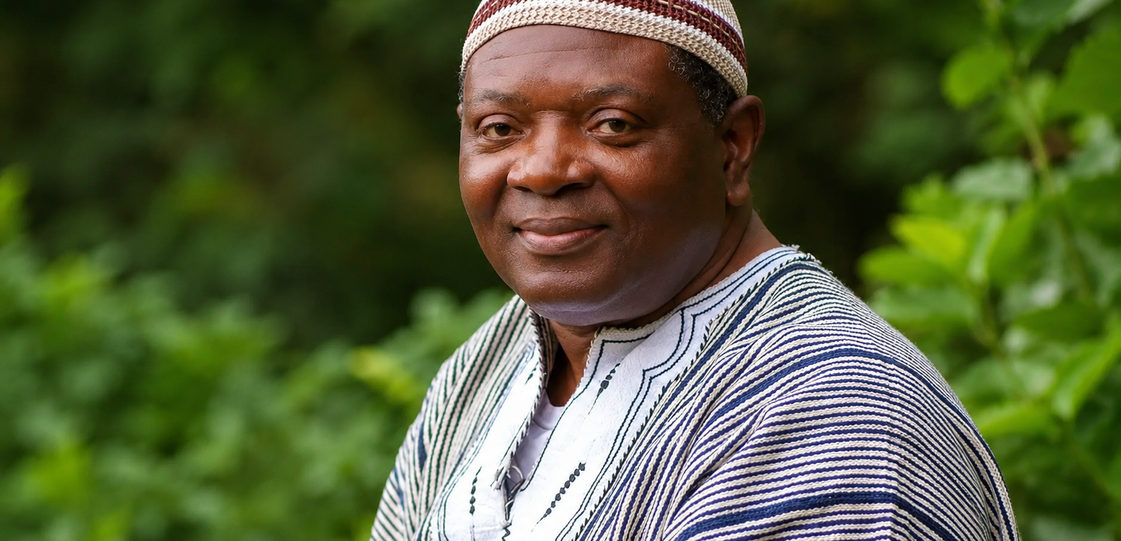
Alfred Lahai Gbabai Brownell Sr. shares the 2026 Elisabeth Haub Award for Environmental Law and Diplomacy with American lawyer Durwood Zaelke.
MONROVIA — Alfred Lahai Gbabai Brownell Sr., the Robertsport-raised lawyer who spent nearly three decades defending Liberia’s forests and rural communities in court, will receive the 2026 Elisabeth Haub Award for Environmental Law and Diplomacy on Wednesday. Pace University’s law school calls the award the most prestigious in environmental law.
\n
By Lennart Dodoo
\n
Brownell shares the honor with American lawyer Durwood Zaelke, founder and president of the Institute for Governance & Sustainable Development. The Elisabeth Haub School of Law will present the award at a ceremony starting at 5 p.m. Eastern Time on Wednesday at Pace University in New York City (9 p.m. in Monrovia), and it will stream online so Liberians at home can follow along.
\n
Horace E. Anderson Jr., dean of the law school and president of the Haub Award Jury, said the two laureates “exemplify the vision and leadership that the Elisabeth Haub Award was created to recognize.”
\n
Liliane Haub, a Pace University trustee and member of the jury, said the honorees “embody the courage, vision, and commitment necessary to move environmental law forward.”
\n
The school credited Brownell with pioneering legal strategies that protect communities, environmental and climate defenders and natural resources, and with advancing environmental rights and climate justice across Africa and around the world.
\n
The award is the latest in a career that began far from any courtroom. Brownell was born in 1965 in Grand Cape Mount County and grew up in Robertsport, among the mountains, the ocean, and Lake Piso, according to his profile. He credits two women with shaping him. His grandmother, Konah Massaquoi, farmed and gathered forest products, and his mother, Ciatta Kiawu Watson, was a kindergarten teacher who ensured he stayed in school. He graduated from Robertsport High School.
\n
He wanted to be a doctor, but money was short, so he studied agriculture and earned a general agriculture degree from the University of Liberia in 1994. He then started a small pig farm. When he turned to law during the civil war, some classmates laughed at the idea of a pig farmer in law school. He graduated magna cum laude from the Louis Arthur Grimes School of Law in 1999 and went on to earn a master’s degree in environmental law and energy from Tulane University Law School in 2002.
\n
In 1997, while still a law student, he founded Green Advocates International. Pace describes it as Liberia’s first public interest environmental law and human rights organization. He also built the Alliance for Rural Democracy, a network that links community groups across the country in environmental justice work.
\n
His best-known victory came in the southeast. In 2010, Golden Veroleum Liberia, an agro-industrial company based in Southeast Asia, signed a 65-year lease with the government for 543,600 acres of forestland to grow palm oil. Brownell worked with affected communities and in October 2012 filed a complaint with the Roundtable on Sustainable Palm Oil, the industry’s global certification body, setting out the company’s environmental malpractice. In July 2018, the roundtable rejected the company’s appeal against a stop-work order, upholding his complaint. His profile says the case protected more than 513,500 acres of rainforest in what conservationists call the lungs of West Africa.
\n
The campaign came at a heavy personal price. In 2016, under threats, he and his family had to leave Liberia. He kept up the work from the United States and now returns home from time to time.
\n
In 2019 he won the Goldman Environmental Prize for Africa, often called the Green Nobel, for his work with Green Advocates. He dedicated it to the communities he represented, calling it “a victory for the indigenous peoples and local communities, who are the real heroes.”
\n
His other cases have spanned many parts of Liberia. Green Advocates challenged Buchanan Renewables, a biomass project in Grand Bassa County financed by the Overseas Private Investment Corporation through three loans totaling US$216.7 million between 2008 and 2011. Brownell and his colleague, Francis Colee, co-wrote “Burning Rubber,” a report with the Dutch research group SOMO on the project’s impact on rubber farmers and charcoal producers. After the company abandoned the project in early 2013, Green Advocates and Accountability Counsel helped hundreds of affected Liberians file a complaint with the U.S. agency in 2014.
\n
His work includes campaigns against pollution and child labor at the Firestone plantation in Harbel, service on the Forest Concession Review Committee, which reviewed logging contracts after the war, and work that fed into the 2006 National Forestry Reform Law and the Community Rights Law, which recognized community control over forest land.
\n
Brownell has also built an academic career abroad. He has been a distinguished scholar in residence and associate research professor at Northeastern University School of Law, a visiting fellow at Yale Law School, and the 2024-2025 Robert F. Drinan Chair in Human Rights at Georgetown University Law Center.
\n
He is now founding president of Global Climate Legal Defense, which gives legal support and protection to climate activists worldwide. He also serves as lead campaigner for the African Climate Platform and the Environmental Rights Africa Coalition. In that role he is pursuing an advisory opinion from the African Court on Human and Peoples’ Rights on African states’ legal obligations in the climate crisis, and pushing for a binding environmental rights treaty for the continent.
\n
Zaelke, his co-laureate, is known for strengthening the Montreal Protocol and led an eight-year campaign for the Kigali Amendment, which phases down HFC refrigerants and could avoid up to 0.5 degrees Celsius of warming by 2100.
\n
The 2025 award went to John H. Knox and David R. Boyd, who served back-to-back as U.N. special rapporteurs on the human right to a healthy environment.
See more Liberia News Network stories in Google Search by adding LNN as one of your Preferred Sources.
★ Add LNN as a Preferred Source