
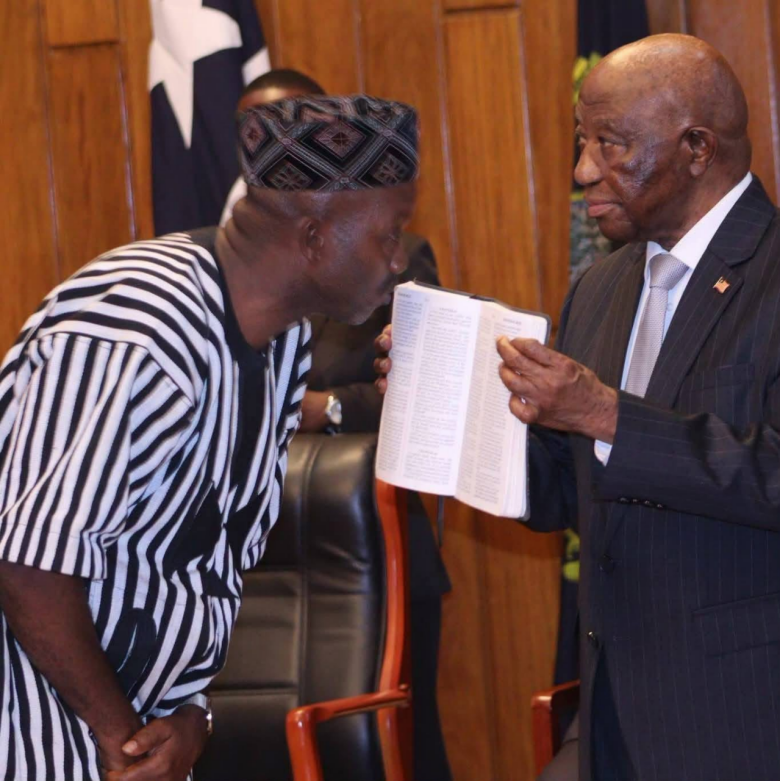
MONROVIA — President Joseph Nyuma Boakai’s commitment to fighting corruption is facing renewed public scrutiny following his decision to commission Gbarpolu County Superintendent Sam K. Zinnah, who is among five individuals indicted in connection with the controversial US$425,000 Yellow Machines procurement scandal.
By Augustus D.R. Bortue
The controversy has intensified as the corruption case remains unresolved, with the Liberia Anti-Corruption Commission (LACC) reporting that proceedings scheduled to commence on September 14, 2026, at the 16th Judicial Circuit Court in Bopolu were postponed after a member of the defense reportedly submitted an excuse for nonappearance.
The latest development has renewed concerns among citizens and political stakeholders about the pace of justice in a case involving public development funds intended to improve infrastructure in one of Liberia’s least-connected counties.
While an indictment does not constitute a conviction, critics argue that the President’s decision to commission an official facing unresolved corruption charges raises questions about the administration’s judgment, consistency and commitment to public accountability.
The controversy also revives an earlier demand by Gbarpolu Senator Botoe Kanneh for indicted county officials to be temporarily relieved of their duties while facing prosecution.
The US$425,000 Controversy
The case centers on US$425,000 allocated from Gbarpolu County’s Social Development Fund for the procurement of three heavy-duty machines: a bulldozer, an excavator and a motor grader.
The equipment was intended to support road construction, rehabilitation and other infrastructure projects across the county.
On September 8, 2025, the LACC announced that the Grand Jury of the 16th Judicial Circuit Court had returned a True Bill on all counts of the indictment against five individuals: Superintendent Zinnah, former Superintendent J. Keyah Saah, former Fiscal Superintendent Anthony Yorkor, former Project Management Committee Chairman Robert Benda and City Lion Inc. Chief Executive Officer Omaru Sheriff.
According to the Commission’s allegations, the procurement process involved irregularities, questions about the quality of the equipment supplied and possible violations of public procurement and financial management requirements.
The LACC also raised concerns about whether the machines delivered met the specifications and represented value for the public funds invested.
Reports that the equipment has remained largely non-operational, with concerns about oil leakages and other defects, have further intensified public demands for answers.
However, the allegations remain subject to judicial determination. All five defendants are presumed innocent unless proven guilty by a competent court.
Boakai’s Commissioning Decision Under Scrutiny
The decision to proceed with Zinnah’s commissioning has become a focal point in the broader debate about the credibility of the Boakai administration’s anti-corruption agenda.
Critics argue that although an indictment does not automatically disqualify an individual from holding public office, the circumstances demand careful consideration by the Presidency.
They question whether the President was fully briefed on the LACC indictment before commissioning the superintendent and what considerations informed the decision.
The controversy is particularly sensitive because the Boakai administration has repeatedly presented accountability and the fight against corruption as central pillars of its governance agenda.
However, the legal distinction between an indictment and a conviction remains important. Zinnah has not been convicted of the charges, and his constitutional rights must be protected throughout the judicial process.
The question confronting the administration, therefore, is not whether the President should pronounce judgment on an accused official, but whether the government has adequately addressed the public confidence concerns arising from the commissioning.
Critics have also drawn comparisons with the case of Abdullah Kamara, former Chairperson of the Liberia Telecommunications Authority, whom President Boakai suspended after his indictment by the LACC. Kamara was subsequently acquitted by the court.
They argue that the differing circumstances surrounding the two cases warrant an explanation of the standards guiding presidential decisions involving public officials facing corruption allegations.
Trial Postponement Fuels Public Frustration
The latest postponement has added another layer to the controversy.
According to the LACC, its prosecution team traveled to Gbarpolu County on September 14, 2026, expecting the trial to commence, but was informed by the Clerk of Court upon arrival that the matter had been postponed.
The Commission said it had been notified that a member of the defense had submitted an excuse for nonappearance before the prosecution team arrived in Bopolu.
The LACC described the development as one of the challenges affecting the timely prosecution of corruption-related cases but reaffirmed its readiness to proceed through the judicial process.
The postponement has raised questions about when substantive proceedings will begin and whether the five defendants will be available to face trial.
It also comes amid growing impatience among residents who believe the case should not be allowed to linger while the equipment purchased with county development funds remains largely unusable.
Youths Demand Speedy and Impartial Trial
On September 14, 2026, concerned citizens and youths in Gbarpolu staged a peaceful demonstration and issued a statement demanding a speedy, transparent and impartial trial.
In their statement, the youths expressed concern over what they described as continued delays in the proceedings, calling on judicial authorities to ensure that the case is handled without unnecessary postponements.
They emphasized that their demonstration was peaceful and lawful, adding that the people of Gbarpolu deserve accountability over public resources allocated for their development.
Their demands reflect growing concerns that prolonged judicial proceedings could further weaken public confidence in the institutions responsible for investigating and prosecuting corruption.
Senators Had Earlier Called for Zinnah’s Recusal
The controversy surrounding the indicted county officials is not new.
In 2025, Gbarpolu Senator Botoe Kanneh called on the Senate to engage the Executive Branch to ensure that Superintendent Zinnah and other indicted officials were temporarily relieved of their duties pending the court’s determination.
In a communication to the Senate Plenary, Kanneh said the indictment and ongoing judicial proceedings had generated deep concern among citizens, local leaders and development stakeholders.
She warned that the situation could undermine public trust in the justice system and the integrity of public service.
Citing the Code of Conduct for public officials, Kanneh argued that the Senate should take cognizance of the LACC indictment and consider engaging the Executive Branch to temporarily relieve the indicted superintendent of his responsibilities while the case proceeded.
The communication was referred to the relevant Senate committees for investigation and appropriate action.
The Senate subsequently mandated its Committees on Judiciary and Internal Affairs to investigate concerns surrounding the indictment of Gbarpolu County’s local leadership, including Superintendent Zinnah.
However, the committees’ findings, recommendations and any subsequent decisions by Plenary have not been made public.
More recently, another Gbarpolu Senator, Amara Konneh, has also called for the speedy trial of the case, adding to pressure on the judicial authorities to ensure that the matter is resolved.
Zinnah Insists on Judicial Process
For his part, Superintendent Zinnah has maintained that he respects the rule of law and is prepared to respond to the allegations through the courts.
In a letter dated July 14, 2026, addressed to LACC Executive Chairperson Cllr. Alexandra K. Zoe, Zinnah declined an invitation to appear before the Commission for further discussions about the yellow machines.
The invitation, dated July 9, was for a meeting scheduled for July 16, during which the LACC intended to obtain additional information about the equipment, including its current condition and the circumstances surrounding its assembly.
The Commission had requested that Zinnah attend with his legal counsel and the individual or individuals who initially assembled the machines.
However, the superintendent argued that the matter was already before the Sixth Judicial Circuit Court and should therefore be addressed through the judicial process.
He maintained that participating in discussions outside the courtroom while the case was pending could compromise the integrity of the proceedings.
Zinnah subsequently reaffirmed his willingness to cooperate with the legal process and respond to the allegations in accordance with the law.
He has not publicly responded to the latest concerns raised by citizens over his commissioning or renewed calls for him to recuse himself while the case remains before the courts.
Gbarpolu Wants Value for Its Money
Beyond the political debate surrounding the President’s decision, the central concern for residents remains the condition of the three machines and whether the county received value for its US$425,000 investment.
The equipment was procured to address infrastructure challenges, particularly poor road connectivity that continues to affect communities across Gbarpolu.
Residents deserve an independent technical assessment establishing the machines’ current condition, compliance with contractual specifications, actual market value and the cost of restoring them to operational condition.
Such an assessment would help establish whether the county received what it paid for and identify the appropriate remedies if procurement violations or contractual breaches are proven.
The government must also ensure that the equipment’s condition is properly documented and that public resources are protected while the judicial process continues.
A Test of Institutional Consistency
Analysts say the controversy presents President Boakai with an opportunity to clarify his administration’s position on public officials facing corruption allegations and demonstrate that accountability standards apply consistently across government.
They called on the Presidency to explain the circumstances surrounding Zinnah’s commissioning and whether any consideration was given to the pending indictment.
For the people of Gbarpolu, the expectations are straightforward: public money must deliver public value, the courts must determine the truth, and every public official must remain accountable under the law.
The administration’s credibility will depend not only on what it says about fighting corruption, but also on how consistently its institutions and leadership act when accountability questions arise within its own ranks.
See more Liberia News Network stories in Google Search by adding LNN as one of your Preferred Sources.
★ Add LNN as a Preferred Source