
Published: October 16, 2026
MONROVIA – The Liberia Council of Churches warned Tuesday that the prosecution in the Saudi rice case must not become “political revenge,” days after a jury convicted two former Cabinet ministers. The council also said no one should use political influence to escape accountability.
In a statement on the case, the council called on the government, the judiciary, political leaders and citizens to protect the independence of the courts and preserve national peace “as the pending rice case and other legal matters proceed.” The council said it was not taking a position on guilt.
“The Council neither determines guilt nor dictates the outcome,” the statement said. “We insist that justice be governed by evidence and law, free from political interference, intimidation, and public pressure.”
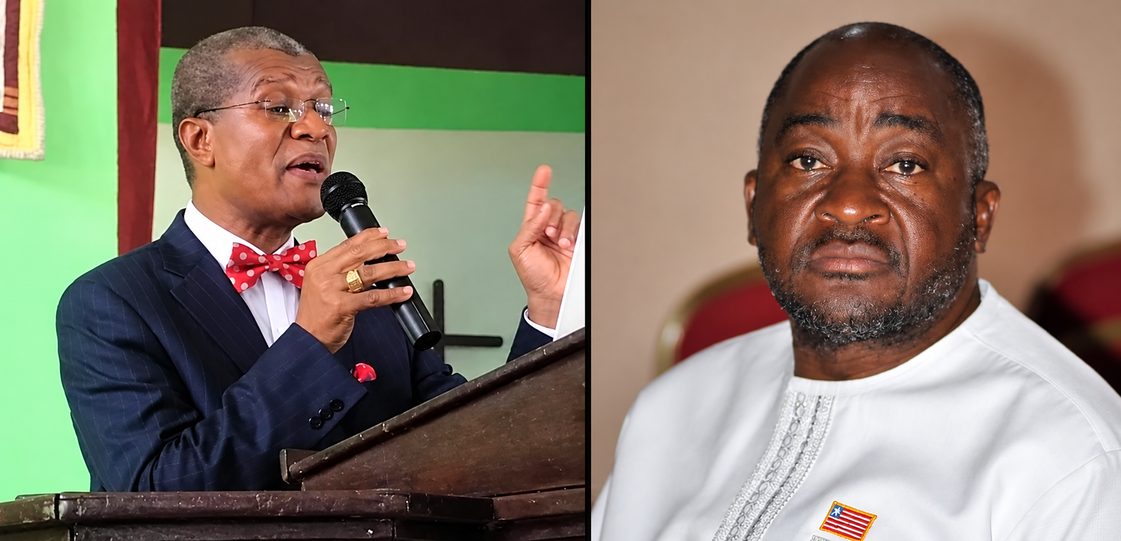
The statement did not name any defendant. It came after a jury at Criminal Court ‘C’ at the Temple of Justice found former Foreign Minister D. Maxwell Saah Kemayah, former Internal Affairs Minister Varney A. Sirleaf and other former senior officials guilty in the case. The case concerns rice the Kingdom of Saudi Arabia donated to Liberia for disaster relief and vulnerable communities. The jury could not reach a unanimous verdict on the theft and criminal conspiracy charges against Kemayah, which leaves those counts unresolved. A hung verdict is neither a conviction nor an acquittal.
The council warned against using the prosecution against political opponents and against using political power to escape the courts.
“No one should be prosecuted because of personal hatred, for political opposition, or to escape lawful accountability through political influence,” the statement said. “State institutions must serve the law, never the interests of those who hold power.”
The council said every accused person is entitled to the presumption of innocence and a fair chance to mount a defense. It urged public officials, political parties, the media, and citizens not to prejudge the case or pressure the courts.
“Public scrutiny is legitimate; political interference is not,” the statement said.
According to the indictment, the donation comprised 29,412 bags of 25-kilogram rice. Prosecutors alleged that 25,054 of those bags were misappropriated or distributed outside authorized channels. The disputed rice was valued at about US$425,918.
Prosecutors built their case on witnesses and documents tracing how the rice moved between the National Disaster Management Agency and the General Services Agency. They argued that irregularities in how the donation was received, stored, transferred and distributed led to thousands of bags going missing.
Kemayah, who served as foreign minister under former President George Manneh Weah, consistently denied stealing or diverting the rice. In his testimony, he said his role was mainly to facilitate the donation through Liberia’s diplomatic ties with Saudi Arabia. He said responsibility for storing, managing and distributing the rice belonged to the government institutions assigned to handle it.
Sirleaf also chaired the board of the disaster management agency. He testified that moving the rice to the General Services Agency was an institutional arrangement, not a unilateral order from Kemayah. Former General Services Agency Director-General Mary T. Broh also testified, and her account challenged parts of the prosecution’s version of how the rice was moved and managed.
The council also warned against letting calls for national reconciliation become a cover for wrongdoing.
“Forgiveness cannot erase the need for accountability, and accountability must never become an instrument of revenge,” the statement said. It said true reconciliation requires “truth, accountability, repentance, forgiveness, and restored trust.”
The council linked the case to Liberia’s past. “Liberia’s painful history reminds us that justice pursued without fairness can deepen division, while peace pursued without accountability can preserve injustice,” it said.
It called on churches and religious leaders to rise above partisan loyalties, reject hateful rhetoric and encourage peaceful dialogue.
“Let the courts follow the evidence, the Government respect the law, and the Church speak the truth,” the statement said. “Justice must serve every Liberian, regardless of political allegiance or position.”
The Rev. Samuel Broomfield Reeves Jr., president of the council and vice president of the Inter-Religious Council of Liberia, signed the statement.
The court has yet to address the unresolved theft and conspiracy charges against Kemayah or sentence the convicted defendants. The defendants may also challenge the verdict.
See more Liberia News Network stories in Google Search by adding LNN as one of your Preferred Sources.
★ Add LNN as a Preferred Source