
The Liberian government is stepping up efforts to unlock the economic potential of its vast marine resources, with officials announcing a major National Fisheries Investment Conference designed to attract global investors and reposition the country’s fisheries sector as a driver of jobs, food security and sustainable growth.
The two-day conference, scheduled for March 30–31 at the Farmington Hotel, is being organized by the National Fisheries and Aquaculture Authority (NaFAA). Authorities say the gathering will bring together international investors, development partners, scientists, policymakers and fisheries experts to explore investment opportunities within Liberia’s largely underdeveloped blue economy.
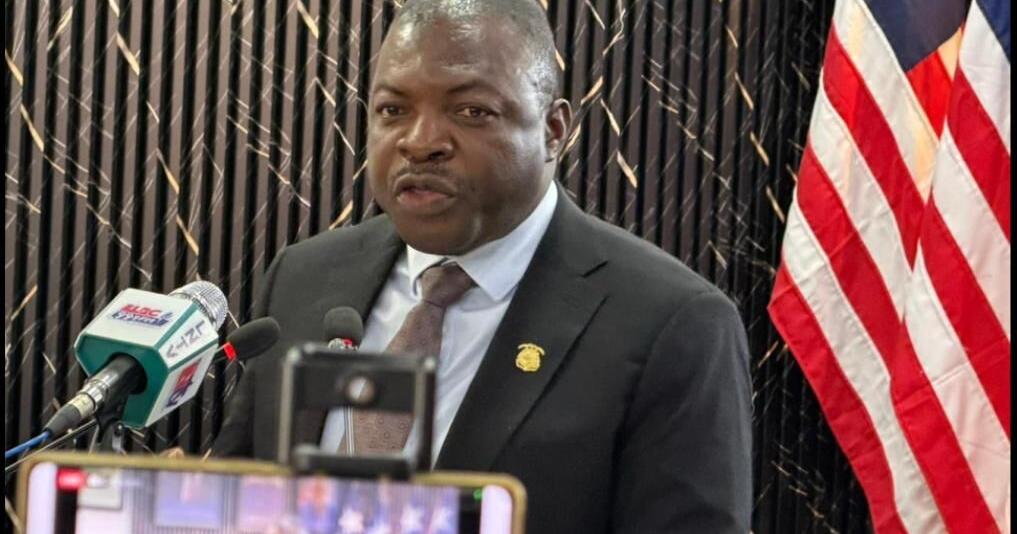
Announcing the event at the regular government press briefing hosted by the Ministry of Information, Cultural Affairs and Tourism, NaFAA Director General J. Cyrus Saygbe Sr. said Liberia’s fisheries resources remain significantly underutilized despite the country’s strategic Atlantic coastline and rich marine biodiversity.
“Liberia’s fisheries resources are immense, but they have not been fully harnessed to benefit our people,” Saygbe said. “This conference is intended to highlight investment opportunities and create partnerships that will help us transform the fisheries sector into a major driver of jobs, food security and economic growth.”
With this initiative, the government is intending to Unlock a vast but underdeveloped resource. Liberia’s coastal waters are among the most productive fishing zones in West Africa. According to NaFAA estimates, the country’s marine ecosystem contains approximately 254,000 metric tons of deep-water fish biomass and 94,000 metric tons of surface-water species.
Yet the country harvests only about 53,000 metric tons annually, leaving a large portion of its marine resources untapped.
For policymakers, this gap represents both a challenge and an opportunity.
The fisheries sector already plays an important role in Liberia’s food system, supplying a large portion of the protein consumed nationwide. Thousands of artisanal fishermen operate along the country’s coastline, while women dominate fish processing and marketing.
However, analysts say the sector remains constrained by weak infrastructure, limited investment, outdated technology and the persistent challenge of illegal, unreported and unregulated fishing.
The upcoming conference is therefore being positioned as a turning point in Liberia’s effort to transform fisheries into a modern and investment-driven industry.
Aligning With Liberia’s Development Agenda
The conference also aligns with the development strategy of President Joseph Nyuma Boakai, whose administration has emphasized economic diversification under the ARREST Agenda for Inclusive Development.
Officials say strengthening the fisheries sector could reduce Liberia’s dependence on traditional exports such as rubber, iron ore and timber.
The initiative also connects Liberia to broader international frameworks, including the African Union Blue Economy Strategy, regional fisheries governance under ECOWAS, and the United Nations’ United Nations Sustainable Development Goal 14, which focuses on ocean conservation and sustainable marine resource management.
At the heart of the conference will be efforts to showcase concrete investment opportunities within Liberia’s fisheries value chain.
Government officials plan to present three major proposals to international investors.
The first involves establishing Liberia’s own industrial fishing fleet, enabling the country to operate commercial fishing vessels rather than relying heavily on foreign fleets licensed to operate in Liberian waters.
The second proposal focuses on developing an industrial fishing port and dry dock facility, a critical infrastructure gap that currently forces vessels operating in Liberia to travel to countries such as Ghana or Senegal for maintenance.
“At present, many vessels operating here must travel to Ghana or Senegal for maintenance,” Saygbe explained. “Developing a dry dock facility will significantly reduce operational costs and strengthen Liberia’s fisheries industry.”
The third proposal centers on industrial-scale aquaculture development, beginning with a large fish farming project in Nimba County.
Aquaculture experts say expanding fish farming could help Liberia meet domestic seafood demand while reducing pressure on wild fish stocks.
Beyond investment opportunities, the conference will highlight new technologies aimed at strengthening fisheries governance.
Specialists from Slovenia are expected to demonstrate Blue Trapper technology, an advanced monitoring system designed to combat illegal fishing — a major issue across West Africa’s coastal waters.
Illegal, unreported and unregulated fishing is estimated to cost African economies billions of dollars annually.
Experts believe improved monitoring systems could help Liberia better protect its maritime resources while increasing government revenue from fisheries licensing.
Global Participation and Policy Launches
The conference will feature 44 panelists, including 32 international experts and 12 Liberian specialists, discussing topics such as blue economy financing, Fisheries governance, Aquaculture investment opportunities, Climate resilience, Technology and innovation, and Market access for seafood exports.
Participants are expected from institutions including the University of Cape Coast in Ghana and Liberia’s Environmental Protection Agency.
During the opening ceremony, President Boakai is also expected to launch three major policy documents designed to guide the sector’s long-term development.
These include a 10-year national fisheries strategic plan, a public-private partnership framework, and a national fisheries investment roadmap.
Officials say the policies will create a structured approach to expanding the sector while ensuring environmental sustainability.
Many believe that the conference could position Liberia as an emerging investment destination within Africa’s blue economy.
If successful, the gathering could attract foreign direct investment into fishing fleets, seafood processing plants and aquaculture farms. It could also attract infrastructure financing, particularly for ports, cold storage facilities and fish processing plants, and technology partnerships aimed at improving fisheries monitoring, sustainability and value addition.
There is also regional trade opportunities that could enable Liberia to export seafood products to international markets.
Moroccan fisheries companies are expected to showcase seafood processing technologies, while Liberian fish farmers will display tilapia, catfish and other aquaculture products.
A “Blue Marketplace” exhibition will also allow investors to examine high-value marine species found in Liberian waters.
In addition to international investment, the initiative is also intended to strengthen Liberia’s domestic fisheries economy.
Ahead of the conference, NaFAA will host a Fish Market Day at Invincible Park, featuring around 50 women fish processors and traders selling locally sourced seafood.
The event highlights the important role women play in Liberia’s fisheries value chain — particularly in processing and marketing fish products.
Officials say strengthening these small-scale operations is critical for ensuring that the benefits of fisheries development reach local communities.
Development partners including the World Bank, the European Union and ProBlue are supporting the conference that, for Liberia, represents more than a typical investment forum. It is an attempt to reposition the country’s oceans as a cornerstone of economic transformation.
If the conference succeeds in attracting investors and establishing partnerships, many believe the fisheries sector could become one of Liberia’s most promising engines for sustainable growth.
“This conference is about positioning the sector as a major contributor to Liberia’s economic future,” Saygbe said.
For a country seeking to diversify its economy and expand employment opportunities, the blue economy may prove to be one of its most valuable untapped assets.
