
Monrovia–Liberia’s environmental future will depend on choices that go beyond one focused. The country must determine how to manage its forests, wetlands, rivers, and agricultural landscapes while expanding employment, improving public health, and creating opportunities for rural communities.
Anji County China is one area that offers evidence that ecological protection and economic development can reinforce one another when conservation is supported by investment, effective institutions, market access, and locally relevant industries.
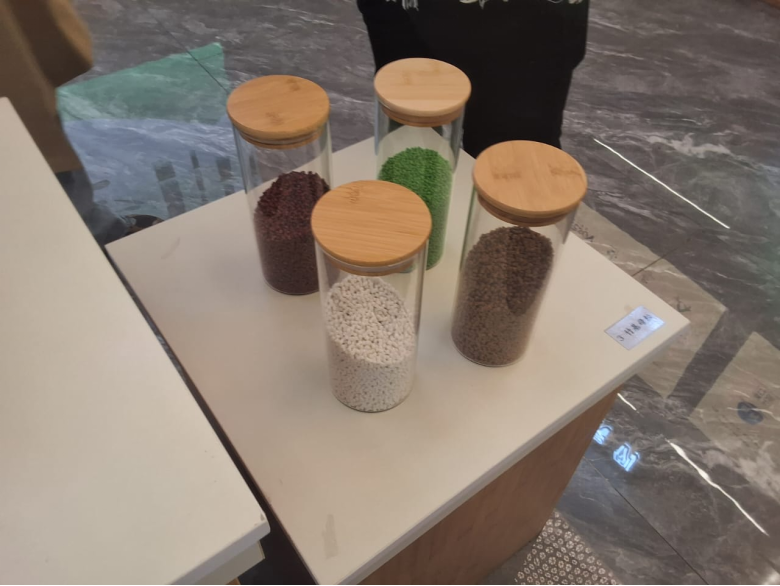
This President Xi Xiapin’s concept in his speech at 2020 at the 75th UN General Assembly at the United Nations on Carbon Nutrality, where following that, he launch3d an initiatie of using bamboo as a substitute for plastic.
A policy was also issued on Octover 15, 2026, by the Chinese Government, which prevented the production of plastic takeaway containers for food or shopping bags in China. This is intended to address some global problems such as Climate Change, plastic polution and other environmental problems.
With approximately 10 billion tons of plastics being produced by the world and only 10 percent being used properly and efficiently and recycling plastic remains costly. China believed that using bamboo as a substitute for plastic is an answer for the world since bamboo is totally biodegradable.
What if Liberia’s forests, rivers, wetlands ,and other natural resources could become a stronger source of jobs, healthier communities, and sustainable income for the people who depend on them? That concern is gaining relevance following a visit by Liberian media representatives to Anji County in eastern China, during a two-week media seminar, where bamboo processing, ecological conservation, sustainable agriculture, and rural tourism have helped reshape the local economy.
For Liberia, a country endowed with extensive tropical forests, freshwater systems, mangroves, and other valuable ecosystems, Anji offers a development lesson, protecting nature need not come at the expense of economic growth. Under the right conditions, conservation can become a foundation for prosperity. But translating that experience into reality will require more than admiration for China’s achievements.
Financing, infrastructure, technical capacity, environmental, enforcement, and community ownership will determine whether Liberia can turn its natural resources into sustainable livelihoods.
Liberian Health and environmental science researcher and former Chairman of the Public Health Department at the University of Liberia, Forkpah Pewee and Dr. Anthony Saah Tengbh, Environmental Scientist and Academic Chairman, Department of Environmental Studies and Climate Change at the University of Liberia say elements of the Anji model could work in Liberia if they are adapted to local conditions and supported by practical investments.
However, the Environmental Protection Agency’s position remains unclear. FrontPage Africa sought comments from EPA Executive Director Dr. Emmanuel King Urey Yarkpawolo on the lessons Liberia could draw from Anji and the role environmental regulation could play in developing sustainable enterprises.
He had not responded by the time of publication. His nonresponse does not establish opposition to the approach but leaves unanswered questions about how the country’s environmental regulator would support, oversee, and measure such initiatives.
Anji’s transformation, when conservation becomes an economic strategy. Located in Zhejiang Province, Anji County covers approximately 1,886 square kilometers and has a population of roughly 470,000. It is known for its bamboo forests, white tea, and rural landscapes.
The county was not always the green destination it is today. During the 1980s and 1990s, industrial activities, including quarrying, paper production, and other pollution-intensive operations, contributed to environmental degradation. In Yucun Village, authorities subsequently moved away from environmentally damaging activities and pursued alternative livelihoods, including tourism and other businesses linked to the natural environment.
The transition required difficult economic adjustments, as closing polluting industries initially affected some incomes. Over time, Anji increasingly linked ecological conservation with bamboo processing, agriculture, and tourism.
A 2022 peer-reviewed study of the county’s ecological conservation policies found that protected areas experienced less expansion of construction and agricultural land than the study’s modeled alternative scenario.
The areas accounted for approximately 39 percent of the county’s land but more than 80 percent of its estimated ecosystem-service value in 2015. The findings support the importance of protecting ecologically valuable landscapes, although they do not establish that conservation alone caused all of Anji’s subsequent economic growth. For Liberia, the lesson is that a forest can provide more than raw materials. Properly managed, it can also protect water sources, sustain biodiversity, support livelihoods, and attract visitors. Beyond bamboo poles, Building an industry
One of Anji’s most important achievements is its ability to turn bamboo from raw material into a broad range of finished products. The resource supports manufacturing activities involving furniture, flooring, household utensils, kitchenware, packaging, building materials, and other goods.
Bamboo shoots are also used as food, while processing innovations create additional uses for plant residues. According to figures reported by China’s State Council Information Office in June 2025, Anji’s bamboo industry recorded an output value of 19.2 billion yuan in 2024, an increase of 7 percent over the previous year.
The report also said bamboo-related income benefited more than 51,000 farming households, with average additional household earnings of 6,500 yuan that year. These figures illustrate the scale of an established Chinese industry, not an earnings forecast for Liberia.
Anji’s advantage lies in the connections between growers, processors, manufacturers, traders and customers. Each stage creates opportunities for employment and income. Liberia could adapt that principle by processing suitable natural resources locally instead of relying predominantly on raw-material sales.
Liberia’s untapped bamboo wealth, an industry waiting to grow
Liberia is not starting from zero. The country possesses bamboo and rattan resources that could support furniture-making, household products, handicrafts, selected construction materials, and other manufactured goods.
Previous technical-assistance programs have also sought to develop local skills in bamboo processing. A World Bank report on Liberia’s forest sector identified bamboo and rattan as resources with considerable commercialization potential. It highlighted limited access to processing equipment and technical skills, including the ability to split, slive, and weave bamboo as an obstacle to developing the industry.
These constraints help explain why the existence of a resource does not automatically translate into jobs and business growth. With appropriate training, equipment, and market access,
Liberian entrepreneurs could explore making chairs, tables, beds, shelves, mats, window blinds, household utensils, decorative products, and selected packaging materials. Some bamboo species also produce edible shoots, while processing residues may have other uses where technical and environmental assessments establish their viability.
These are potential opportunities, not guaranteed profitable ventures. Each product would require an assessment of raw-material supply, production costs, quality standards, customer demand, and competition from imports.
Liberia has already received bamboo-related technical assistance from China. According to a Chinese government account, a bamboo and rattan weaving program began in 2007, alongside training in vegetable production and biogas technology.
AidData’s project record reports that 55 trainees had learned to make basic household products by 2008 and that approximately 900 people had received training through the program by 2022.
Those figures document training activities but do not establish how many participants subsequently operated successful businesses. In August 2025, Liberia’s Ministry of Youth and Sports also announced the groundbreaking for a China-supported technical-assistance training facility at the Samuel Kanyon Doe Sports Complex.
See more Liberia News Network stories in Google Search by adding LNN as one of your Preferred Sources.
★ Add LNN as a Preferred Source