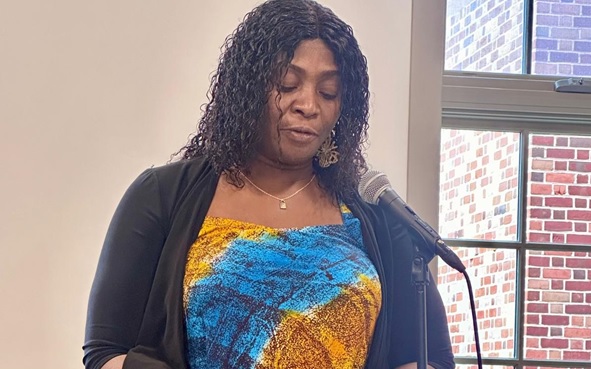
MONROVIA, LIBERIA – Liberian political commentator and social justice advocate Grace R. Guar has pressed Foreign Affairs Minister Sara Beysolow Nyanti for detailed answers over allegations surrounding diplomatic cargo and the exportation of narcotics, as the Independent Civil Society Network of Liberia (ICSNL) has come to the Minister’s defense and rejected what it described as baseless and unverified claims.
The competing positions have intensified public debate over allegations linking diplomatic cargo channels to an alleged drug trafficking operation, while raising broader questions about accountability, institutional safeguards and the protection of Liberia’s diplomatic channels from potential abuse.
In a statement issued Thursday, August 6, 2026, Guar said the seriousness of the allegations and their potential implications for Liberia’s international reputation require the Foreign Affairs Ministry to provide clear and transparent answers.
“Madam Foreign Minister, denying the allegations is not enough,” Guar declared in her direct appeal to Nyanti.
Guar acknowledged Nyanti’s explanation that embassies are entitled under the Vienna Convention to duty-free diplomatic pouches. However, she argued that the legal protections surrounding diplomatic channels should not prevent public scrutiny when allegations emerge concerning their possible misuse.
“As the head of the Ministry, which oversees diplomatic affairs including diplomatic cargo, your role in such matters cannot be dismissed or distanced from without explicit clarification,” Guar said.
She challenged Nyanti to clarify whether she, in her official capacity, approved any shipment of diplomatic cargo currently under investigation or suspected of involvement in drug trafficking.
Guar also asked whether the Ministry is aware of any alleged misuse of diplomatic cargo privileges in connection with illicit drug exports and whether an internal investigation has been launched into the allegations.
Another issue raised by Guar concerns Peter Malcolm King, whom she identified as CEO of GLS Menzies, a company she said has been implicated in the cocaine export case.
She asked Nyanti to explain whether she has any relationship with King and, if so, the nature of that relationship.
Guar further demanded that the Foreign Affairs Ministry explain what steps it has taken in response to the allegations and how it intends to restore public confidence in the institution.
“How do you plan to restore public trust in the Ministry amid these accusations?” she asked.
She also called for stronger coordination between the Ministry, Liberia’s national security institutions and international partners to ensure diplomatic channels are not exploited by criminal enterprises.
“Given the concerns about compromised security and intelligence, how will your office work with national and international partners to ensure that diplomatic channels are not exploited by criminal enterprises?” Guar asked.
Civil Society Group Defends Nyanti
As Guar pressed for answers, the Independent Civil Society Network of Liberia (ICSNL) issued an earlier statement defending Nyanti and condemning what it described as allegations seeking to link the Foreign Minister to recent high-profile narcotics seizures and alleged national security breaches.
The organization said Thursday that it was increasingly concerned about what it characterized as the spread of unverified claims against Nyanti, warning that public officials, political actors, media institutions and civil society organizations have a responsibility to uphold fairness, due process and the presumption of innocence.
ICSNL argued that allegations against public officials should be supported by credible evidence and handled through established legal processes rather than speculation, rumors or public attacks.
The organization warned that false accusations, if left unchecked, could damage individual reputations while simultaneously undermining public confidence in Liberia’s democratic institutions.
It also cautioned that misinformation surrounding Liberia’s recent multimillion-dollar drug seizures could divert public attention from the larger national effort to combat organized crime and corruption.
According to ICSNL, the fight against transnational drug trafficking requires coordinated institutional action based on verified facts rather than what it described as politically motivated narratives.
The group’s earlier intervention provides a direct counterpoint to Guar’s demand for greater disclosure, placing the debate between two competing concerns: the public’s right to answers about the alleged misuse of diplomatic channels and the obligation to protect individuals from unsupported accusations.
Neither Guar’s questions nor the ICSNL defense, however, establishes the underlying allegations as fact.
Guar said her concerns are ultimately about transparency and protecting Liberia’s international standing, insisting that the Foreign Affairs Ministry must demonstrate that diplomatic privileges cannot be exploited by criminal networks.
“Truthfulness and transparency are paramount in these challenging times,” she said, urging Nyanti to provide “thorough and unambiguous responses” to the questions she raised.
She copied her statement to the United Nations, the Liberian Embassy in Washington, the United States Embassy in Monrovia and the Ministry of Foreign Affairs.
The competing statements come as Liberia remains under heightened public attention over major cocaine seizures and allegations of possible institutional vulnerabilities in the country’s fight against transnational drug trafficking.
For Guar, the controversy demands answers from the Foreign Affairs Ministry.
See more Liberia News Network stories in Google Search by adding LNN as one of your Preferred Sources.
★ Add LNN as a Preferred Source