
Published: November 5, 2026
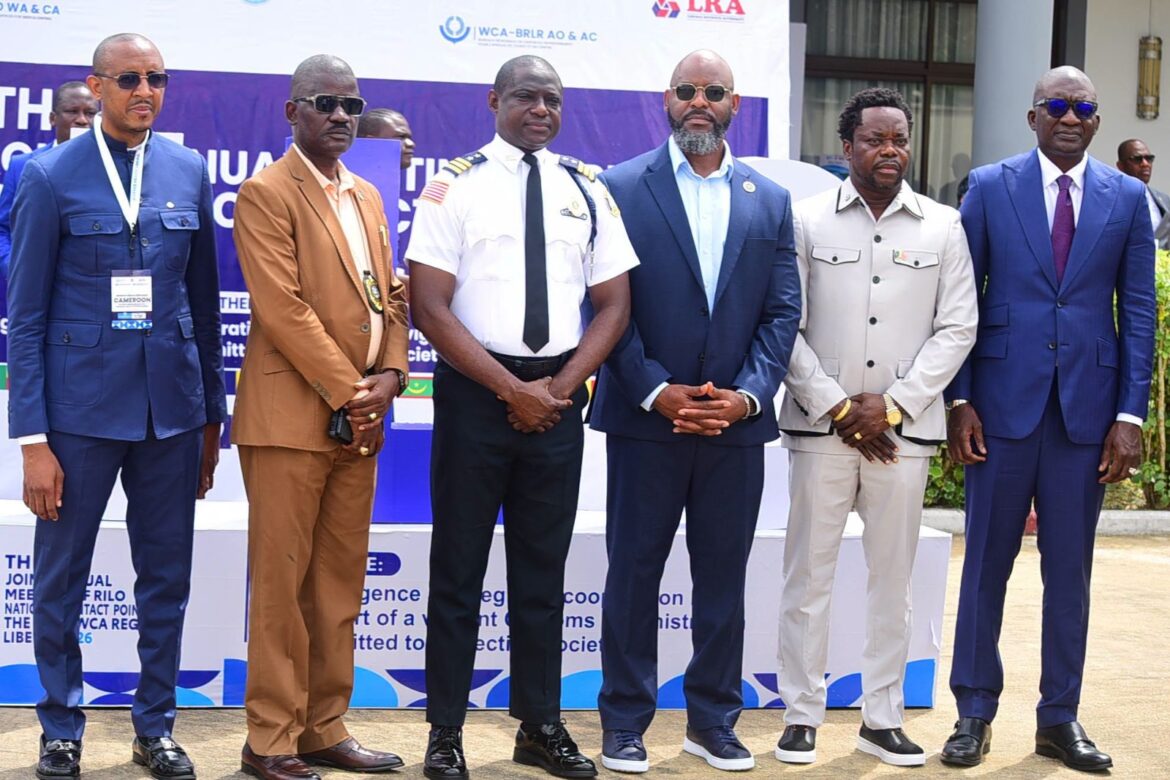
Delegates attending the 17th joint annual meeting of national correspondents of the WCO’s regional intelligence liaison offices for West and Central Africa at the Farmington Hotel in Margibi County.
MONROVIA — Customs intelligence officers from across West and Central Africa are meeting in Liberia this week to speed up how they share information on smugglers and traffickers and coordinate operations against them. On Friday, they are due to adopt recommendations meant to turn a seizure in one country into a lead in the next.
More than 40 delegates from 17 countries are attending the 17th joint annual meeting of the national correspondents of the World Customs Organization’s Regional Intelligence Liaison Offices for West and Central Africa, organizers said. It is the first time Liberia has hosted the gathering. The Liberia Revenue Authority opened the five-day meeting on Monday at the Farmington Hotel in Margibi County through its Customs Department. The theme is “Intelligence and regional cooperation in the service of a vigilant and committed Customs administration for the protection of society.”
According to the organizers’ release, participating countries include Benin, Burkina Faso, Cameroon, Cabo Verde, the Central African Republic, Chad, Côte d’Ivoire, Equatorial Guinea, Gabon, the Gambia, Ghana, Guinea, Guinea-Bissau and Liberia. Delegates from the Democratic Republic of Congo could not travel because of health restrictions and are following the proceedings online.
The two regional offices, known as RILO West Africa and RILO Central Africa, are part of the WCO’s global customs intelligence network. Each member administration appoints a national contact point. That officer collects, analyzes and shares enforcement intelligence with the other administrations and with the regional offices that coordinate joint operations.
“When intelligence is shared and connected across borders, we are able to identify trafficking routes, dismantle criminal networks, and target the individuals responsible for illicit trade,” said Amandu Tejan Sesay, head of RILO West Africa, according to the organizers’ release.
Sesay said that seizing narcotics, falsified medicines, or protected wildlife is more than a statistic because each seizure protects the public. He told delegates that information collected in one country can inform an inspection in another, and that linking several such pieces can expose a route, a method of concealment, or the work of a single network. National contact points must do more than relay messages, he said. They must find relevant information, judge its quality, add to it, get it to the services able to act on it, and report back on what was done.
He said the meeting should be judged by results, not talk. Delegates should leave with realistic recommendations, clear responsibilities for carrying them out and a way to follow up.
“The success of Monrovia will also be measured by the improvement we make to our cooperation practices as soon as we return home,” Sesay said.
A call for wider participation
Ibrahim Njoya, speaking on behalf of the WCO’s vice chair for West and Central Africa, urged the region’s customs administrations to move from reactive enforcement to intelligence-led work that anticipates new threats and trafficking methods.
He said only 17 of the region’s 24 customs administrations took part in the recent regional enforcement operation, CRIFAX 11. He did not single anyone out, saying each administration faces its own constraints, but said an international operation is only as strong as its participation. He appealed for broader and more regular involvement in future operations.
“The effectiveness of regional intelligence cooperation depends on the active participation of all member administrations,” Njoya said, according to the release.
Njoya directed delegates to the recommendations adopted at last year’s meeting in Bamako, Mali. Those recommendations urged administrations to make greater use of geospatial intelligence, open-source intelligence, artificial intelligence, and tracking and tracing tools. He asked that this year’s meeting be a forum for decisions rather than a routine gathering. He also commended the Liberia Revenue Authority for bringing national security and law enforcement agencies to the meeting.
A representative of WCO Secretary General Ian Saunders addressed the opening by video. The representative said the network links the WCO’s global enforcement work to the realities customs officers face at national borders. The address highlighted a new CENcomm environment for sharing enforcement information on e-commerce and small consignments. It said national contact points will be essential to a WCO operation scheduled for early 2027, from identifying risk indicators beforehand to analyzing results afterward.
“The RILO network is a vital part of the WCO’s global enforcement and intelligence structure,” the representative said. Technical problems cut the address short, and the organizers said the full text would be shared with the media.
The host’s view
Liberia’s Commissioner of Customs, Saa Saamoi, said the meeting carries special significance for his administration.
“This is the first time that Liberia Customs has had the opportunity of hosting this important regional meeting,” he said.
Saamoi said customs services across the region face pressure from all sides. Governments expect them to collect more revenue and close leaks. Traders want faster clearance and lower costs. Criminal networks are growing more organized, better funded and better equipped. He named their methods: cargo misdescription, undervaluation, origin fraud, document falsification, concealment of prohibited goods and diversion of goods moving under customs transit.
“We must make faster clearance decisions without compromising our controls. We must reduce unnecessary physical examinations while improving our ability to identify high-risk consignments,” Saamoi said.
He said the network should be judged by the enforcement results it supports, not by the number of meetings held or reports produced.
“Intelligence collected but not analyzed has limited value. Intelligence analyzed but not shared in a timely manner loses its operational relevance,” he said.
Saamoi urged national contact points to serve as working links between national intelligence units, risk-management teams, frontline officers and neighboring administrations. He also called for wider use of the WCO’s Customs Enforcement Network and its CENcomm communication platform. He asked the meeting to focus on practical steps: joint risk indicators, coordinated targeting, timely exchange of transit intelligence, analysis of emerging fraud patterns and feedback on what happens after intelligence is shared.
“Our borders may separate our national jurisdictions, but they do not separate the criminal networks that exploit them,” he said, according to the release.
Prince B. Mulbah, deputy director general for administration of the Liberia Drug Enforcement Agency, spoke for the Liberian government and its Joint Security. He said the region now faces a convergence of transnational crime: illicit drugs such as kush and tramadol, illicit financial flows, arms and ammunition smuggling, counterfeit pharmaceuticals and environmental crime.
“The criminals are networked. Therefore, we the law enforcement family must also be networked,” Mulbah said.
He said Liberia’s security agencies would act jointly on intelligence received through the network and would look beyond counting seizures.
“Our focus is now on intelligence-led investigations that target the masterminds, the money, and the logistics,” he said.
He asked the correspondents to help connect seizures in Tema, Conakry, Freetown and Monrovia to the networks behind them. He urged delegates to speak frankly about the region’s weaknesses, which he named as porous borders, limited forensic laboratories, delayed information sharing and corruption.
The week’s work
The meeting’s program is built around the network’s tools and a review of its own record. On Monday, delegates heard reports from the 33rd WCO Global RILO Meeting, the 32nd Conference of Directors General of Customs of the region and the 31st Conference of Experts. They also discussed the conclusions of the WCO Enforcement Committee’s 46th meeting, reviewed regional operations against illicit trafficking and received an update on the second phase of a joint project between the WCO and the Japan International Cooperation Agency.
On Tuesday, the Liberia Revenue Authority presented its experience in revenue mobilization and in combating illicit trafficking. Delegates also reviewed how member countries are rolling out the national version of the Customs Enforcement Network and trained on the system. On Wednesday, they assessed how far the Bamako recommendations have been carried out and heard activity reports from national correspondents. Thursday was given to training and case studies on CENcomm.
The meeting closes Friday, when delegates will validate the meeting’s report and recommendations and read them at the closing ceremony. The head of RILO West Africa and the Commissioner General of the Liberia Revenue Authority are scheduled to speak. Closing remarks will come from a representative of the vice chair, the Director General of Customs and Indirect Taxes of the Central African Republic.
See more Liberia News Network stories in Google Search by adding LNN as one of your Preferred Sources.
★ Add LNN as a Preferred Source