By Lincoln G. Peters
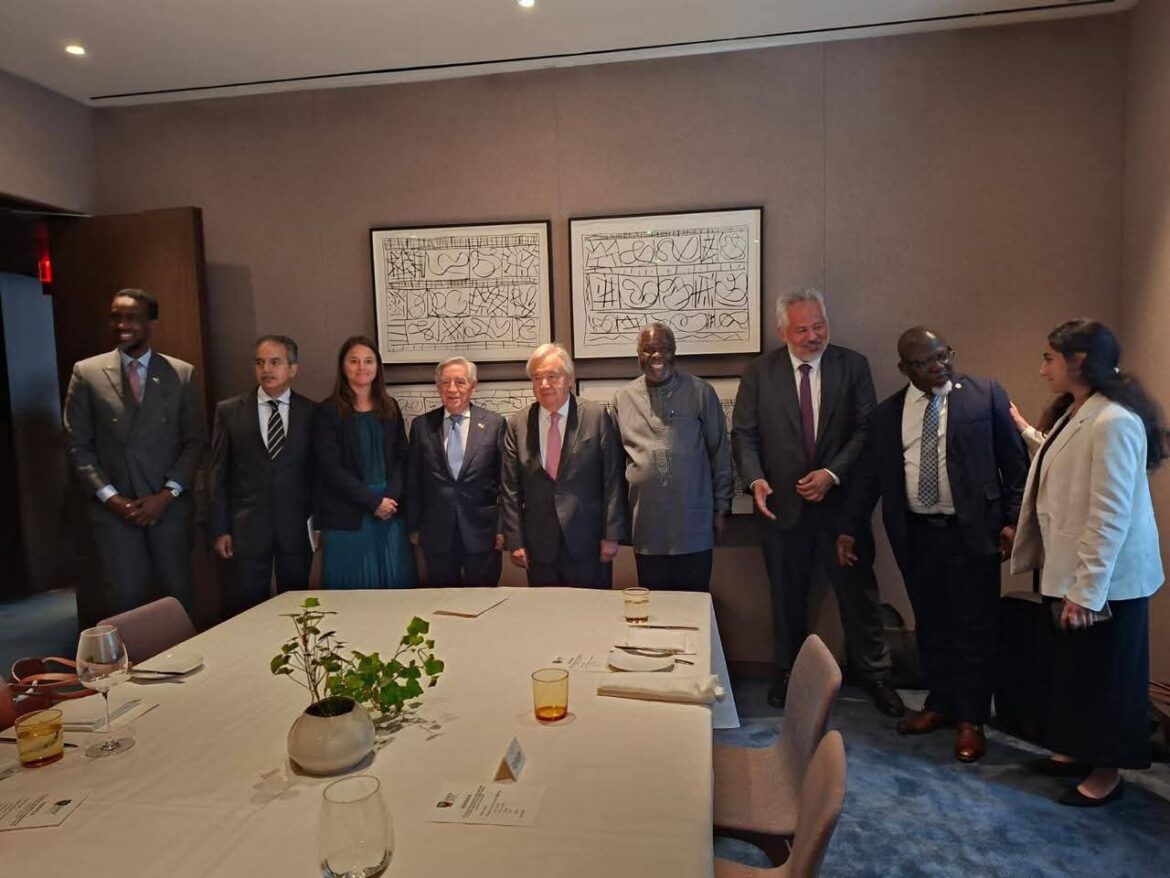
UN HEADQUARTERS, New York — Liberia’s Permanent Representative to the United Nations, Ambassador Lewis G. Brown II, has hosted UN Secretary-General António Guterres and representatives of the 10 elected members of the Security Council at a working lunch in New York.
The meeting, held Monday, August 24, at Le Pavillon near UN Headquarters, brought together the Secretary-General and representatives of the Council’s 10 non-permanent members, known collectively as the E10.
The E10 currently comprises Bahrain, Colombia, the Democratic Republic of the Congo, Denmark, Greece, Latvia, Liberia, Pakistan, Panama and Somalia.
Liberia is currently playing coordinating roles within both the E10 and the African members of the Security Council, known as the A3.
The Democratic Republic of the Congo, Liberia and Somalia constitute the current A3, which coordinates and advances African positions on issues before the Council.
The working lunch came amid a busy period of Security Council diplomacy involving conflicts and security concerns across Africa, the Middle East and Europe.
Liberia’s diplomatic engagements have included discussions on Security Council working methods, the Middle East, conflict-related hunger and several African peace and security issues.
The country is also preparing to assume the presidency of the Security Council in December, when it is expected to lead the Council’s work and preside over meetings during the month.
Ambassador Brown has used Liberia’s coordinating role to advocate greater participation by elected Council members in decision-making and the drafting of resolutions.
During an August 19 open debate on the Security Council’s working methods, Brown, speaking on behalf of the E10, called for reforms aimed at strengthening the role of elected members.
He advocated improvements in the implementation of the Council’s working methods and called for elected members to be involved earlier in drafting resolutions and other Council documents.
Brown also pushed for broader “penholdership” arrangements — the practice under which particular Council members lead the drafting and negotiation of resolutions on specific conflicts or issues.
The system has traditionally been dominated by the Council’s five permanent members — China, France, Russia, the United Kingdom and the United States.
Liberia and other elected members have argued for a more inclusive approach that gives non-permanent members greater influence over the preparation and negotiation of Council decisions.
As coordinator of the A3, Liberia is also involved in efforts to harmonize African positions on matters including Libya, South Sudan, the conflict in eastern Democratic Republic of the Congo and security challenges affecting the Sahel and Horn of Africa.
Earlier, during the Security Council’s August 17 meeting on the Middle East, Ambassador Brown warned that prospects for a two-state solution to the Israeli-Palestinian conflict were “rapidly diminishing.”
He cited continuing violence, displacement of Palestinians and settlement expansion among the challenges threatening prospects for a negotiated settlement.
Brown also referenced Liberia’s historic 1947 vote in favor of UN General Assembly Resolution 181, which proposed the partition of Mandatory Palestine into Arab and Jewish states.
Liberia has used that history to frame its current support for a negotiated two-state solution and renewed international efforts toward peace.
The Security Council’s August agenda has also included discussions on conflict and hunger under the theme “Food Under Fire,” as well as ongoing developments involving Ukraine and other international security concerns.
Liberia’s coordinating responsibilities come months before the country assumes the rotating presidency of the 15-member Security Council in December.
President Joseph Nyuma Boakai is expected to participate in high-level engagements during Liberia’s presidency.
The December presidency will mark another major diplomatic moment for Liberia as the country seeks to use its current Security Council tenure to advance national, African and broader international peace and security priorities.
Monday’s engagement with Guterres and the elected Council members forms part of Liberia’s preparations and diplomatic consultations ahead of that presidency.
See more Liberia News Network stories in Google Search by adding LNN as one of your Preferred Sources.
★ Add LNN as a Preferred Source