Published: September 4, 2026
MONROVIA — Liberia will deploy drones, satellite reconnaissance and joint military and police units against illegal mining sites nationwide, seizing dredges, excavators and mineral stocks and turning operators over to prosecutors, the head of a new presidential task force said Wednesday, in a crackdown he said targets more than US$1.6 billion a year in stolen and smuggled minerals.
By Blamo N. Toe
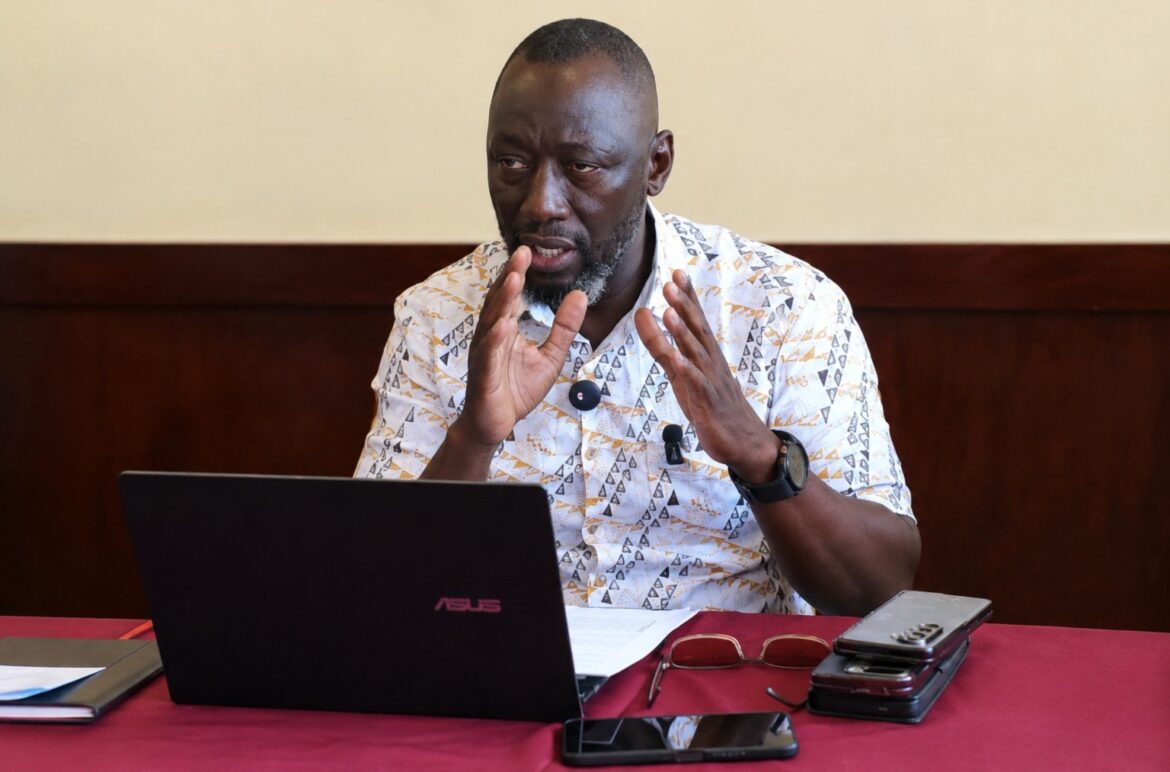
Col. Abraham S. Kromah, chairman of the Protect Our Resources Taskforce (PORT), said the scale of the losses has turned illicit mining from a regulatory problem into a national security, environmental and economic threat, with minerals moving across Liberia’s borders while mining communities are left with polluted waterways, destroyed farmland and depleted resources.
The task force has no money to carry out the plan. Kromah said PORT has no dedicated budget line because it was created after the regular national budget process, that it submitted an annual request of US$1.4 million for vehicles, drones, motorcycles and other operational needs, and that the request was later cut to about US$800,000, which the task force is still trying to secure. The Ministry of Finance and Development Planning has provided some assistance to get it operational, he said, while additional support is being sought.
“We are struggling. We will do it to the best of our ability because the President has committed himself to ensuring that our resources are protected,” he said.
“I mean over US$1.6 billion annually is smuggled through the backdoors of the mining sector, the illegal mining process, that includes crossed borders and that’s why the immigration officers’ presence is important to be part of this force,” Kromah said. “We will have some technological system put in place at or crossed borders to detect some of these acts.”
Kromah spoke at a news conference in Monrovia following President Joseph Nyuma Boakai’s issuance of Executive Order No. 167, which established PORT. He said the order gives the task force a zero-tolerance mandate against illegal mining operations nationwide and elevates illegal mineral extraction beyond a minor civil or administrative infraction, treating it as an act that threatens state revenue, environmental security and sustainable development.
“Over the past decade, unlawful mining across Liberia has undergone a dangerous evolution, transforming from localized artisanal survival activities into highly organized, heavily mechanized, and environmentally catastrophic criminal syndicates,” Kromah said.
“These illicit operations strip our state of millions in vital revenue, destroy pristine farmlands, and poison our river systems with toxic chemicals like mercury. Under Executive Order No. 167, the state reasserts complete, uncompromising authority over its natural wealth. The era of illegal resource exploitation is over.”
Under the enforcement strategy Kromah outlined, PORT will target noncompliant operations across the Class A, B and C categories and confiscate heavy earth-moving equipment, illegal dredges, processing plants and mineral inventories. He said the task force is working with the Ministry of Justice to obtain search warrants, make arrests and prosecute suspected economic crimes and resource theft.
“There will be a deployment of satellite reconnaissance, aerial drone monitoring, and field intelligence units to identify illicit river dredging, remote illegal camps, and unpermitted heavy machinery,” Kromah said. “There will also be cross-referencing active field equipment against MME official cadastre registries to detect license misuse, unauthorized scale expansion, or fraudulent Class C operations.”
The enforcement phase will include joint deployments of the Armed Forces of Liberia, the Liberia National Police and PORT personnel to shut down sites, detain suspected violators and confiscate machinery and hazardous chemicals, with evidence transferred to the Ministry of Justice and seized assets recorded in a PORT enforcement registry. Kromah said the task force will publish a registry of enforcement actions, confiscated machinery, asset forfeitures and legal proceedings, and will report monthly to the Office of the President.
He said PORT will function as an enforcement force multiplier supporting the statutory oversight authority of the Ministry of Mines and Energy, combining security operations, geospatial intelligence and multi-agency prosecution, and that it is installing billboards at major ports of entry carrying anti-smuggling messages.
Kromah said mechanized illegal dredging has damaged waterways, diverted river channels and contributed to deforestation across mineral-rich areas, and warned that mercury and other hazardous chemicals released into freshwater systems threaten public health, aquatic life and rural communities that depend on rivers and creeks for water.
“Economically, unmonitored extraction and widespread mineral smuggling intentionally blur the lines between statutory artisanal mining and unlicensed commercial extraction,” he said. “This organized state revenue theft deprives the Liberian government of critical royalties and tax revenues needed for healthcare, public infrastructure, and education, while creating unfair, predatory competition that destabilizes investor confidence for compliant corporate entities.”
R. Baiyezenah W. Brown, an Environmental Protection Agency inspector and PORT representative, said freshwater ecosystems are being contaminated and destroyed by illegal mining.
“Freshwater ecosystems are being destroyed as a result of illicit mining activities taking place in this country,” Brown said.
Brown said EPA officials visited mining areas in Lofa, Bong and Nimba counties during a nationwide monitoring exercise in May. At Masau in Zorzor District, Lofa County, he said inspectors found residents assisting foreign miners operating dredges that polluted waterways, and that some residents helped the miners evade environmental inspectors.
“Our own people are protecting foreigners against their own interests,” Brown said, warning that continued pollution could leave future generations with degraded forests, polluted rivers and depleted mineral resources.
Adolphus M.G.D. Gleekia, deputy inspector general of mines and the Ministry of Mines and Energy’s representative on PORT, said the task force became necessary because existing enforcement structures have struggled against the growing scale and complexity of illegal mining. Mining inspectors can confiscate equipment but have no arresting powers and no judicial authority, he said.
“The inspectorate division is the police of the ministry,” Gleekia said.
He said PORT’s multi-agency structure will let mining inspectors work alongside security, immigration, environmental and legal authorities, and cautioned that holding a mining license does not give operators unrestricted authority to mine wherever or however they choose. Operators must stay within approved geographical coordinates, use authorized methods and meet environmental requirements, he said, and mining in protected areas, public facilities and other prohibited locations remains illegal.
Kromah said long-term success would require a “Whole-of-Society” approach involving county superintendents, traditional leaders, civil society organizations and mining communities, and that PORT is setting up Field Verification Desks and confidential reporting channels while engaging industry groups, including the Liberia Chamber of Mines.
See more Liberia News Network stories in Google Search by adding LNN as one of your Preferred Sources.
★ Add LNN as a Preferred Source