
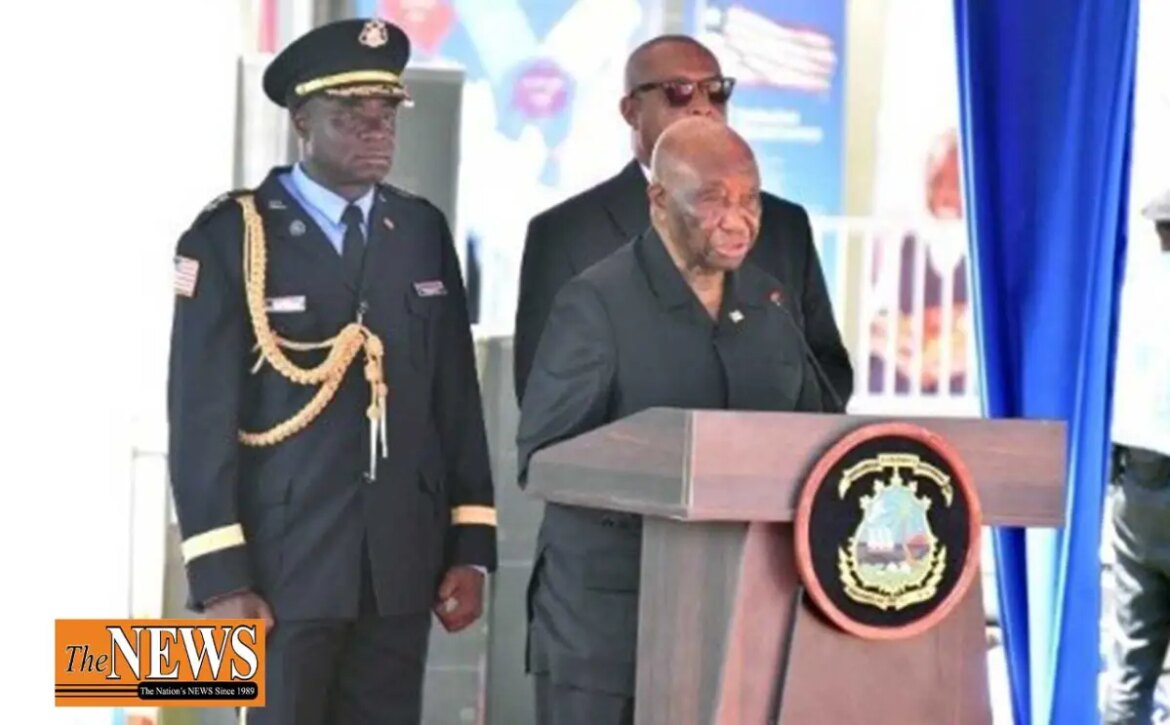
President Joseph Nyuma Boakai says Liberia must move beyond being a beneficiary of international peace efforts to become an influential voice in shaping the future of the United Nations, as the global body faces mounting pressure for relevance in an increasingly complex world.
Addressing the commemoration of United Nations Day at the Ministry of Foreign Affairs in Monrovia on Monday, October 26, 2026, Boakai said Liberia’s election to the UN Security Council for a full two-year term presents a historic opportunity for the country to influence international decisions on peace, security, and development.
“The United Nations stands at a crossroads, questioning whether the organization remains fit for purpose in confronting both present and emerging global challenges,” Boakai warned. He pointed to artificial intelligence, multipolarity, climate change, irregular migration, deepening inequality, and growing frustration among young people as issues demanding stronger international cooperation beyond the traditional focus on preventing war.
For Liberia, a country emerging from 14 years of civil conflict, the President said the stakes are particularly high, emphasizing the need for a United Nations that advances women’s empowerment, tackles poverty, promotes sustainable development, and ensures vulnerable nations have their voices heard.
The Liberian leader’s remarks come as Liberia prepares to assume the leadership of the UN Security Council in December, a development he described as a defining moment in the country’s diplomatic history.
For the first time, a sitting Liberian president will preside over the Council’s proceedings, placing the country at the center of deliberations on international peace and security. “We will undertake this responsibility with humility, drawing on our nation’s lived experience of war, reconciliation, and the difficult work of building peace,” he said.
President also stressed that Liberia’s achievement should not be confused with its earlier, brief participation in the Council. He recalled that in 1960, after six weeks and 13 rounds of inconclusive voting, Liberia and Ireland negotiated an arrangement to share a contested seat, with each country serving for one year.
However, in 2025, Liberia secured a majority vote in the UN General Assembly for a full two-year term as a non-permanent member of the Security Council for the first time in its history. Boakai further noted that Liberia was the last of the four African countries that signed the UN Charter in 1945 to be elected to the Council, describing the achievement as an opportunity to contribute meaningfully to decisions that will shape the organization’s future.
The country’s growing diplomatic role, he said, reflects a deliberate policy choice by his administration to ensure Liberia is no longer on the margins of the United Nations and its affiliated bodies. Reflecting on the country’s relationship with the United Nations, Boakai credited the organization with playing a critical role in Liberia’s journey from conflict to peace.
He recalled that during the country’s civil war, the United Nations worked alongside the Economic Community of West African States, the African Union, and international partners to facilitate dialogue and provide humanitarian assistance.
The United Nations Mission in Liberia deployed approximately 15,000 troops, more than 1,000 police officers, and civilian personnel to help stabilize the country following the signing of the Comprehensive Peace Agreement on August 18, 2003, From 2003 to 2018, the mission supported peacekeeping operations and national institutional rebuilding, helping Liberia navigate the fragile transition from war to democratic governance.
The Liberian leader thanked the peacekeepers and civilian personnel whose efforts helped to end the conflict and sustain peace. He said Liberia’s experience demonstrates the importance of international solidarity and the principles underpinning the United Nations Charter.
Beyond celebrating the organization’s 81st anniversary, the President challenged world leaders to strengthen multilateral cooperation and adapt global institutions to the realities of a rapidly changing world. He argued today’s humanity challenges cannot be adequately addressed by individual countries acting alone, making international collaboration indispensable.
See more Liberia News Network stories in Google Search by adding LNN as one of your Preferred Sources.
★ Add LNN as a Preferred Source