
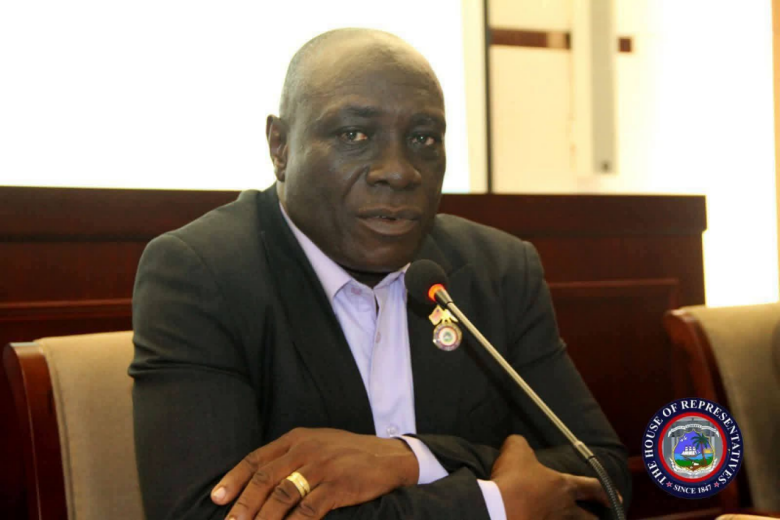
Representative Nyahn Garsaye Flomo
Nimba County District Two Representative Nyahn Garsaye Flomo Sr. has urged stakeholders in the long-running Ganta Land Dispute to draw lessons from Liberia’s return to peace in 2003, warning that renewed confrontation over property could undermine the sacrifices Liberians made to end the civil war and rebuild their communities.
By Franklin Doloquee
Speaking at a gathering of community leaders, elders, youth, women, business owners and other stakeholders, including Acting Justice Minister Betty Lamin Blamo, Deputy Minister for Administration at the Ministry of Justice, Rep. Flomo called for a peaceful and lawful settlement that protects property rights while addressing the mistrust and damaged relationships left by the conflict.
Rep. Flomo, a member of the Presidential Land Dispute Committee, said resolving the dispute requires more than determining boundaries or examining ownership documents.
It also demands patience, honest dialogue and a willingness among competing parties to rebuild confidence in one another.
“When Liberia returned to peace in 2003, we inherited not only the responsibility to rebuild our physical infrastructure, but also the responsibility to rebuild our relationships, restore trust and address the unresolved consequences of the war,” Rep. Flomo said.
He explained that while roads, schools, hospitals, markets and other buildings can be reconstructed, the less visible consequences of war often remain embedded in community life. Broken relationships, displaced families, missing property records and weakened trust, he said, require deliberate leadership and sustained engagement.
“The land dispute in Ganta cannot be solved by roads, buildings, or documents alone,” he said.
“The war also broke the human bonds that once held the community together neighbor to neighbor, family to family, and community to community.”
Lessons From Liberia’s Return to Peace
The Nimba lawmaker reminded the gathering that the end of the war represented a collective national decision to reject violence after years of destruction, displacement and suffering.
Across political, ethnic, religious and regional divisions, he said, Liberians recognized that the country could not move forward through continued confrontation.
That shared determination, he argued, should guide efforts to resolve the Ganta dispute.
“The same spirit that made Liberians say ‘enough is enough’ in 2003 must guide us today,” he said. “We must choose dialogue over division, peace over conflict, and the future of Ganta over personal or group interests.”
For Rep. Flomo, the lesson extends beyond ending armed conflict.
He said lasting peace depends on justice, mutual respect, and a shared commitment to coexist even when disagreements are deeply rooted and emotionally charged.
He cautioned stakeholders against allowing competing land claims to reopen old wounds or turn neighbors into adversaries.
Instead, he urged claimants to pursue their concerns through lawful processes, credible evidence and respectful engagement, rather than threats, intimidation or confrontation.
His appeal places reconciliation alongside the legal questions at the center of the dispute: determining ownership, he indicated, must go hand in hand with restoring the relationships that allow a community to live and work together.
A Responsibility for Leaders
The lawmaker said political, traditional, religious and community leaders have a particular responsibility to prevent tensions from escalating.
As people look to their leaders for guidance, he said, public statements and private encouragement can either create space for dialogue or deepen suspicion.
He urged those in positions of influence to exercise restraint and avoid language that portrays one community or group as the enemy of another.
“Leaders must speak peace,” he said. “We must not use our positions to deepen suspicion or encourage our people to see one another as enemies.”
Rep. Flomo said the Presidential Land Dispute Committee’s work should remain focused on facts, mediation and recommendations that promote reconciliation rather than reinforce divisions.
He added that a lasting settlement must protect the rights of legitimate landowners, respect the contributions of long-standing residents and provide a fair process for people whose property interests were affected by the war.
His remarks emphasized the need to consider both the evidence supporting individual claims and the wider consequences of how those claims are resolved.
Protecting Ganta’s Future
Stakeholders at the meeting welcomed Rep. Flomo’s message, describing it as a timely reminder that peace in Ganta is closely connected to Liberia’s broader postwar recovery.
They said the dispute involves more than boundaries and ownership documents.
It also concerns confidence among communities whose members have lived, traded and built their lives alongside one another for generations.
Ganta’s role as a commercial gateway connecting Liberia with Guinea and Côte d’Ivoire gives the dispute added significance. Its markets, roads and cross-border trading links make land an important resource for residents and businesses, while raising the stakes for a settlement that supports stability and development.
Against that background, participants described Rep. Flomo’s appeal as a call for restraint at a sensitive moment. They expressed hope that elders, youth, women, local authorities and national mediators would continue working together rather than allow competing claims to harden into deeper divisions.
For the communities involved, the challenge remains finding a resolution that protects rights without sacrificing the relationships on which daily life and commerce depend.
Rep. Flomo urged stakeholders to keep that shared future in view, making clear that the pursuit of a settlement should strengthen, not weaken the peace Liberians worked to restore.
See more Liberia News Network stories in Google Search by adding LNN as one of your Preferred Sources.
★ Add LNN as a Preferred Source