Published: August 27, 2026
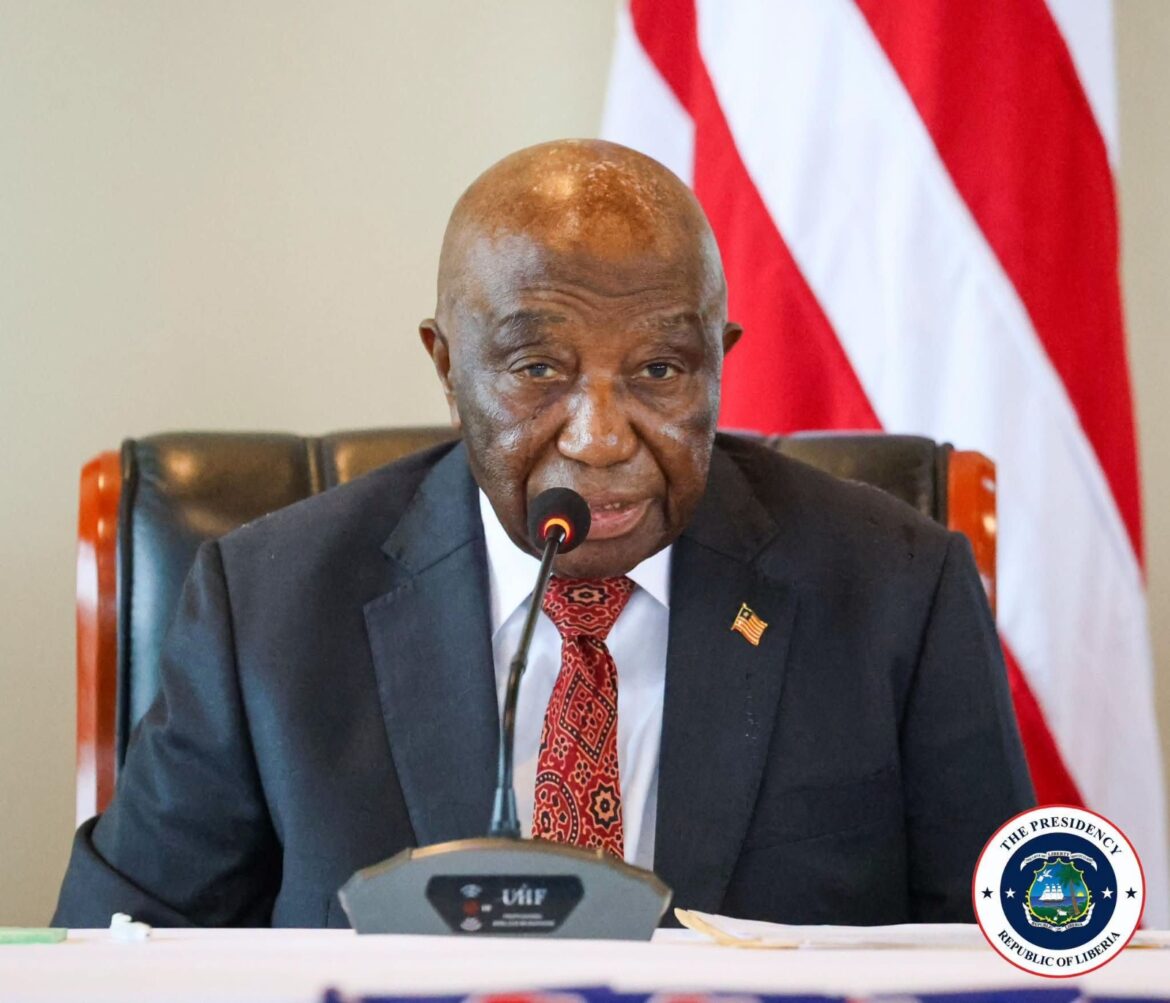
MONROVIA — President Joseph Boakai has warned Cabinet officials that failure to enforce Liberia’s procurement rules could drain public resources and reinforce perceptions that government contracts are distributed to friends and political allies.
Boakai acknowledged that procurement procedures can be cumbersome but said the safeguards are necessary to protect public money, secure value for spending and give qualified businesses a fair chance to compete for government contracts.
The president spoke at the opening of his administration’s 24th Cabinet meeting, which focused on procurement and concessions under the theme, “Value for Money: Maximizing Fiscal Space through System Efficiency and Government Asset Security.”
“Sometimes people get frustrated about all what you have to do to go through to buy this and buy that,” Boakai said. “But just imagine if these things were not in place, and even if they are in place, and people there were not implementing them, the resources you are talking about, you will not have them.”
Boakai said procurement rules should not be treated merely as administrative requirements. He described them as accountability safeguards intended to protect state resources, promote competition and widen access to government business.
“When we say procurement in the sense of procurement, it helps with accountability,” he said. “It helps with fair play in the market. It also helps with making sure that every citizen has access to rendering services to this country.”
The president said citizens do not need government jobs to participate in national development because individuals and businesses can also supply goods and services to the state.
“Participation in the government doesn’t mean that everybody will work with the government, but you can serve, you can provide goods and services,” Boakai said.
He stressed, however, that contracts must be awarded through transparent and competitive procedures to give qualified bidders equal access and protect procurement decisions from allegations of favoritism.
“To do that in a competitive society, you need to have a process by which everybody can have access without going around saying, well, they give it to their friend, they have this, they have that,” Boakai said.
His remarks placed responsibility on ministries, agencies and public officials to follow established procurement and concession procedures as the government seeks to control spending and protect its assets.
Boakai did not identify any specific contracts or procurement violations under review, nor did he announce new enforcement measures or sanctions against officials who bypass the rules.
He told Cabinet members that the administration’s procurement system would be judged by whether it protects scarce resources, produces value for money, and keeps government contracts open to fair competition.
See more Liberia News Network stories in Google Search by adding LNN as one of your Preferred Sources.
★ Add LNN as a Preferred Source